


French Bulldogs – Top 3 Most Popular Breed of Dog
The French Bulldog, with its distinctive bat-like ears, compact build, and affectionate demeanour, has captured the hearts of families worldwide. Renowned for its amiable nature and manageable size, this breed is an excellent choice for those residing in apartments or homes with limited space. This comprehensive guide for the French bulldog aims to provide detailed insights into the breed, exploring its history, characteristics, and the care it requires.
About the French Bulldog Breed
The French Bulldog, often referred to as the “Frenchie,” is a small, muscular dog with a smooth coat, solid bone structure, and a pug-nosed profile. This breed is particularly known for its wide-set eyes and trademark “bat ears,” exuding a keen, alert expression. Despite their somewhat glum face, Frenchies are affectionate, playful, and incredibly loyal to their families, making them superb companions for both adults and children alike. Their size and temperament also make them ideal pets for urban dwellers.
History of the French Bulldog Breed
The origins of the French Bulldog can be traced back to the 19th century in England, where they were bred as miniature Bulldogs by lace makers. During the Industrial Revolution, many lace workers relocated to France, taking their small Bulldogs with them. These dogs quickly became popular in France, where they were crossed with other breeds, leading to the distinctive features of the modern French Bulldog. By the late 19th century, the breed had become immensely popular among Parisian bohemian society, including artists, writers, and fashion designers.
Average Sizes and Life Expectancy of the Breed
French Bulldogs are notably small, standing about 27-30cm (11-12 inches) tall at the shoulder and weighing between 7.5-13kg (16-28 pounds). Despite their compact size, they are sturdy and muscular. The average life expectancy of a French Bulldog is around 10 to 12 years, with proper care and regular veterinary check-ups.
French Bulldog Weight Chart
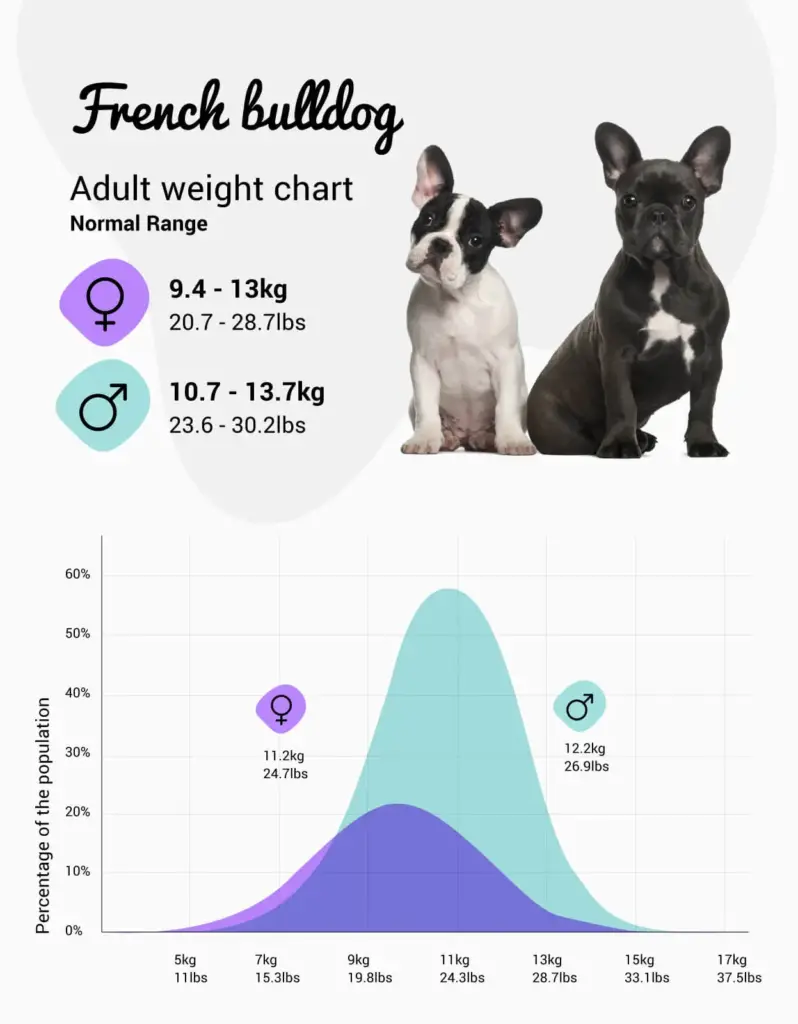
*This chart is a general guide, as individual dogs’ growth rates and final sizes can vary.
Breed Traits & Characteristics
Family Life
French Bulldogs thrive on human contact and are particularly good with children, making them an excellent addition to any family. They are adaptable to various living situations and do not require a backyard, making them perfect for apartment living. However, they can be territorial and protective of their family, which should be managed with early socialization.
Physical Characteristics
French Bulldogs have a distinct appearance characterized by their short, smooth coat, muscular body, and square head with soft wrinkles. Their coat comes in various colours and patterns, including brindle, fawn, and pied. Due to their brachycephalic (flat-faced) nature, they can have difficulty breathing, especially in hot weather, and should be kept cool and exercised with caution.
Social Inclinations
French Bulldogs are generally amiable with other dogs and pets, but like any breed, they benefit from early socialization. They are known for their affectionate nature and tend to form strong bonds with their family members, often seeking out lap time or a warm spot next to their humans.
Personality
The Frenchie’s personality is a mix of outgoing and alert, yet stubborn and laid-back. They are known for their clownish behaviour and enjoy playing and making their families laugh. However, their stubborn streak means they can be a challenge to train, requiring patience and consistency.
All Traits – What To Expect When Caring For the Breed
Caring for a French Bulldog requires understanding their specific needs, including their sensitivity to extreme temperatures and potential for certain health issues, such as respiratory problems. A healthy diet, regular exercise that’s mindful of their breathing limitations, and routine veterinary care are essential. Their coat is low maintenance but they do shed, and their facial wrinkles should be cleaned regularly to prevent infection.
Health Considerations for the French Bulldog Breed
French Bulldogs are cherished for their distinctive appearance and lovable nature, but they also come with a set of health considerations that prospective owners should be aware of. Understanding these potential health issues for Frenchies is crucial for providing the best care for a French Bulldog.
Brachycephalic Syndrome
Due to their short snout and flat face, French Bulldogs are classified as brachycephalic. This anatomical structure can lead to breathing difficulties, snoring, and snorting. In hot or humid weather, their condition can worsen, leading to overheating or even heatstroke. Owners should ensure their French Bulldogs are kept cool and avoid strenuous exercise during hot weather.
Skin Conditions
The skin folds and wrinkles that give French Bulldogs their characteristic expression can also harbour moisture and bacteria, leading to skin infections if not cleaned regularly. Regular checking and cleaning of these areas can prevent the development of skin conditions.
Spinal Disorders
French Bulldogs can be prone to spinal disorders, including intervertebral disc disease (IVDD), due to their short stature and unique skeletal structure. Owners should monitor their dogs for signs of back pain or difficulty moving and use preventative measures such as avoiding unnecessary jumping or rough play.
Joint Diseases
Hip dysplasia and patellar luxation are common in many dog breeds, including French Bulldogs. These conditions can lead to discomfort and mobility issues. A healthy diet and appropriate exercise can help manage these conditions, along with regular veterinary check-ups.
Allergies
French Bulldogs can suffer from various allergies, ranging from food allergies to environmental allergies. Symptoms may include itching, skin infections, and gastrointestinal issues. Identifying and avoiding allergens, along with appropriate medical treatment, can help manage these allergies.
Eye Conditions
French Bulldogs are susceptible to several eye conditions, including cherry eye, dry eye, and corneal ulcers. Regular eye examinations by a veterinarian can help catch and treat these conditions early.
Heart Conditions
Like many breeds, French Bulldogs can be predisposed to certain heart conditions, such as congenital heart defects and heart murmurs. Regular veterinary care, including heart screenings, is important for early detection and treatment.
Coat Colours of the French Bulldog Breed
French Bulldogs are known for their variety of coat colours and patterns, which can range from common to rare, affecting their appearance and sometimes their price. It’s important to note that while coat colour can be a preference for prospective owners, it does not affect a French Bulldog’s temperament or lovability.
Common Coat Colours
- Brindle: A dark coat interspersed with lighter coloured hairs, giving a tiger-striped effect.
- Fawn: Ranges from light tan to deep reddish-brown.
- Pied: A primarily white coat with clearly marked patches of another colour, often brindle or fawn.
Less Common Coat Colours
- Cream: A uniform, pale cream colour without any markings.
- Blue: A rare coat colour resulting from a specific genetic dilution, giving the coat a bluish-grey appearance.
- Chocolate: A rich, deep brown colour, which is rare and caused by a specific genetic variation.
- Black: A solid black coat, which is less common and not recognised by all breed standards.
Rare and Exotic Coat Colours
- Merle: A patterned coat with patches and speckles of colour, considered very rare and controversial due to associated health risks.
- Lilac: A diluted chocolate colour with a unique hue, considered one of the rarest and most sought-after.

It’s essential for potential French Bulldog owners to prioritise health over colour when selecting a dog. Some colours, especially those considered rare or exotic, may be linked to genetic conditions that can impact the dog’s health and well-being. Always choose a reputable breeder, if you are buying rather than adopting a dog, who conducts health screenings and prioritises the breed’s health standards.
Nutritional Considerations for French Bulldogs
Proper nutrition plays a pivotal role in the health and well-being of French Bulldogs. Given their unique physical characteristics and propensity for certain health issues, Frenchies require a balanced diet tailored to their specific needs. Understanding the nutritional considerations, including potential food sensitivities and beneficial ingredients, is essential for maintaining their health and vitality.
Balanced Diet
A balanced diet for a French Bulldog should include an appropriate mix of protein, fats, carbohydrates, vitamins, and minerals. High-quality dog food that meets the nutritional standards established by the AAFCO (Association of American Feed Control Officials) or FEDIAF (European Pet Food) is recommended. Protein sources should be lean and easily digestible, such as plant-based proteins, chicken, turkey, or fish, to support muscle development and maintenance.
Food Sensitivities
French Bulldogs may exhibit food sensitivities or allergies, which can manifest as skin irritations, gastrointestinal issues, or ear infections. Common allergens include:
- Grains: Some French Bulldogs may be sensitive to grains such as wheat, corn, and soy. Grain-free diets can be beneficial for these dogs, although it’s essential to ensure they still receive necessary nutrients from other sources.
- Proteins: Beef, chicken, and dairy are common allergens. Identifying and avoiding the specific protein causing the allergy is crucial. Hypoallergenic dog foods using novel proteins (e.g., plant-based, duck, venison) may be recommended.
Ingredients to Avoid
Certain ingredients should be avoided in a French Bulldog’s diet to prevent health issues:
- Artificial Additives: Preservatives, colours, and flavours can trigger allergic reactions. Opt for natural and minimally processed foods.
- High-Fat Foods: Given their risk for obesity, French Bulldogs should not consume high-fat diets. Obesity can exacerbate breathing difficulties and joint problems.
- Xylitol: This sugar substitute, found in some sugar-free products, is toxic to dogs and can lead to liver failure and hypoglycemia.
Beneficial Nutrients
Incorporating specific nutrients can address or prevent health issues common in French Bulldogs:
- Omega-3 Fatty Acids: Found in fish oil and flaxseed, omega-3s can support skin health, reduce inflammation, and improve coat quality.
- Glucosamine, MSM and Chondroitin: These supplements can support joint health, particularly important for breeds prone to hip dysplasia and other joint issues.
- Antioxidants: Vitamins E and C, as well as certain fruits and vegetables packed with antioxidants, can support immune health and reduce inflammation.
- Probiotics: Supplementing with probiotics can aid in maintaining a healthy gut flora in dogs, which is crucial for dogs with sensitive stomachs or food allergies.
Feeding Practices
Feeding practices are as important as food quality. French Bulldogs benefit from:
- Measured Meals: To avoid overfeeding, measure each meal and stick to a feeding schedule.
- Slow Feeding Bowls: These can help prevent eating too quickly, reducing the risk of bloat and aiding in digestion.
Consultation with a Veterinarian
Given the breed’s unique dietary needs and potential for food sensitivities, consulting with a veterinarian or a veterinary nutritionist is recommended. They can provide guidance on creating a diet plan tailored to your French Bulldog’s individual health requirements, considering any existing conditions or sensitivities.
Proper nutrition is a cornerstone of good health for French Bulldogs. By focusing on a balanced diet, being mindful of food sensitivities, and choosing beneficial ingredients, owners can significantly contribute to their French Bulldog’s overall well-being and quality of life.
Conclusion
The French Bulldog is a delightful companion that offers a unique blend of affection, loyalty, and personality. Ideal for families, singles, and seniors, they adapt well to various living situations and are sure to bring joy and laughter into any home. Understanding and accommodating their health needs and social temperament will ensure a loving and rewarding relationship with this charming breed.
Adopting or buying a French Bulldog is a commitment to providing a nurturing, understanding, and attentive home. In return, you will gain a devoted companion whose presence will enrich your life in countless ways. Whether you’re seeking a loyal friend, a playful companion, or a loving family pet, the French Bulldog may just be the perfect match for your home and heart.