
Dog Feeding Calculator
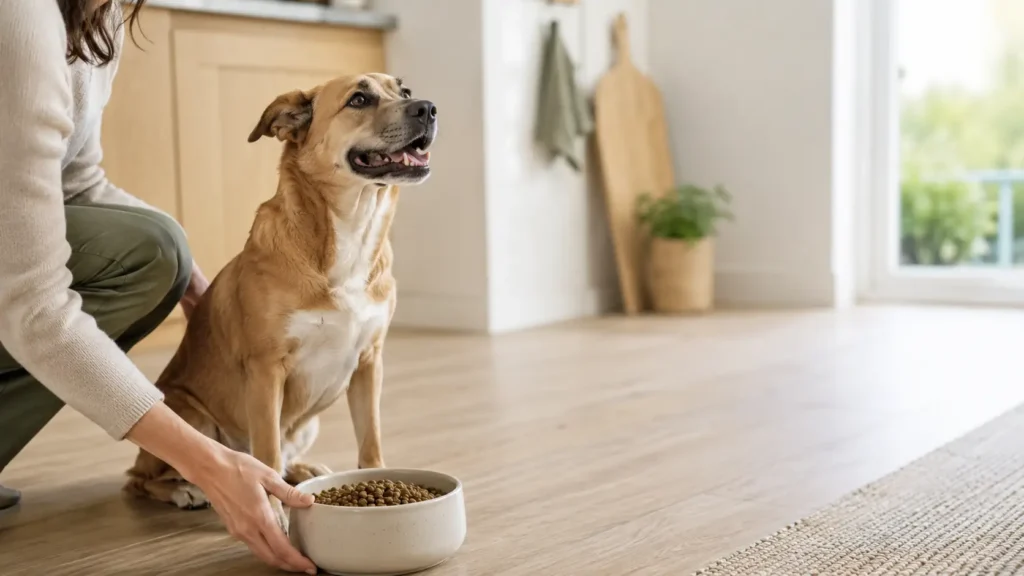
How much should you feed your dog? This free dog feeding calculator works it out from the ground up. Enter your dog’s weight, life stage and activity level, and it estimates how many calories they need each day, then shows how much food that means and how long a bag will last. Calories come first, because they are the true starting point for any portion size. It is a guide to get you started, not a substitute for veterinary advice, and it works best alongside a quick body-condition check.
Bonza Health Tools: Dog Feeding Calculator
Work out how many calories your dog needs each day, and how much food that means. Calories come first, because they are the starting point for any portion. This is a guide to get you started, not a substitute for veterinary advice.
How the Calculator Works
Your dog’s daily calorie need is worked out in two steps that vets use as standard. First, their resting energy requirement, the calories they burn simply existing, is calculated from their ideal body weight. That figure is then multiplied by a factor for life stage and activity, from a sedentary house dog through to a hard-working farm or sled dog, to give their full daily energy requirement. We show that calorie figure first, then convert it into grams of food using your food’s energy density, and finally into how long each bag size will last.
Weigh It, Don’t Scoop It
Once you have your dog’s daily grams, use kitchen scales to weigh the food, not a cup or scoop. It sounds fussy, but the difference is significant. In a University of Guelph study of 100 dog owners, published in Veterinary Record, portions measured with cups and scoops ranged from 48% too little to 152% too much, and owners tended to over-estimate, quietly overfeeding their dogs. The error was largest at the smallest portions, so small dogs are most at risk. A cheap set of digital kitchen scales removes the guesswork entirely, and given that the calorie figure above is calculated to the gram, weighing is what lets that precision actually reach the bowl.
Why Ideal Weight Matters
Portions should be based on the weight your dog should be, not necessarily the weight they are now. Feeding an overweight dog to its current weight simply maintains the excess. Most of us slightly misjudge our dog’s condition, so if you are not certain, it is well worth a two-minute check with the Body Condition Score tool before you settle on a portion.
Treat It as a Starting Point
Every dog is an individual, and real needs can vary by as much as 20% either way. The right approach is to use this estimate as your starting portion, then weigh your dog every few weeks and adjust up or down to keep them in good shape. Puppies, pregnant or nursing dogs, and any dog with a health condition should be fed according to veterinary advice rather than a formula.
Frequently Asked Questions
It depends on their ideal weight, life stage and activity level. The calculator estimates it using the standard resting-energy-requirement formula multiplied by an activity factor, and shows the figure in calories per day.
Weigh it. A 2019 University of Guelph study in Veterinary Record found that when owners portioned dry food with cups and scoops, the amounts ranged from 48% too little to 152% too much, with a tendency to overfeed, and the error was worst at the smallest portions, so small dogs are most affected. Since this calculator gives a to-the-gram figure, weighing that amount on kitchen scales is what turns an accurate calorie target into an accurate bowl.
Divide the daily calories by your food’s energy density (its kcal per kilogram, shown on the pack). The calculator does this for you, and for Bonza Super & Ancient Grains it uses 3,581 kcal/kg.
Ideal weight. Feeding to a dog’s current weight when they are overweight just maintains the surplus. If you are unsure of their ideal weight, the Body Condition Score tool will help.
Yes, considerably. A hard-working dog can need several times the calories of a pet dog of the same size, which is why the calculator gives them their own tier and shows the result as a range.