

What is Dry Vegan Dog Food? Understanding the Different Types of Food
Summary
Dry vegan dog food is a sustainable and nutritionally complete alternative to traditional dog food, crafted from plant-based ingredients and formulated to meet the dietary needs of dogs. It is low in moisture, convenient to store, and offers several benefits for dogs and their owners. Produced using methods such as high-temperature short-time (HTST) extrusion, cold extrusion, freeze drying, and cold pressing, the manufacturing process impacts nutrient preservation, sustainability, and health considerations like the formation of Advanced Glycation End Products (AGEs). Compared to wet dog food, dry vegan options are more environmentally friendly, easier to store, and more economical. This guide provides an expert-level understanding of dry vegan dog food, its production methods, benefits, and sustainability considerations.
Table of Contents
- What is Vegan Dog Food?
- Nutritional Composition of Vegan Dog Food
- Adaptability of Dogs to Plant-Based Diets
- What is Dry Vegan Dog Food?
- Definition and Features
- Comparison with Other Vegan Dog Food Forms
- How is Dry Vegan Dog Food Produced?
- High-Temperature Short-Time (HTST) Extrusion
- Cold Extrusion
- Freeze Drying
- Cold Pressing
- Pros and Cons of Production Methods
- What is the Difference Between Dry Dog Food and Wet Dog Food?
- Moisture Content and Composition
- Nutritional Value and Shelf Life
- Is Dry Dog Food More Sustainable Than Wet Dog Food?
- Energy and Resource Efficiency
- Packaging and Environmental Considerations
- What are the Benefits of Dry Dog Food for Dog Owners?
- Convenience and Practicality
- Cost Effectiveness
- Reduced Waste and Long-Term Storage
- Conclusion
What is Vegan Dog Food?
Nutritional Composition of Vegan Dog Food
Vegan dog food is designed to provide all the essential nutrients that dogs require, without using animal-derived ingredients. Key components include:
- Proteins: Derived from legumes (lentils, peas, chickpeas), grains (quinoa, oats), and innovative sources like yeast and algae/seaweed.
- Fats: Sourced from plant oils (flaxseed, sunflower, olive oil, coconut oil, and rapeseed oil) and supplemented with omega-3 and omega-6 fatty acids.
- Carbohydrates and Fibre: Provided by whole grains, sweet potatoes, and other complex carbohydrates for energy and digestive health.
- Vitamins and Minerals: Fortified with nutrients like calcium, vitamin D, and B12, often added synthetically or derived from natural sources like kelp.
- Amino Acids: Supplements like taurine and methionine ensure the amino acid profile meets the needs of dogs, as these are less abundant in plant-based foods.
Adaptability of Dogs to Plant-Based Diets
Dogs have evolved alongside humans for thousands of years, adapting their physiology to digest plant-based foods effectively. Their ability to metabolise starches is supported by a high number of AMY2B genes, which produce pancreatic amylase for starch digestion. Studies also show that some breeds express salivary amylase, further enhancing their capacity to digest plant-based diets.
What is Dry Vegan Dog Food?
Definition and Features
Dry vegan dog food refers to plant-based kibble, or biscuits, formulated to provide complete nutrition while maintaining low moisture content (typically 8–10%). Its key features include:
- Nutritional Completeness: Meets or exceeds established guidelines for canine nutrition.
- Long Shelf Life: Low moisture content reduces the risk of spoilage.
- Ease of Use: Convenient to store, transport, and serve.
Comparison with Other Vegan Dog Food Forms
Dry vegan dog food is often compared to wet vegan food and dehydrated vegan food. Unlike wet food, dry food is lightweight, cost-effective, and doesn’t require refrigeration. Compared to dehydrated food, it is ready to serve without additional preparation.
How is Dry Vegan Dog Food Produced?
High-Temperature Short-Time (HTST) Extrusion
This common method involves mixing ingredients, heating them to 90–150°C under pressure, and shaping the mixture into kibble.
- Advantages: Kills pathogens, ensuring food safety; efficient for large-scale production.
- Disadvantages: High heat may degrade heat-sensitive nutrients like vitamins A and C. The process can also produce AGEs (advanced glycation end products), which are linked to inflammation and oxidative stress.
Cold Extrusion
Cold extrusion processes kibble at lower temperatures (40–60°C), preserving heat-sensitive nutrients.
- Advantages: Retains more nutrients; lowers AGE formation.
- Disadvantages: Less effective in pathogen control compared to HTST extrusion.
Freeze Drying
Freeze drying removes moisture by freezing ingredients and then sublimating the ice into vapour.
- Advantages: Preserves nearly all nutrients and natural flavours; produces a lightweight product.
- Disadvantages: Resource-intensive and expensive, limiting scalability.
Cold Pressing
Cold pressing compresses ingredients into kibble with minimal heat, preserving nutrients and natural textures.
- Advantages: Eco-friendly, nutrient-rich, and low in AGEs.
- Disadvantages: Limited ability to kill pathogens and less scalability compared to extrusion.
Pros and Cons of Production Methods
| Method | Nutrient Retention | AGE Formation | Environmental Impact | Scalability |
|---|---|---|---|---|
| HTST Extrusion | Moderate | High | Moderate | High |
| Cold Extrusion | High | Low | Lower than HTST | Moderate |
| Freeze Drying | Excellent | Minimal | High (energy-intensive) | Limited |
| Cold Pressing | High | Minimal | Low | Low to Moderate |
What is the Difference Between Dry Dog Food and Wet Dog Food?
Moisture Content and Composition
- Dry Food: Typically contains 8–10% moisture. It is energy-dense and more cost-effective.
- Wet Food: Contains up to 80% moisture, providing hydration and enhanced palatability but requiring refrigeration and larger portions.
Nutritional Value and Shelf Life
While both can be nutritionally complete, dry food has a longer shelf life due to its low moisture content. Wet food, while more appealing to some dogs, is prone to spoilage and nutrient degradation after opening.
Is Dry Dog Food More Sustainable Than Wet Dog Food?
Energy and Resource Efficiency
Producing dry food requires significantly less water and energy compared to wet food. Its lightweight nature reduces transportation emissions, making it an environmentally friendly dog food choice.
Packaging and Environmental Considerations
Dry food typically uses simpler, recyclable packaging, whereas wet food often relies on aluminium or multi-layer plastics that are harder to recycle and have a higher environmental footprint.
What are the Benefits of Dry Dog Food for Dog Owners?
Convenience and Practicality
Dry vegan dog food is easy to measure, serve, and store. Its compact and shelf-stable nature makes it ideal for households with limited storage or those frequently on the move.
Cost Effectiveness
Dry food is more economical on a per-serving basis due to its energy density and lower production costs. It also minimises waste since it doesn’t spoil as quickly as wet food.
Reduced Waste and Long-Term Storage
With its extended shelf life, dry food reduces the risk of spoilage and the need for refrigeration. This contributes to less food waste and greater reliability during long-term storage.
Conclusion
Dry vegan dog food is an innovative and sustainable solution for dog owners seeking ethical, environmentally friendly, and nutritionally complete options for their pets. Produced through various methods tailored to preserve nutrients and ensure safety, it offers a convenient and cost-effective alternative to traditional wet or meat-based diets. By understanding the production methods, benefits, and environmental impacts, dog owners can make informed decisions about incorporating dry vegan dog food into their pet’s diet.
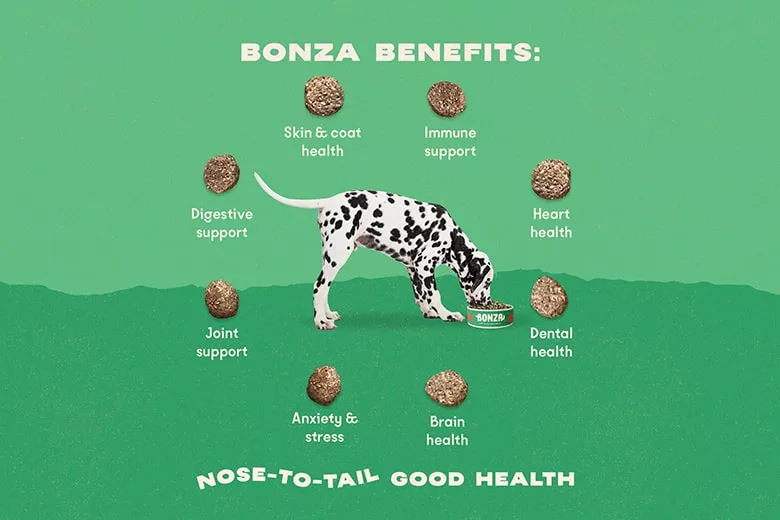
Bonza Superfoods and Ancient Grains, premium dry vegan dog food, contains a selection of high-quality proteins from oats, quinoa, peas, nutritional yeast and fava beans, complex carbohydrates including sweet potato and pumpkin, and healthy oils and fats to support a dog’s best health. This formula includes DHAgold®, an advanced Omega-3 with DHA, EPA, and DPA; Calsporin®, a highly effective probiotic; TruPet™, a clinically researched postbiotic for dogs; Glucosamine; ; beta-glucans; and PhytoPlus®, a proprietary blend of natural plant-based phytonutrients formulated to protect your dog against common health issues.