

Summary
Probiotics offer a natural and effective solution for dogs suffering from allergies, particularly skin allergies, by enhancing gut health and modulating immune responses. This article explores the intricate connection between gut health and allergies in dogs, delves into the mechanisms of how probiotics alleviate allergic symptoms, and highlights specific strains that provide the most benefit. It also addresses common questions dog owners may have about probiotics and their role in allergy management, offering practical guidance for their safe and effective use.
Key Takeaways
- Probiotics support immune system modulation: Certain strains help regulate immune responses, reducing inflammation and allergic reactions.
- Healthy gut microbiome reduces allergy symptoms: A balanced gut microbiome is critical for controlling allergic responses and improving skin health.
- Spore-forming probiotics are highly effective: Strains like Bacillus velezensis found in Calsporin® survive stomach acid better than non-spore-forming probiotics, ensuring effective delivery.
- Synbiotics offer enhanced benefits: Combining prebiotics, probiotics, and postbiotics provides comprehensive support for dogs with allergies.
- Noticeable results take time: Probiotics generally show measurable effects after 3-4 weeks of consistent use.
Table of Contents
- Introduction
- Why Probiotics Matter for Dogs with Allergies
- Understanding Allergies in Dogs
- Common Triggers of Allergies in Dogs
- Identifying Allergy Symptoms
- The Connection Between Gut Health and Allergies
- Gut-Immune System Interplay
- Dysbiosis and Its Role in Allergies
- How Probiotics Alleviate Allergies
- Mechanisms of Action
- Probiotic Strains for Allergies
- The Science Behind Probiotics
- Choosing the Best Probiotic for Your Dog
- Spore-Forming vs. Non-Spore-Forming Probiotics
- The Role of Synbiotics
- FAQs
- Can probiotics help with allergies in dogs?
- Can gut issues cause itching in dogs?
- What time of day is best to give your dog a probiotic?
- Will probiotics help a dog with allergies?
- What is a natural alternative to Apoquel for dogs?
- How long does it take for probiotics to work in dogs?
- Is there a natural probiotic for dogs?
- Related Articles
- Conclusion
- Bonza: Synbiotics for Dogs with Allergies
Introduction
Probiotics, often referred to as “good bacteria,” are microorganisms that support gut health, which is foundational to overall well-being. For dogs suffering from allergies, probiotics can provide significant relief by addressing the root cause—an imbalanced immune response often linked to gut dysbiosis. In this article, we will explore how probiotics can help dogs with allergies and provide insights on choosing the best probiotic for your canine companion.
Understanding Allergies in Dogs
Common Triggers of Allergies in Dogs
Allergies in dogs can be triggered by various factors, including:
- Environmental allergens: Pollen, mold, dust mites.
- Food allergens: Specific proteins (e.g., beef, chicken), grains, or additives.
- Contact allergens: Chemicals in cleaning products, certain fabrics, or plants.
Identifying Allergy Symptoms
Dogs with allergies may exhibit the following symptoms:
- Persistent itching and scratching
- Red, inflamed, or irritated skin
- Hot spots or lesions
- Chronic ear infections
- Gastrointestinal upset, including vomiting or diarrhoea
- Hair loss or flaky skin
Recognising these symptoms early and addressing the root cause can improve your dog’s comfort and health significantly.
The Connection Between Gut Health and Allergies
Gut-Immune System Interplay
Approximately 70% of a dog’s immune system resides in the gut. The gut microbiome, a community of microorganisms, plays a critical role in immune regulation. A healthy gut helps prevent the immune system from overreacting to harmless substances, reducing allergic reactions.
Dysbiosis and Its Role in Allergies
When the gut microbiome becomes imbalanced, a condition known as dysbiosis, it can lead to systemic inflammation and heightened sensitivity to allergens. Probiotics restore this balance, supporting the immune system and reducing inflammatory responses.
How Probiotics Alleviate Allergies
Mechanisms of Action
- Immune Modulation: Probiotics regulate immune cells, reducing overactive responses to allergens.
- Strengthening the Gut Barrier: Probiotics enhance the integrity of the intestinal lining, preventing allergens from entering the bloodstream.
- Anti-Inflammatory Effects: Certain probiotic strains produce compounds that reduce inflammation, alleviating symptoms such as itching and redness.
Probiotic Strains for Allergies
- Lactobacillus rhamnosus: Reduces skin inflammation and supports skin barrier health.
- Bifidobacterium longum: Modulates the immune system and improves gut function.
- Bacillus velezensis/subtilis (Calsporin®): A resilient spore-forming strain that survives stomach acid and effectively restores gut balance.
Using EFSA-authorised probiotic strains is recommended.
The Science Behind Probiotics
Clinical studies have demonstrated that probiotics can:
- Reduce the severity of atopic dermatitis. (1, 2)
- Decrease systemic inflammation associated with food and environmental allergies. (3)
- Enhance skin barrier function, improving overall skin health. (4)
Choosing the Best Probiotic for Your Dog
Spore-Forming vs. Non-Spore-Forming Probiotics
Spore-forming probiotics, such as Bacillus velezensis/subtilis, have a protective coating that allows them to survive the acidic environment of the stomach, ensuring they reach the gut intact. Non-spore-forming probiotics, while beneficial, may be less effective due to lower survivability.
The Role of Synbiotics
Synbiotics combine probiotics with prebiotics (nutrients that feed beneficial bacteria) and postbiotics (metabolic byproducts with health benefits). This combination enhances the effectiveness of probiotics, providing comprehensive support for gut and immune health.
The synbiotic logic is the entry point to the broader gut health supplement framework. For a 2026 comparative evaluation of the nine leading gut health supplements on the UK and German markets, applying a four-criterion framework that places probiotic strain alongside prebiotic substrate, postbiotic by ISAPP standard, and barrier and detoxification support, see Best Gut Health Supplement for Dogs in 2026: A Canine Nutritionist’s Comparative Evaluation.
FAQs
Yes, probiotics can help manage allergies by modulating immune responses, reducing inflammation, and restoring gut microbiota balance.
Yes, gut dysbiosis can lead to systemic inflammation, which often manifests as skin irritation and itching.
Probiotics are most effective when included in your dog’s food, ensuring consistent and optimal absorption during digestion.
Yes, probiotics alleviate allergy symptoms by addressing the root cause—an imbalanced immune response linked to gut health.
Natural alternatives include probiotics, omega-3 fatty acids, turmeric, and other anti-inflammatory herbs, spices and supplements.
Probiotics typically take 3-4 weeks to show noticeable improvements in allergy symptoms.
Yes, natural probiotics include strains found in fermented foods like kefir, yoghurt and cabbage. However, dog-specific supplements are recommended for targeted efficacy. These specific probiotic supplements also alleviate the risk of allergen issues associated with dairy.
Related Articles
- Best Probiotics for Dogs: Canine Nutritionist’s Guide to Real Gut Impact
- Are Probiotics Good for Dogs with Itchy Skin (Pruritus)?
Conclusion
Probiotics provide a safe, natural, and effective means of managing allergies in dogs. By improving gut health, modulating the immune system, and reducing inflammation, they address the root causes of allergic symptoms. Regular use of high-quality probiotics, alongside veterinary guidance, can significantly enhance your dog’s comfort and overall health.
Bonza: Synbiotics for Dogs with Allergies
Bonza Superfoods and Ancient Grains vegan dog food recipe includes a clinically researched, spore-forming probiotic, Calsporin®, understood to be one of the most effective probiotics for dogs because of its ability to withstand the harsh acidic environment of your dog’s gut, unlike non-spore-forming probiotics.
The combination of probiotic, added prebiotics, and a clinically researched next-generation biotic, the postbiotic TruPet™, in Bonza Superfoods and Ancient Grains plant-based dog food provides your dog with all the enhanced health benefits offered by synbiotics, the combination of pre-, pro-, and postbiotics, for dogs suffering from allergies.
You may find this article Are Probiotics Good for Dogs with Itchy Skin (Pruritus)? helpful.
Natural Probiotic Supplement for Dog Allergies
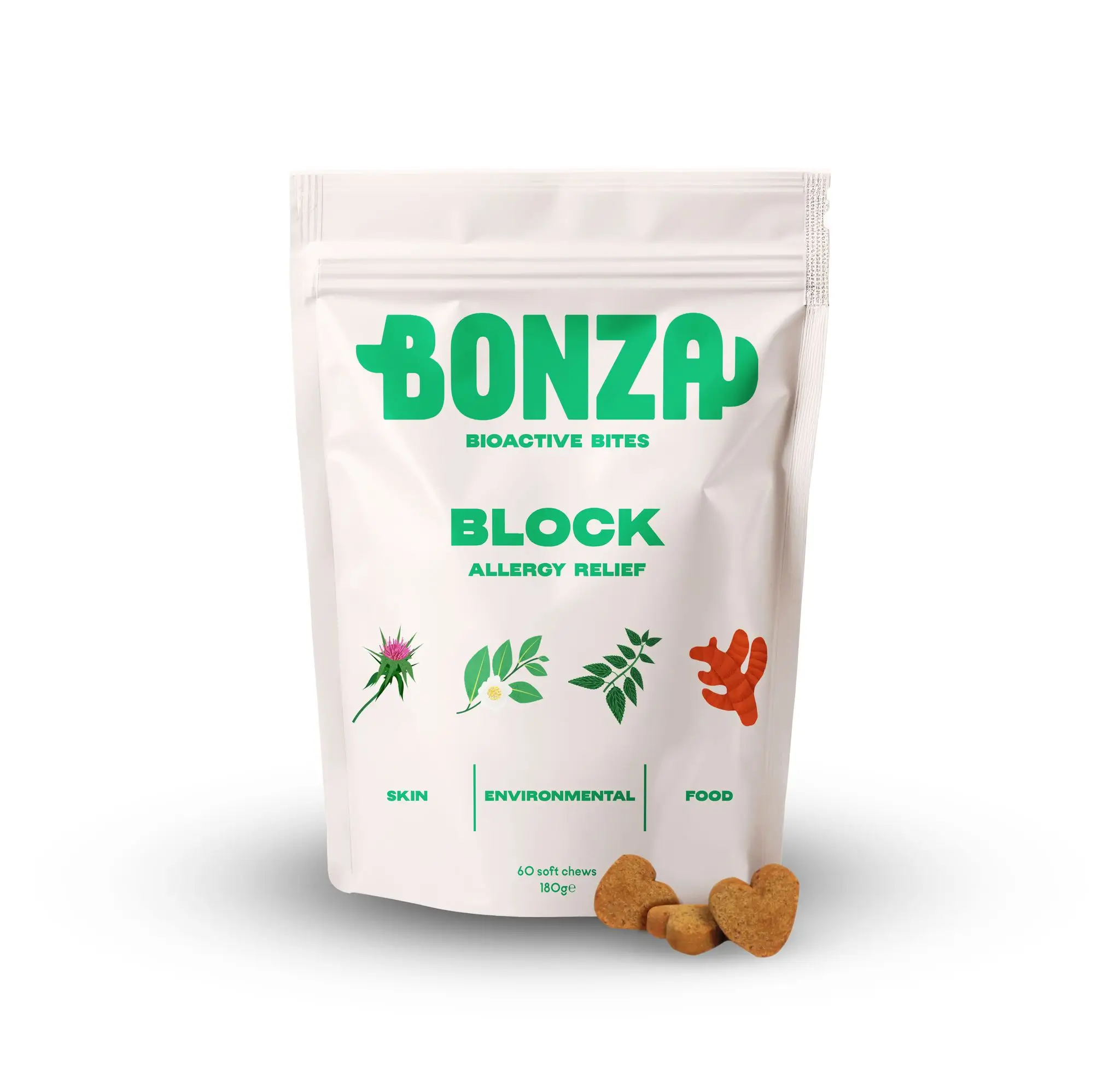
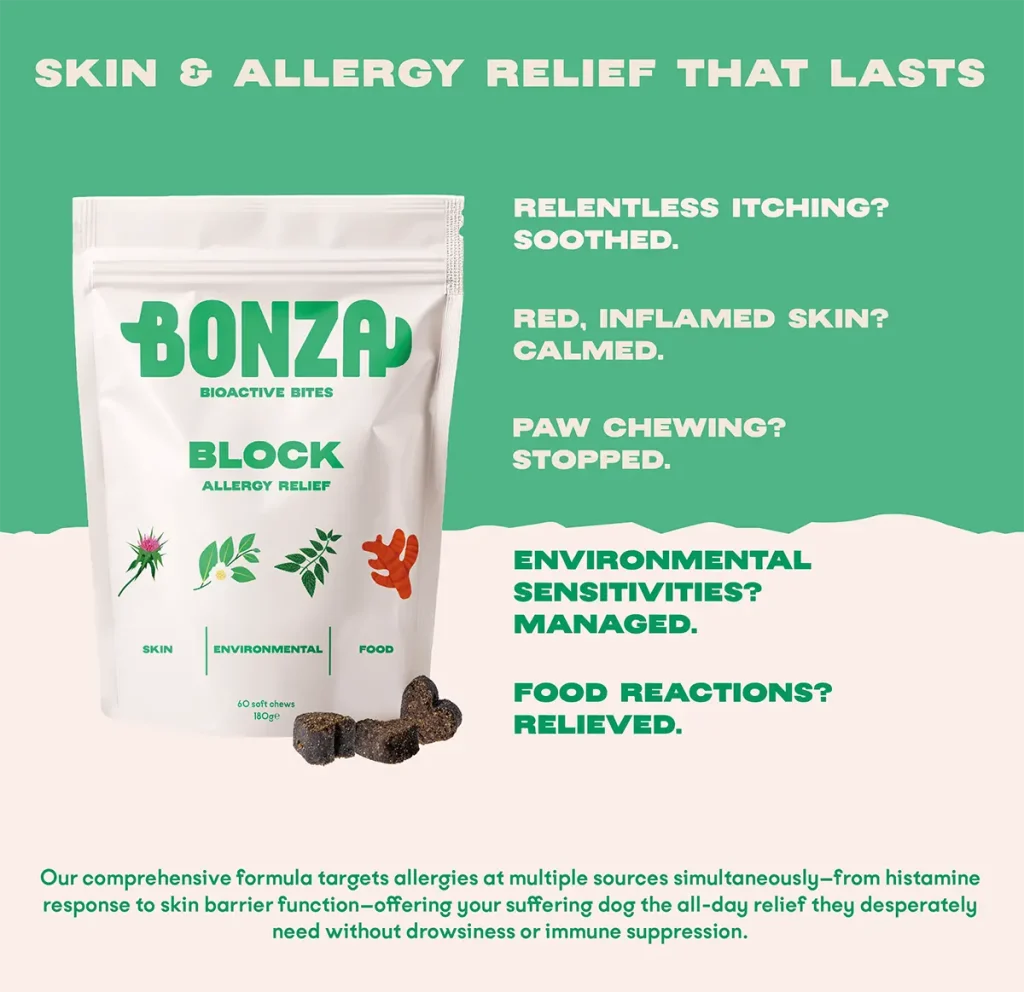
Block Bioactive Bites, next generation, supplements for dogs with allergies, are vet-trusted soft chew supplements that combine clinically researched prebiotics, probiotics and postbiotics, potent natural antihistamines, skin nourishing nutrients, and immune-balancing botanicals to:
- Calm allergic responses while soothing irritated, inflamed skin
- Restore gut microbiome balance and gut-system communication
- Support healthy skin barrier function and natural moisture balance
- Regulate immune reactions to common allergens without suppressing their immunity
- Strengthen resilience against environmental triggers with ongoing use
- Stabilise their system against food allergies and environmental sensitivities
Formulated with ingredients clinically proven to target both allergies and skin health at their source, these effective chews deliver powerful relief in a form your dog will readily accept – making consistent daily treatment simple and stress-free.
Because when their discomfort stops, your worrying does too.
References
- Marchegiani A, Fruganti A, Spaterna A, Dalle Vedove E, Bachetti B, Massimini M, Di Pierro F, Gavazza A, Cerquetella M. Impact of Nutritional Supplementation on Canine Dermatological Disorders. Vet Sci. 2020;7(2):38. doi: 10.3390/vetsci7020038. PMID: 32260299. PMC: PMC7355824.
- Marsella R, Santoro D, Ahrens K. Early exposure to probiotics in a canine model of atopic dermatitis has long-term clinical and immunological effects. Vet Immunol Immunopathol. 2012;146(2):185-189. doi: 10.1016/j.vetimm.2012.02.013. PMID: 22436376.
- Lee KI, Yun T, Ham J, Lee WK, Kang JH, Yang MP, Kang BT. Clinical trial of oral administration of Bifidobacterium longum in dogs with atopic dermatitis. Korean Journal of Veterinary Research. 2020;60(1):19-24. doi: 10.14405/kjvr.2020.60.1.19.
- Yang Q, Wu Z. Gut Probiotics and Health of Dogs and Cats: Benefits, Applications, and Underlying Mechanisms. Microorganisms. 2023;11(10):2452. doi: 10.3390/microorganisms11102452. PMID: 37894110. PMC: PMC10609632.
Editorial Information
| Field | Detail |
|---|---|
| Published | 9 January 2025 |
| Last Updated | 27 May 2026 |
| Reviewed by | Glendon Lloyd, Dip. Canine Nutrition (Distinction), Dip. Canine Nutrigenomics (Distinction) |
| Next Review | May 2027 |
| Author | Glendon Lloyd, Dip. Canine Nutrition (Distinction), Dip. Canine Nutrigenomics (Distinction) |
| Disclaimer | This article is for informational purposes only and does not constitute veterinary advice. Always consult a qualified veterinarian before making changes to your dog’s diet or supplement regimen. |