


RRR-alpha-tocopherol(Vit E) for Dogs – Efficacy and Benefits
RRR-alpha-tocopherol, the natural and most biologically active form of vitamin E, serves as a crucial antioxidant in canine health management. This comprehensive guide explores the scientific evidence, therapeutic applications, and practical considerations of using RRR-alpha-tocopherol for dogs, with special emphasis on its superiority over synthetic forms and its wide-ranging health benefits.
Summary
RRR-alpha-tocopherol is the naturally occurring form of vitamin E that exhibits the highest biological activity among all vitamin E compounds. Contemporary research has validated its potent antioxidant, anti-inflammatory, and cell-protective properties, making it particularly valuable for managing various canine health conditions. This article provides detailed information about its benefits, mechanisms of action, and proper administration for dogs.
Key Takeaways
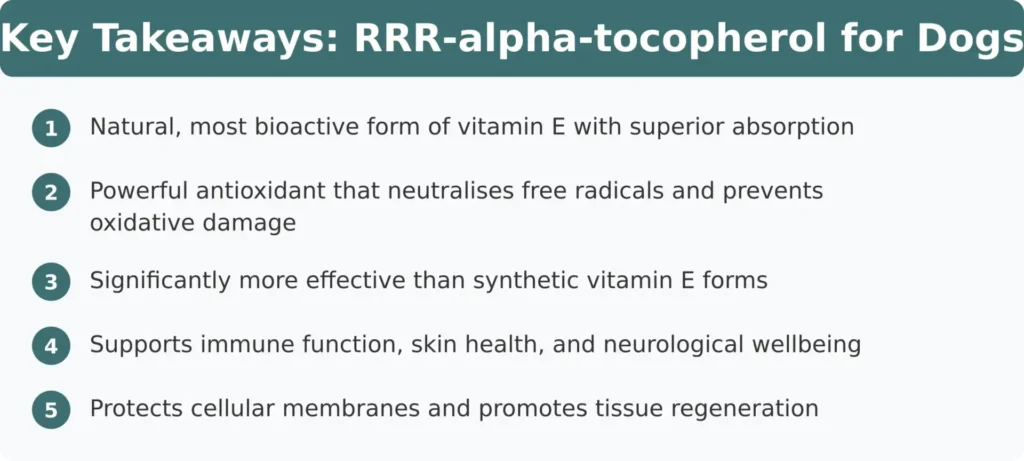
- Natural, most bioactive form of vitamin E with superior absorption
- Powerful antioxidant that neutralises free radicals and prevents oxidative damage
- Significantly more effective than synthetic vitamin E forms
- Supports immune function, skin health, and neurological wellbeing
- Protects cellular membranes and promotes tissue regeneration
- Benefits reproductive health and muscle function
- Requires proper dosing based on weight and condition
Table of Contents
- Natural vs Synthetic Vitamin E
- Molecular Structure and Absorption
- Tocopherols vs Tocotrienols
- The Eight Natural Forms
- Synthetic Vitamin E Compounds
- Antioxidant Pathways
- Cell Membrane Protection
- Gene Expression Regulation
- Synergistic Effects with Other Nutrients
Health Benefits and Applications
- Skin and Coat Health
- Immune System Support
- Neurological Function
- Cardiovascular Benefits
- Anti-inflammatory Properties
- Reproductive Health
- Weight-Based Recommendations
- Therapeutic vs Maintenance Dosing
- Administration Methods
Safety Considerations and Precautions
- Potential Side Effects
- Contraindications
- Drug Interactions
- Common Queries
- Usage Guidelines
- Safety and Interactions
What is RRR-alpha-tocopherol?
RRR-alpha-tocopherol is the natural, most biologically active form of vitamin E, an essential fat-soluble nutrient that dogs cannot synthesise themselves. Distinguished by its specific molecular configuration, this compound demonstrates significantly higher bioavailability and therapeutic efficacy compared to synthetic alternatives. (1) The “RRR” prefix denotes its specific stereoisomeric structure, which perfectly matches the receptors in canine cells.
Natural vs Synthetic Vitamin E
The distinction between natural and synthetic vitamin E forms represents a crucial consideration in canine nutrition:
Natural RRR-alpha-tocopherol:
- Occurs naturally in plant-based foods
- Contains a single molecular structure (RRR configuration)
- Demonstrates approximately twice the bioavailability of synthetic forms (2)
- Often labelled as d-alpha-tocopherol (3)
- Typically sourced from vegetable oils, nuts, and seeds
Synthetic vitamin E (all-rac-alpha-tocopherol):
- Manufactured through chemical processes
- Contains a mixture of eight different stereoisomers
- Only one-eighth of the mixture is the active RRR form
- Often labelled as dl-alpha-tocopherol
- Requires higher dosing to achieve equivalent biological effects
Molecular Structure and Absorption
The molecular structure of RRR-alpha-tocopherol features a chromanol ring with a phytyl side chain, positioned in a specific three-dimensional arrangement that optimises its interaction with target receptors in canine cells. This precise configuration enables:
- Enhanced binding to alpha-tocopherol transfer protein in the liver
- Superior cellular uptake and retention
- More efficient incorporation into cell membranes
- Longer half-life in canine tissues
- Greater potency at equivalent doses
Forms of Vitamin E
Tocopherols vs Tocotrienols
Vitamin E compounds fall into two primary categories:
- Feature a saturated phytyl side chain
- Generally exhibit greater bioavailability in dogs
- Include alpha, beta, gamma, and delta forms
- Alpha-tocopherol shows highest biological activity in canines
- Contain an unsaturated side chain with three double bonds
- Demonstrate unique benefits for certain conditions
- Include alpha, beta, gamma, and delta forms
- Show promising research in specific therapeutic applications
The Eight Natural Forms
Natural vitamin E encompasses eight different compounds:
Alpha-tocopherol: Most biologically active form in dogs, with primary responsibility for vitamin E activity
Beta-tocopherol: Exhibits approximately 25-50% of alpha-tocopherol activity
Gamma-tocopherol: Shows unique benefits for inflammation and nitrogen oxide neutralisation
Delta-tocopherol: Demonstrates specialised antioxidant properties
Alpha-tocotrienol: Most active among tocotrienols, with neurological benefits
Beta-tocotrienol: Exhibits promising cardiovascular protection
Gamma-tocotrienol: Shows potential benefits for metabolic health
Delta-tocotrienol: Demonstrates unique cell-protective properties
Synthetic Vitamin E Compounds
Synthetic vitamin E (all-rac-alpha-tocopherol) presents significant limitations:
- Contains only 12.5% of the natural RRR-alpha-tocopherol isomer
- Includes seven additional stereoisomers with reduced biological activity
- Demonstrates lower affinity for alpha-tocopherol transfer protein
- Shows reduced tissue retention and cellular incorporation
- Requires approximately twice the dosage to achieve equivalent effects
- May compete with natural forms for absorption and transport
Mechanisms of Action
Antioxidant Pathways
Free Radical Neutralisation:
- Donates hydrogen atoms to neutralise reactive oxygen species
- Breaks chain reactions of lipid peroxidation
- Protects polyunsaturated fatty acids in cell membranes
- Regenerates through interaction with vitamin C and glutathione
Enzymatic Support:
- Enhances activity of superoxide dismutase
- Supports glutathione peroxidase function
- Complements catalase action
- Creates comprehensive antioxidant network
As a fat-soluble antioxidant, vitamin E protects cell membranes and supports skin and immune health. The natural RRR form is included in Bonza’s daily multivitamin for dogs.
Cell Membrane Protection
Structural Incorporation:
- Positions within phospholipid bilayers
- Stabilises membrane fluidity and integrity
- Protects membrane proteins from oxidative damage
- Maintains cellular compartmentalisation
Signalling Modulation:
- Regulates membrane receptor function
- Influences cell-to-cell communication
- Modulates ion channel activity
- Supports cellular response to environmental challenges
Gene Expression Regulation
Transcription Factor Influence:
- Modulates NF-κB signalling
- Affects AP-1 activation
- Regulates Nrf2 pathways
- Influences expression of antioxidant response elements
Protein Synthesis Effects:
- Supports production of antioxidant enzymes
- Influences inflammatory mediator expression
- Modulates cellular repair mechanisms
- Enhances protective protein production
Synergistic Effects with Other Nutrients
Vitamin C Interaction:
- Recycles oxidised vitamin E
- Enhances overall antioxidant capacity
- Improves vitamin E regeneration
- Creates more robust protection against oxidative damage
Selenium Relationship:
- Complements glutathione peroxidase function
- Enhances overall antioxidant network
- Provides comprehensive cellular protection
- Improves efficiency of antioxidant systems
Health Benefits and Applications
Skin and Coat Health
Barrier Function Support:
- Maintains skin integrity and resilience
- Protects against environmental damage
- Supports natural moisture retention
- Enhances epidermal cell health
Coat Condition Improvement:
- Reduces oxidative damage to hair follicles
- Supports healthy sebum production
- Enhances coat lustre and texture
- Helps address seasonal shedding
Clinical Applications:
- Beneficial for atopic dermatitis management
- Supports recovery from hot spots and irritation
- Helps address age-related skin changes
- Complements treatment for various dermatological conditions
Immune System Support
Cellular Immunity Enhancement:
- Improves T-cell function and proliferation
- Supports natural killer cell activity
- Enhances phagocytic function
- Modulates cytokine production
Inflammatory Response Regulation:
- Balances pro-inflammatory mediators
- Supports resolution phase of inflammation
- Helps maintain immune homeostasis
- Reduces excessive inflammatory responses
Age-Related Immune Support:
- Counters immunosenescence
- Supports immune function in senior dogs
- Helps maintain response to vaccination
- Addresses age-related oxidative stress
Neurological Function
Cognitive Protection:
- Shields neuronal membranes from oxidative damage
- Supports healthy neurotransmitter function
- Maintains myelin sheath integrity
- Helps preserve cognitive function in aging dogs
Neurodegenerative Condition Support:
- Shows promise for canine cognitive dysfunction
- Complements management of neurological challenges
- Supports mitochondrial function in neurons
- Helps address oxidative stress in the brain
Peripheral Nerve Health:
- Maintains axonal integrity
- Supports healthy nerve conduction
- Protects against neuropathic issues
- Complements management of peripheral nerve conditions
Cardiovascular Benefits
Vascular Protection:
- Maintains endothelial cell function
- Supports healthy blood vessel elasticity
- Helps regulate nitric oxide production
- Protects against oxidative damage to vessels
Lipid Oxidation Prevention:
- Reduces LDL cholesterol oxidation
- Supports healthy lipid profiles
- Maintains cell membrane integrity
- Complements heart health management
Cardiac Muscle Support:
- Protects myocytes from oxidative stress
- Supports mitochondrial function in heart cells
- Maintains membrane integrity
- Complements management of age-related cardiac changes
Anti-inflammatory Properties
Eicosanoid Pathway Modulation:
- Influences prostaglandin production
- Modulates leukotriene synthesis
- Helps maintain balance of inflammatory mediators
- Supports normal inflammatory response
Chronic Inflammation Management:
- Complements treatment for joint conditions
- Supports resolution of inflammatory processes
- Helps address low-grade systemic inflammation
- Particularly valuable for senior dogs
Oxidative-Inflammatory Balance:
- Addresses the interrelationship between oxidation and inflammation
- Supports comprehensive management of inflammatory conditions
- Creates foundation for tissue recovery
- Enhances quality of life in affected dogs
Reproductive Health
Male Fertility Support:
- Protects sperm membrane integrity
- Supports healthy sperm motility
- Enhances reproductive cell longevity
- Protects against testicular oxidative stress
Female Reproductive Function:
- Supports ovarian health
- Maintains follicular development
- Protects oocyte quality
- Complements breeding programme nutrition
Pregnancy and Lactation Support:
- Critical for maternal health during gestation
- Supports placental function
- Enhances colostrum antioxidant content
- Protects against oxidative challenges during reproduction
RRR-alpha-tocopherol for Muscle Function
The relationship between RRR-alpha-tocopherol and canine muscle health is particularly significant, especially for working dogs, athletic breeds, and seniors:
Membrane Protection:
- Shields myocyte membranes from exercise-induced damage
- Maintains sarcolemma integrity during physical exertion
- Protects against mechanical stress-related oxidation
- Supports recovery after intense activity
Mitochondrial Support:
- Maintains energy production efficiency
- Protects mitochondrial membranes
- Supports ATP synthesis pathways
- Enhances cellular respiration in muscle tissue
Anti-Atrophy Effects:
- Helps preserve muscle mass in aging dogs
- Modulates proteolytic pathways
- Supports protein synthesis
- Complements management of age-related sarcopenia
Clinical Applications in Veterinary Medicine:
- Valuable for sporting and working dog nutrition
- Supports recovery from intense exercise
- Helps address exercise-induced oxidative stress
- Shows particular promise for senior dogs with muscle atrophy
Dosage Guidelines
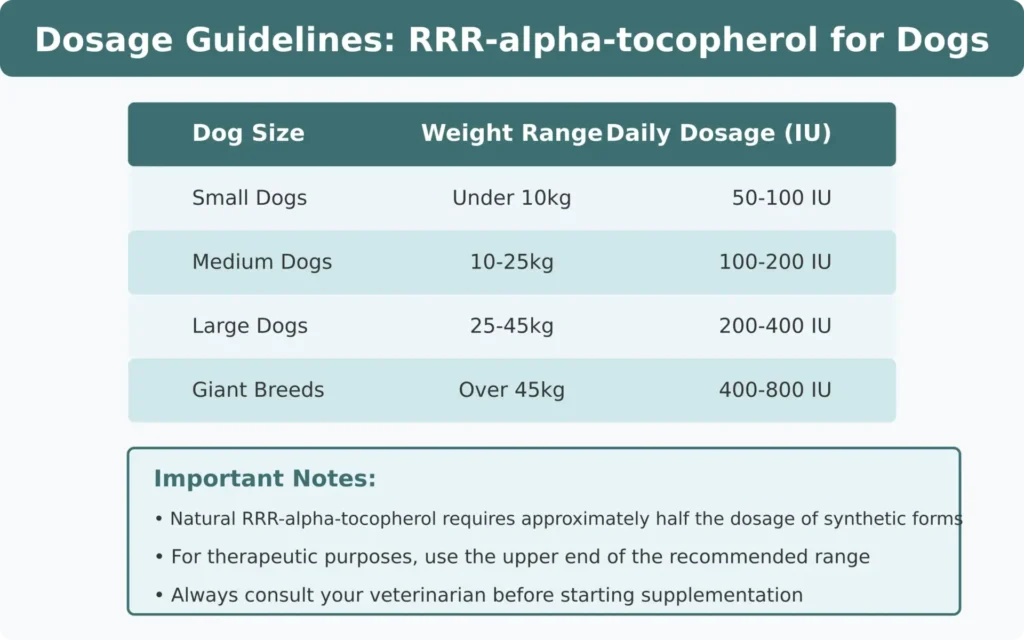
Weight-Based Recommendations
Small Dogs (under 10kg): 50-100 IU daily Medium Dogs (10-25kg): 100-200 IU daily Large Dogs (25-45kg): 200-400 IU daily Giant Breeds (over 45kg): 400-800 IU daily
Therapeutic vs Maintenance Dosing
Maintenance Support:
- Lower end of recommended range
- Suitable for general health maintenance
- Appropriate for preventative care
- Can be administered continuously
Therapeutic Applications:
- Upper end of recommended range
- Appropriate for specific health conditions
- May be adjusted based on clinical response
- Veterinary supervision recommended
Condition-Specific Considerations:
- Skin conditions may benefit from higher dosages
- Neurological support often requires upper-range dosing
- Joint and inflammatory conditions typically need median to upper ranges
- Senior dogs often benefit from more generous supplementation
Administration Methods
Oil-Based Formulations:
- Highest bioavailability
- Can be mixed with food
- Facilitates accurate dosing
- Supports optimal absorption
Vitamin E Oil for Dogs:
- Provides concentrated form of RRR-alpha-tocopherol
- Useful for both internal supplementation and topical application
- Particularly effective for localised skin conditions
- Can be applied directly to dry patches, hot spots, or minor wounds
- Offers flexible dosing options for precision administration
- Typically measured in drops for small dogs or fractions of a teaspoon for larger breeds
- Pure forms should be diluted with a carrier oil for topical use (such as coconut or olive oil)
- Look for cold-pressed, hexane-free oils for highest quality
Dry Supplements:
- Convenient capsule or tablet form
- May be incorporated into treat form
- Often combined with other nutrients
- Stability advantages for storage
Mixed Tocopherol Products:
- Provide balanced spectrum of vitamin E forms
- Enhance comprehensive antioxidant support
- Often preferred for specific conditions
- May offer synergistic benefits
Natural vs Synthetic Considerations:
- Natural RRR-alpha-tocopherol requires approximately half the dosage of synthetic forms
- Look for “d-alpha-tocopherol” on labels for natural form
- Avoid “dl-alpha-tocopherol” which indicates synthetic mixture
- Consider acetate or succinate forms for enhanced stability
Safety Considerations and Precautions
Potential Side Effects
Uncommon Effects:
- Mild digestive adjustment initially
- Temporary changes in stool consistency
- Rare instances of lethargy at very high doses
High-Dose Considerations:
- Potential anticoagulant effects at excessive levels
- Possible vitamin K antagonism
- Rare instances of altered thyroid hormone utilisation
- May affect vitamin A and D absorption at extreme doses
Contraindications
- Caution with anticoagulant medications
- Potential interaction with certain chemotherapy protocols
- Specific dosage adjustments for liver or kidney disease
- Consideration needed for dogs with coagulopathies
Drug Interactions
Medication Considerations:
- Warfarin and other anticoagulants (monitor clotting times)
- Certain chemotherapeutic agents (consult oncologist)
- Some immunosuppressive protocols (veterinary supervision required)
- Iron supplements (separate administration times)
Supplement Interactions:
- May enhance selenium utilisation
- Affects vitamin K cycling at high doses
- Consider balanced approach with other fat-soluble vitamins
- Synergistic with vitamin C supplementation
Frequently Asked Questions
Yes, RRR-alpha-tocopherol (natural vitamin E) is significantly more effective than synthetic vitamin E for dogs. Research demonstrates that natural vitamin E has approximately twice the bioavailability and retention in canine tissues. This superior efficacy stems from its molecular structure, which perfectly matches the alpha-tocopherol transport protein in the liver. While synthetic vitamin E (dl-alpha-tocopherol) contains only 12.5% of the active RRR isomer, natural vitamin E provides 100% of the most biologically active form. For practical purposes, this means dogs require approximately half the dosage of natural vitamin E to achieve the same biological effects as synthetic forms.
RRR-alpha-tocopherol provides comprehensive benefits for canine skin and coat health through multiple mechanisms. As a powerful antioxidant, it protects skin cell membranes from oxidative damage caused by environmental factors, including UV radiation and pollutants. It supports the skin’s barrier function by maintaining cell membrane integrity and promoting proper moisture retention. For the coat, vitamin E enhances follicle health and contributes to sebum quality, resulting in improved lustre, texture, and reduced brittleness. Clinical studies have shown particular benefits for dogs with atopic dermatitis, seasonal allergies, and age-related skin changes. Additionally, topical applications can complement systemic supplementation for localised skin concerns.
Yes, vitamin E oil can be safely applied directly to a dog’s skin for various dermatological benefits. When selecting vitamin E oil for topical use, look for pure RRR-alpha-tocopherol oil or mixed tocopherols without additional ingredients. For direct application, vitamin E oil should typically be diluted with a carrier oil such as coconut oil or olive oil at a ratio of approximately 1:1 to prevent potential irritation. This topical application is particularly effective for dry, flaky skin, minor wounds, hot spots, and areas of inflammation. For localised issues, apply a small amount 1-2 times daily until improvement is noted. For dogs with particularly sensitive skin, perform a patch test first by applying to a small area and monitoring for 24 hours. Vitamin E oil should not be applied to open wounds, infected areas, or used in place of veterinary care for serious skin conditions. Combined internal supplementation and external application often provides the most comprehensive approach to skin health management.
The duration of RRR-alpha-tocopherol supplementation depends on the specific purpose:
For general health maintenance: Continuous supplementation is appropriate with periodic veterinary review
For specific skin conditions: Typically 6-12 weeks initially, then reassess
For senior support: Long-term administration often beneficial
For athletic/working dogs: Season-specific supplementation or year-round depending on activity level
As a fat-soluble vitamin, RRR-alpha-tocopherol accumulates in tissues over time, creating a reserve that provides ongoing protection. However, consistent supplementation ensures optimal levels are maintained.
Yes, RRR-alpha-tocopherol can be beneficial for dogs with arthritis through several mechanisms. Its powerful antioxidant properties help neutralise reactive oxygen species that contribute to joint inflammation and cartilage degradation. Research has shown that vitamin E modulates inflammatory pathways, potentially reducing the production of pro-inflammatory cytokines involved in arthritis progression. It also helps protect synoviocytes (joint lining cells) from oxidative damage. While not a primary treatment for arthritis, RRR-alpha-tocopherol serves as a valuable complementary approach alongside conventional management strategies. For optimal results, it’s often combined with omega-3 fatty acids, glucosamine, and chondroitin in comprehensive joint support protocols.
RRR-alpha-tocopherol is generally safe for puppies when administered at appropriate dosages based on weight. Developing puppies benefit from its support of rapid cell division, immune system development, and protection against environmental oxidative challenges. However, puppies have different nutritional requirements than adult dogs, and supplementation should be approached cautiously. For puppies eating a complete and balanced commercial diet formulated for growth, additional supplementation may be unnecessary unless specifically recommended by a veterinarian. If supplementation is indicated, lower doses within the weight-based range are typically recommended, with gradual increases as the puppy matures.
Yes, RRR-alpha-tocopherol provides significant support for canine immune function through multiple pathways. Research demonstrates that it enhances T-cell proliferation and function, improves neutrophil activity, and supports optimal macrophage response. As a powerful antioxidant, it protects immune cells from self-generated reactive oxygen species produced during immune responses. Vitamin E also modulates cytokine production, helping maintain balanced inflammatory responses. Studies in both humans and animals show that optimal vitamin E status is associated with improved vaccine response, particularly in senior subjects. For dogs facing immune challenges, recovering from illness, or entering their senior years, appropriate RRR-alpha-tocopherol supplementation can provide valuable immune support.
The prefixes “d-” and “dl-” represent a crucial distinction in vitamin E supplements:
d-alpha-tocopherol: Designates the natural RRR-alpha-tocopherol form with 100% biological activity. This single isomer perfectly matches canine cellular receptors.
dl-alpha-tocopherol: Indicates synthetic all-rac-alpha-tocopherol, which contains eight different stereoisomers. Only one-eighth (12.5%) is the active RRR form, while the remaining seven isomers have significantly reduced biological activity.
This difference translates to approximately twice the potency for natural d-alpha-tocopherol compared to synthetic dl-alpha-tocopherol at equivalent doses. When selecting supplements, the “d-” prefix indicates the superior natural form.
Human vitamin E supplements are not ideal for dogs for several reasons. Dosages in human products are typically formulated for human weights, making appropriate canine dosing difficult. Many human supplements contain additional ingredients that may not be suitable for dogs, including sweeteners like xylitol, which is toxic to canines. Additionally, the specific form and carrier oils used in human products may not be optimised for canine absorption. If a human vitamin E product must be used temporarily, ensure it contains only d-alpha-tocopherol (natural form) without additional ingredients, and calculate the appropriate weight-based dose. However, veterinary-formulated supplements designed specifically for dogs are strongly preferred.
The timeframe for noticeable effects varies depending on the condition being addressed:
For skin and coat improvements: Typically 4-6 weeks as skin cell turnover occurs
For antioxidant protection: Begins within days but builds over 2-3 weeks
For immune support: Basic effects within 1-2 weeks, optimal effects in 4-6 weeks
For neurological benefits: Gradual improvement over 6-12 weeks
For inflammatory conditions: Initial effects may be noted within 2-4 weeks
Individual response varies based on the dog’s health status, age, and specific condition. Consistent administration is key for optimal results.
Yes, RRR-alpha-tocopherol works synergistically with numerous other supplements.
Particularly beneficial combinations include:
Vitamin C for regeneration of oxidised vitamin E
Selenium for enhanced antioxidant enzyme function
Omega-3 fatty acids for complementary anti-inflammatory effects
Coenzyme Q10 for mitochondrial support
Mixed carotenoids for comprehensive antioxidant protection
These combinations often provide greater benefits than individual supplements alone. Certain specific formulations have been studied for conditions such as cognitive dysfunction, joint disease, and dermatological issues. Always consult with a veterinarian before combining multiple supplements, especially for dogs with existing health conditions or those on medication.
RRR-alpha-tocopherol is particularly valuable for senior dogs facing age-related oxidative stress and inflammation. Aging canines experience natural increases in free radical production alongside decreases in endogenous antioxidant systems. This creates an environment where supplemental antioxidants become increasingly important. Vitamin E supports cognitive function, helps maintain muscle mass, supports immune function, and addresses the age-related increase in inflammatory processes. Senior dogs also benefit from its support of skin elasticity and barrier function, which often decline with age. For geriatric patients, starting with lower doses and gradually increasing helps ensure good tolerance, with many senior dogs benefiting from the higher end of the recommended dosage range.
RRR-alpha-tocopherol provides several benefits for dogs with cardiac conditions. Its antioxidant properties help protect cardiac muscle cells from oxidative damage, which is particularly important in conditions involving increased cardiac workload. Research indicates vitamin E helps maintain endothelial function, supporting healthy blood vessel elasticity and function. It also protects LDL cholesterol from oxidation, a process implicated in atherosclerosis development. Additionally, some studies suggest vitamin E may help modulate certain aspects of cardiac remodelling in response to stress. While not a primary treatment for heart disease, RRR-alpha-tocopherol can serve as a supportive element in comprehensive cardiac management plans. Always coordinate supplementation with your veterinary cardiologist, as certain heart medications may interact with high doses of vitamin E.
Conclusion
RRR-alpha-tocopherol represents a superior form of vitamin E supplementation for dogs, offering comprehensive antioxidant protection and wide-ranging health benefits. Its natural molecular structure enables optimal absorption, utilisation, and retention, making it significantly more effective than synthetic alternatives. From supporting skin and coat health to enhancing immune function, protecting neurological health, and maintaining muscle integrity, this powerful nutrient addresses multiple aspects of canine wellbeing. The key to success lies in selecting high-quality supplements containing the natural RRR form, administering appropriate weight-based dosages, and maintaining consistency. When properly implemented as part of a comprehensive health management approach, RRR-alpha-tocopherol supplementation can significantly contribute to your dog’s health, vitality, and longevity. As with any supplement, veterinary consultation remains essential, particularly for dogs with existing health conditions or those on medication regimens.