


Understanding Sophora Japonica’s Role in Canine Health
Sophora japonica (Japanese pagoda tree), a deciduous tree native to East Asia, has emerged as a significant botanical supplement in canine health management. This botanical treasure provides one of nature’s richest sources of quercetin and other bioactive flavonoids that modulate inflammatory responses, support vascular health, and enhance antioxidant protection. This comprehensive guide explores the scientific evidence, biochemical mechanisms, and therapeutic applications of Sophora japonica in canine health management.
Summary
Sophora japonica flower buds and fruit contain exceptional concentrations of bioactive flavonoids, particularly quercetin and rutin, alongside other phytochemicals with complementary therapeutic actions. Modern research has validated the effectiveness of these compounds in supporting anti-inflammatory pathways, reducing histamine responses, protecting against oxidative damage, and supporting vascular and connective tissue health. The diverse phytochemical profile of Sophora japonica enables multiple therapeutic pathways that benefit canine health through both acute and long-term administration.
Key Takeaways
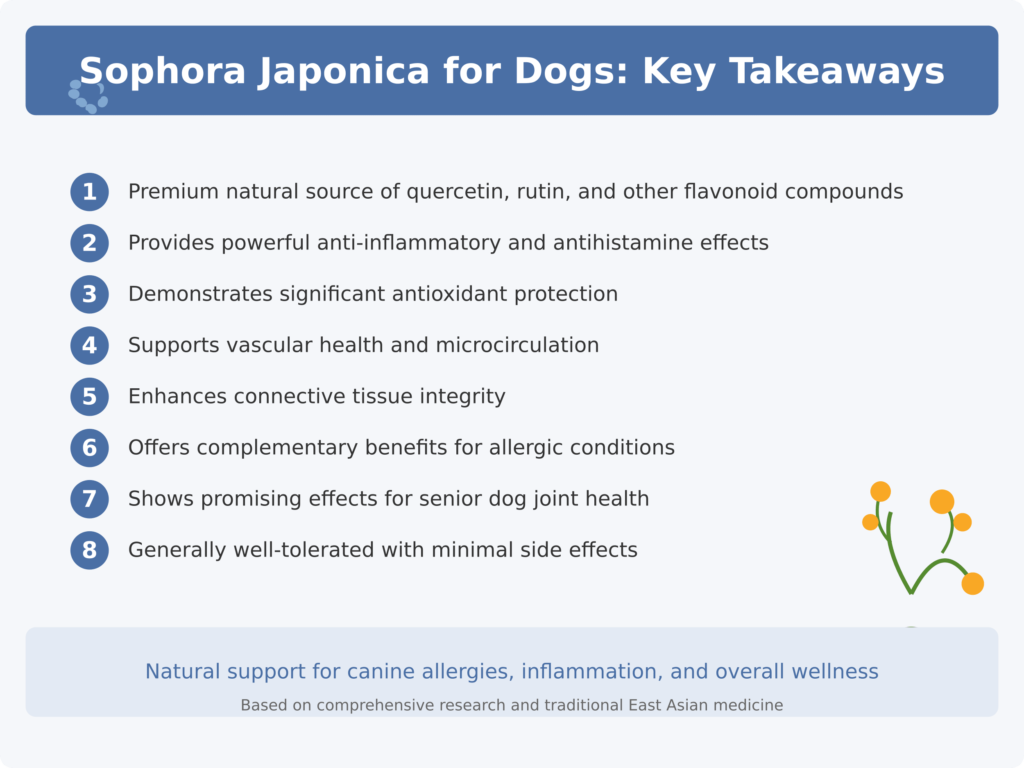
- Premium natural source of quercetin, rutin, and other flavonoid compounds
- Provides powerful anti-inflammatory and antihistamine effects
- Demonstrates significant antioxidant protection
- Supports vascular health and microcirculation
- Enhances connective tissue integrity
- Offers complementary benefits for allergic conditions
- Shows promising effects for senior dog joint health
- Generally well-tolerated with minimal side effects
Table of Contents
Understanding Sophora Japonica’s Role in Canine Health
- Summary
- Key Takeaways
Bioactive Compounds and Composition
- Primary Flavonoid Components
- Secondary Compounds
- Nutritional Elements
- Anti-inflammatory Pathways
- Antihistamine Effects
- Antioxidant Protection Systems
- Endothelial and Microcirculatory Support
Health Benefits and Applications
- Allergic Response Management
- Inflammatory Condition Support
- Additional Therapeutic Applications
Sophora Japonica as a Source of Quercetin
- Comparative Quercetin Content
- Bioavailability Considerations
- Synergistic Compound Effects
- Weight-Based Recommendations
- Form-Specific Considerations
- Duration of Administration
- Supplement Forms
- Integration Strategies
- Absorption Optimisation
Safety Considerations and Precautions
- Potential Side Effects
- Contraindications
- Quality and Sourcing Importance
FAQ – Sophora Japonica for Dogs
- Common Questions and Answers
What is Sophora Japonica?
Sophora japonica (also known as Styphnolobium japonicum) is a deciduous tree belonging to the Fabaceae family. Originally native to China and Korea, this majestic tree has been cultivated throughout Asia and Europe for centuries for both ornamental and medicinal purposes. Various parts of the plant are used medicinally, including:
- Flower buds (highest quercetin concentration)
- Fruits and pods
- Seeds
- Leaves (to a lesser extent)
- Root bark (specific traditional applications)
In traditional East Asian medicine, Sophora japonica has been used for over 2,000 years for its haemostatic, anti-inflammatory, and cooling properties, with modern research confirming many of these traditional applications through identification of its bioactive compounds. (1,2,3,4)
Bioactive Compounds and Composition
Primary Flavonoid Components
- Quercetin and Derivatives:
- Quercetin: 1.5-2.7% in flower buds (15,000-27,000 mg/kg)
- Quercetin-3-O-glucoside
- Quercetin-3-O-rutinoside
- Isoquercetin
- Quercetin glycosides (various forms)
- Rutin and Related Compounds:
- Rutin (quercetin-3-O-rutinoside): 15-20% in flower buds
- Kaempferol: 0.1-0.3%
- Kaempferol glycosides
- Isorhamnetin derivatives
- Other Flavonoids:
- Genistein
- Sophoricoside
- Sophorabioside
- Trioxaundecanoic acid
Secondary Compounds
- Triterpenoids and Saponins:
- Sophoradiol
- Betulinic acid
- Soyasaponins
- Various triterpene glycosides
- Isoflavones and Alkaloids:
- Sophocarpine
- Matrine
- Oxymatrine
- Cytisine (in seeds)
- Nutritional Elements:
- Essential minerals (calcium, potassium, magnesium)
- Trace minerals
- Amino acids
- Polysaccharides
Mechanisms of Action
Anti-inflammatory Pathways
- NF-κB Inhibition Mechanisms:
- Inhibition of IκB kinase (IKK) activation
- Prevention of IκB phosphorylation and degradation
- Reduced nuclear translocation of NF-κB
- Decreased inflammatory gene transcription
- Modulation of upstream signalling cascades
- Prostaglandin Synthesis Modulation:
- Selective inhibition of cyclooxygenase-2 (COX-2)
- Regulation of phospholipase A2 activity
- Modulation of arachidonic acid metabolism
- Reduction of prostaglandin E2 production
- Balance of prostacyclin/thromboxane ratio
- Cytokine Regulation:
- Reduction of pro-inflammatory cytokines (IL-1β, IL-6, TNF-α)
- Modulation of IL-4 and IL-13 in allergic responses
- Influence on chemokine production and function
- Support for anti-inflammatory cytokine expression
- Regulation of cytokine receptor sensitivity
Antihistamine Effects
- Mast Cell Stabilisation:
- Inhibition of mast cell degranulation
- Reduction of histamine release
- Stabilisation of cellular membranes
- Calcium channel modulation
- Inhibition of phosphodiesterase activity
- Histamine Receptor Regulation:
- Competitive inhibition at H1 receptors
- Modulation of receptor signalling pathways
- Downregulation of receptor expression
- Alteration of receptor sensitivity
- Interference with downstream signalling
Antioxidant Protection Systems
- Free Radical Neutralisation:
- Direct scavenging of hydroxyl radicals
- Superoxide anion neutralisation
- Hydrogen peroxide decomposition
- Singlet oxygen quenching
- Inhibition of lipid peroxidation chain reactions
- Cellular Antioxidant Enhancement:
- Upregulation of glutathione synthesis
- Increased activity of superoxide dismutase
- Enhanced catalase expression
- Support for glutathione peroxidase function
- Activation of Nrf2-dependent antioxidant response elements
Endothelial and Microcirculatory Support
- Vascular Function Enhancement:
- Increased nitric oxide production
- Endothelial nitric oxide synthase activation
- Improved endothelial integrity
- Enhanced vasodilation capacity
- Reduced vascular permeability
- Microcirculation Optimisation:
- Prevention of abnormal platelet aggregation
- Improved erythrocyte flexibility
- Enhanced capillary flow dynamics
- Reduced microvessel leakage
- Support for lymphatic drainage
Health Benefits and Applications
Allergic Response Management
- Seasonal Allergies:
- Reduction of nasal and ocular symptoms
- Decreased respiratory reactivity
- Diminished itching and irritation
- Support during peak allergen seasons
- Complementary to conventional management
- Contact Sensitivities:
- Reduced dermatological reactions
- Decreased pruritus (itching)
- Improved skin barrier function
- Lessened inflammatory response to allergens
- Support for recovery from flare-ups
- Food Reactivity Support:
- Modulation of gastrointestinal immune responses
- Reduction of digestive inflammation
- Support for mucosal barrier function
- Complementary management for food sensitivities
- Enhanced digestion and absorption
Inflammatory Condition Support
- Joint and Mobility Enhancement:
- Reduction of joint inflammation
- Support for cartilage matrix integrity
- Decreased inflammatory enzyme activity
- Modulation of synovial fluid composition
- Complementary to structural joint supplements
- Dermatological Applications:
- Management of inflammatory skin conditions
- Reduction of excessive mast cell activity
- Support for dermal blood flow
- Enhancement of healing processes
- Protection against oxidative damage
- Vascular and Cardiac Health:
- Support for cardiovascular function
- Enhancement of capillary integrity
- Reduction of oxidative stress
- Modulation of blood viscosity
- Support for healthy blood pressure
Additional Therapeutic Applications
- Senior Dog Support:
- Management of age-related inflammation
- Cognitive function support
- Protection against oxidative age-related changes
- Maintenance of vascular health
- Complementary to senior dog supplements
- Athletic Dog Recovery:
- Support during periods of physical stress
- Enhanced recovery from exercise
- Reduction of exercise-induced inflammation
- Vascular support during peak performance
- Antioxidant protection during increased metabolism
- Immune System Modulation:
- Balancing of immune responses
- Support during immune challenges
- Reduction of excessive inflammatory reactions
- Enhancement of cellular immune function
- Complementary to immune-supportive protocols
Sophora Japonica as a Source of Quercetin
Comparative Quercetin Content
- Superior Natural Concentration:
- Sophora japonica flower buds: 1.5-2.7% (15,000-27,000 mg/kg)
- Onions: 300-600 mg/kg
- Capers: 1,800 mg/kg
- Apples: 20-45 mg/kg
- Broccoli: 30-50 mg/kg
- Specific Plant Part Variations:
- Flower buds: Highest concentration (1.5-2.7%)
- Fruits: Moderate concentration (0.3-0.7%)
- Leaves: Lower concentration (0.1-0.3%)
- Comparison with other quercetin-containing medicinals
- Extraction Efficiency:
- Standardised extracts available (40-95% flavonoids)
- Quercetin-specific extraction methods
- Retention of complementary compounds
- Quality control considerations
- Seasonal harvesting variations
Bioavailability Considerations
- Enhanced Absorption Factors:
- Natural co-occurrence with rutin improves quercetin absorption
- Presence of glycoside forms increases bioavailability
- Lipid-based delivery systems enhance utilisation
- Micronisation improves uptake
- Digestive factors affecting absorption
- Metabolism and Utilisation:
- Hepatic processing of quercetin compounds
- Formation of active metabolites
- Tissue distribution patterns
- Plasma half-life of different forms
- Factors affecting metabolic conversion
Synergistic Compound Effects
- Complementary Flavonoid Actions:
- Rutin enhances vascular benefits
- Kaempferol provides additional anti-inflammatory effects
- Isorhamnetin offers complementary antioxidant activity
- Glycoside forms provide staged release and absorption
- Combined flavonoid spectrum for broader activity
- Supporting Compound Interactions:
- Triterpenoids enhance anti-inflammatory effects
- Saponins improve membrane permeability for absorption
- Isoflavones provide additional antioxidant capacity
- Alkaloids contribute unique pharmacological effects
- Polysaccharides support immune modulation
- Whole Plant vs. Isolated Quercetin:
- Advantages of natural compound ratios
- Balanced pharmacological activity
- Improved tolerability and safety profile
- Traditional medicine perspective on whole plant benefits
- Modern research on entourage effects
Dosage Guidelines
Weight-Based Recommendations
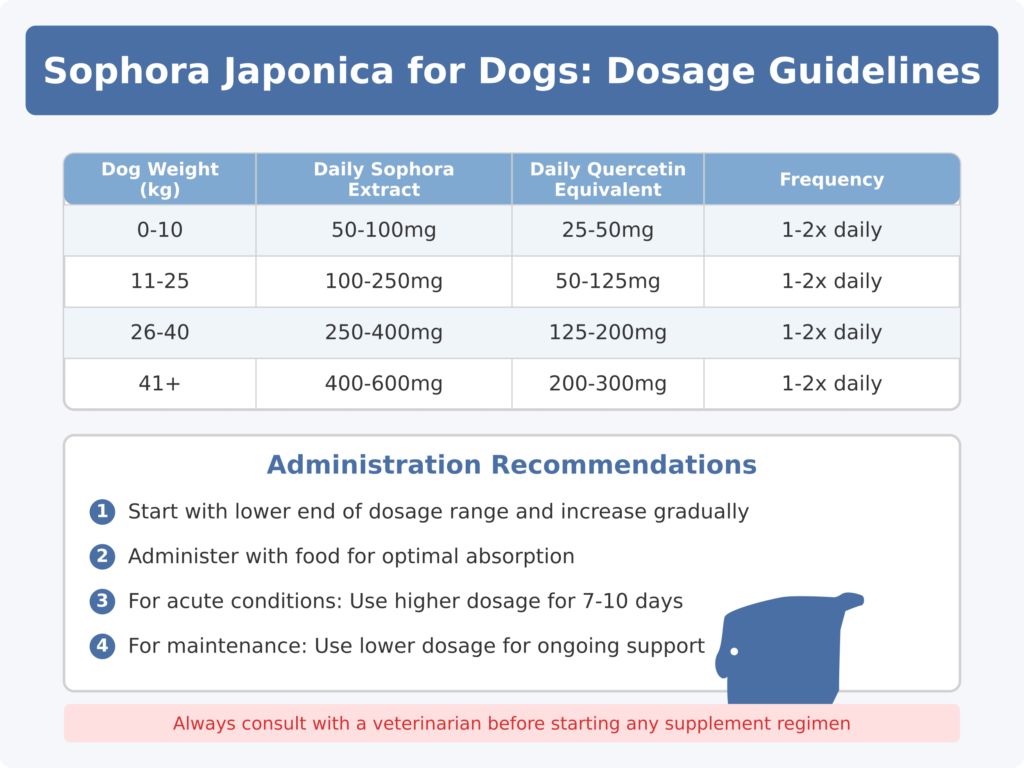
Form-Specific Considerations
- Extract Standardisation:
- Standardised to flavonoid content (40-95%)
- Quercetin-specific quantification
- Rutin content considerations
- Total bioflavonoid profile
- Extraction method impacts on composition
- Whole Plant Preparations:
- Dried flower buds (lower concentration)
- Tinctures and liquid extracts
- Traditional decoctions
- Powdered whole plant material
- Adjustment factors for different preparations
Duration of Administration
- Acute Applications:
- Seasonal allergy support: 2-3 months during peak seasons
- Contact reaction management: 2-4 weeks during flare-ups
- Post-exercise recovery: 3-7 days after intense activity
- Loading phase considerations: Higher initial dosing for 7-10 days
- Long-Term Support:
- Chronic inflammatory conditions: Ongoing with periodic assessment
- Senior dog support: Continuous with occasional breaks
- Preventative applications: Cyclical administration
- Maintenance dosing strategies
- Monitoring protocols for long-term use
Administration Methods
Supplement Forms
- Powder and Capsules:
- Standardised extract powders
- Encapsulated preparations
- Micronised forms for enhanced absorption
- Powdered whole plant material
- Combined formulations with complementary ingredients
- Liquid Preparations:
- Tinctures (alcohol or glycerine-based)
- Fluid extracts
- Liposomal delivery systems
- Water-soluble complexes
- Flavoured liquid formulations for palatability
- Specialised Delivery Systems:
- Phospholipid complexes for enhanced absorption
- Time-release formulations
- Chewable and flavoured tablets
- Soft chews with palatability enhancers
- Micro-encapsulated forms for improved stability
Integration Strategies
- Dietary Incorporation:
- Mixed with moist food
- Added to home-prepared meals
- Incorporated into treats or snacks
- Delivery with healthy fats for absorption
- Combination with prebiotics for gut health
- Complementary Supplement Protocols:
- Co-administration with omega fatty acids
- Combination with glucosamine/chondroitin for joint health
- Synergistic use with probiotics
- Integration with senior dog support formulas
- Companion to immune-supportive supplements
Absorption Optimisation
- Timing Considerations:
- Administration with meals containing fat improves absorption
- Divided dosing for maintained blood levels
- Consistency in daily timing
- Strategic timing for specific conditions
- Consideration of circadian influences
- Bioavailability Enhancement:
- Co-administration with vitamin C
- Bromelain as absorption enhancer
- Lipid-based delivery vehicles
- Piperine for metabolic protection
- Technological enhancements in commercial formulations
Safety Considerations and Precautions
Potential Side Effects
- Digestive Considerations:
- Occasional mild gastrointestinal upset
- Transient changes in stool consistency
- Adaptation periods for digestive comfort
- Individual sensitivity variations
- Mitigation strategies for sensitive individuals
- Rare Effects:
- Allergic reactions to Fabaceae (legume) family plants
- Potential for herb-drug interactions
- Effects on blood clotting at very high doses
- Individual sensitivity to specific compounds
- Monitoring protocols for long-term use
Contraindications
- Medical Conditions:
- Caution with pre-existing liver disease
- Consideration in cases of clotting disorders
- Monitoring with certain cardiovascular conditions
- Adjustment for dogs with compromised kidney function
- Veterinary supervision for complex medical cases
- Medication Interactions:
- Potential interactions with anticoagulant medications
- Consideration with certain immunosuppressive drugs
- Possible effects on some antibiotic absorption
- Monitoring with hepatically metabolised medications
- Timing adjustments to minimise interaction potential
Quality and Sourcing Importance
- Cultivation and Harvesting:
- Organic cultivation preferred
- Proper harvest timing for optimal flavonoid content
- Sustainable harvesting practices
- Regional variation in phytochemical profiles
- Traditional harvesting knowledge
- Processing and Extraction:
- Low-temperature drying to preserve compounds
- Appropriate extraction methods for desired components
- Standardisation protocols
- Solvent considerations
- Clean processing methods
- Quality Control:
- Testing for flavonoid content
- Screening for contaminants and adulterants
- Microbial testing
- Heavy metal analysis
- Stability and shelf-life monitoring
FAQ – Sophora Japonica for Dogs
Sophora japonica (Japanese pagoda tree) is a medicinal plant that contains exceptionally high levels of quercetin and other flavonoids that provide multiple health benefits for dogs. These compounds work primarily through:
Anti-inflammatory mechanisms that help reduce pain and swelling
Antihistamine effects that support management of allergic conditions
Antioxidant protection that guards against cellular damage
Vascular support that enhances microcirculation
The most commonly used parts are the flower buds and fruits, which contain the highest concentration of beneficial compounds. For dogs, the primary benefits include management of allergic conditions, support for inflammatory issues like arthritis, enhancement of skin health, and support for senior dogs’ overall wellbeing.
Sophora japonica extracts are generally safe for dogs when administered in appropriate amounts. The long history of use in traditional medicine and modern safety studies provide a good safety profile. However, considerations include:
Proper Dosing:
Follow weight-based guidelines
Start with lower doses and increase gradually
Monitor individual response
Precautions:
Not recommended for pregnant or lactating dogs without veterinary guidance
Use cautiously with dogs on blood-thinning medications
May interact with certain pharmaceutical drugs
Use with veterinary supervision in dogs with liver or kidney disease
Most dogs tolerate Sophora japonica well, with side effects being rare and typically limited to mild digestive adjustment when first introduced.
Sophora japonica offers several advantages over other quercetin sources:
Superior Concentration:
Contains 1.5-2.7% quercetin in flower buds, significantly higher than most food sources
Provides quercetin in naturally occurring glycoside forms that enhance absorption
Contains rutin (15-20%), which complements quercetin’s actions
Synergistic Components:
Natural co-occurrence of multiple flavonoids enhances overall effects
Contains supportive compounds that improve bioavailability
Traditional formulation provides balanced phytochemical profile
Practical Advantages:
Standardised extracts ensure consistent dosing
Lower effective dose needed due to higher concentrations
Long history of traditional use provides safety information
Can be more economical due to higher potency
These advantages make Sophora japonica a preferred quercetin source in many veterinary supplements.
The timeframe for observing effects depends on the condition being addressed:
For Allergic Conditions:
Initial improvements: Often within 7-14 days
Significant effects: 2-4 weeks of consistent use
Maximum benefits: 4-6 weeks of regular administration
For Inflammatory Conditions:
Acute inflammation: Some improvement within 5-7 days
Chronic conditions: Gradual improvement over 3-4 weeks
Optimal results: May require 4-8 weeks of consistent use
For Preventative Support:
Antioxidant protection: Begins immediately but effects cumulative
Vascular health: Gradual improvements over several weeks
Overall well-being: Variable timeline dependent on individual dog
For best results, consistent daily administration according to recommended dosages is essential, with some conditions responding more quickly than others.
Yes, Sophora japonica can be particularly effective for managing seasonal allergies in dogs through multiple mechanisms:
Antihistamine Effects:
Stabilises mast cells, reducing histamine release
Competes with histamine at receptor sites
Reduces the overall allergic response cascade
Decreases inflammatory mediator production
Anti-inflammatory Benefits:
Reduces inflammation in nasal passages and eyes
Decreases skin inflammation and itching
Modulates immune response to allergens
Supports respiratory comfort
Practical Application:
Best started 2-3 weeks before allergy season begins
Most effective when used consistently throughout exposure period
Can be used alongside conventional treatments if needed
May allow reduction in other medications (with veterinary supervision)
For optimal results with seasonal allergies, consistent daily administration throughout the allergy season is recommended, with many dogs showing significant improvement in comfort and reduction of symptoms.
Sophora japonica can provide significant support for dogs with joint issues through several mechanisms:
Anti-inflammatory Actions:
Inhibits key inflammatory enzymes in joint tissues
Reduces production of inflammatory cytokines
Modulates prostaglandin synthesis
Decreases joint swelling and associated discomfort
Antioxidant Protection:
Neutralises free radicals that damage joint tissues
Protects synovial fluid from oxidative degradation
Supports cartilage cell health
Reduces oxidative stress in joint structures
Circulatory Enhancement:
Improves microcirculation around joint capsules
Enhances nutrient delivery to joint tissues
Supports removal of inflammatory waste products
Improves overall joint environment
While not a replacement for structural joint supplements like glucosamine and chondroitin, Sophora japonica works complementarily with these ingredients, often providing more immediate comfort while structural supports build up in the system.
Senior dogs can benefit significantly from Sophora japonica supplementation through multiple age-supportive mechanisms:
Inflammatory Management:
Helps address age-related chronic inflammation
Supports comfort and mobility in ageing joints
Reduces inflammatory burden on multiple systems
Supports quality of life and comfort
Vascular Health Support:
Enhances microcirculation throughout the body
Supports brain blood flow and cognitive function
Maintains capillary integrity
Promotes healthy blood pressure regulation
Antioxidant Protection:
Guards against age-accelerating oxidative damage
Supports cellular longevity and function
Protects against free radical accumulation
Complements endogenous antioxidant systems
These combined benefits make Sophora japonica a valuable addition to comprehensive senior care protocols, especially when used consistently as part of a holistic approach to healthy ageing.
Sophora japonica can be given with many medications, but certain precautions should be observed:
Generally Compatible With:
Most joint supplements (glucosamine, chondroitin, MSM)
Many antibiotics (with proper timing)
Most probiotics and digestive supplements
Common heart medications (with veterinary supervision)
Typical thyroid medications
Exercise Caution With:
Blood-thinning medications (warfarin, aspirin)
Certain immunosuppressive drugs
Some chemotherapy protocols
Medications with narrow therapeutic windows
Drugs primarily metabolised through specific liver pathways
Administration Tips:
Separate administration times by 2 hours when possible
Consult with veterinarian about specific drug interactions
Consider reduced dosing when using with similar-acting medications
Monitor for any unusual effects when starting concurrently with medications
Always inform your veterinarian about all supplements being given to ensure safe integration with prescription medications.
The optimal form depends on your dog’s specific needs and preferences:
For Maximum Potency:
Standardised extracts (95% flavonoids) provide the most consistent and potent effects
Capsules offer precise dosing and avoid taste issues
Liposomal formulations enhance absorption of active compounds
For Ease of Administration:
Flavoured chews or soft treats for picky dogs
Liquid extracts that can be added directly to food
Powders that can be mixed thoroughly with wet food
For Specific Conditions:
Combined formulations with glucosamine for joint issues
Products with added bromelain for enhanced absorption
Formulations with complementary herbs for targeted effects
When selecting a product, look for standardisation information, clear dosing guidelines, and quality manufacturing practices. The best form ultimately depends on your dog’s size, preferences, and the specific health concerns being addressed.
Conclusion
Sophora japonica represents a valuable botanical supplement for supporting canine health through its exceptional content of quercetin, rutin, and other bioactive flavonoids. These compounds work through multiple complementary mechanisms to reduce inflammation, modulate histamine responses, protect against oxidative damage, and support vascular and connective tissue health. The natural synergy of compounds in Sophora japonica extracts provides advantages over isolated quercetin, offering a balanced phytochemical profile with enhanced bioavailability and comprehensive activity.
When properly administered at appropriate dosages, Sophora japonica provides a safe, effective option for managing allergic conditions, supporting joint health, enhancing skin integrity, and promoting overall wellbeing in dogs of all ages, with particular benefits for senior animals. Success depends on proper dosing, consistent administration, quality sourcing, and integration into holistic health management strategies. Always consult with a veterinarian before starting any supplement regimen, especially for dogs with existing health conditions or those on medication.
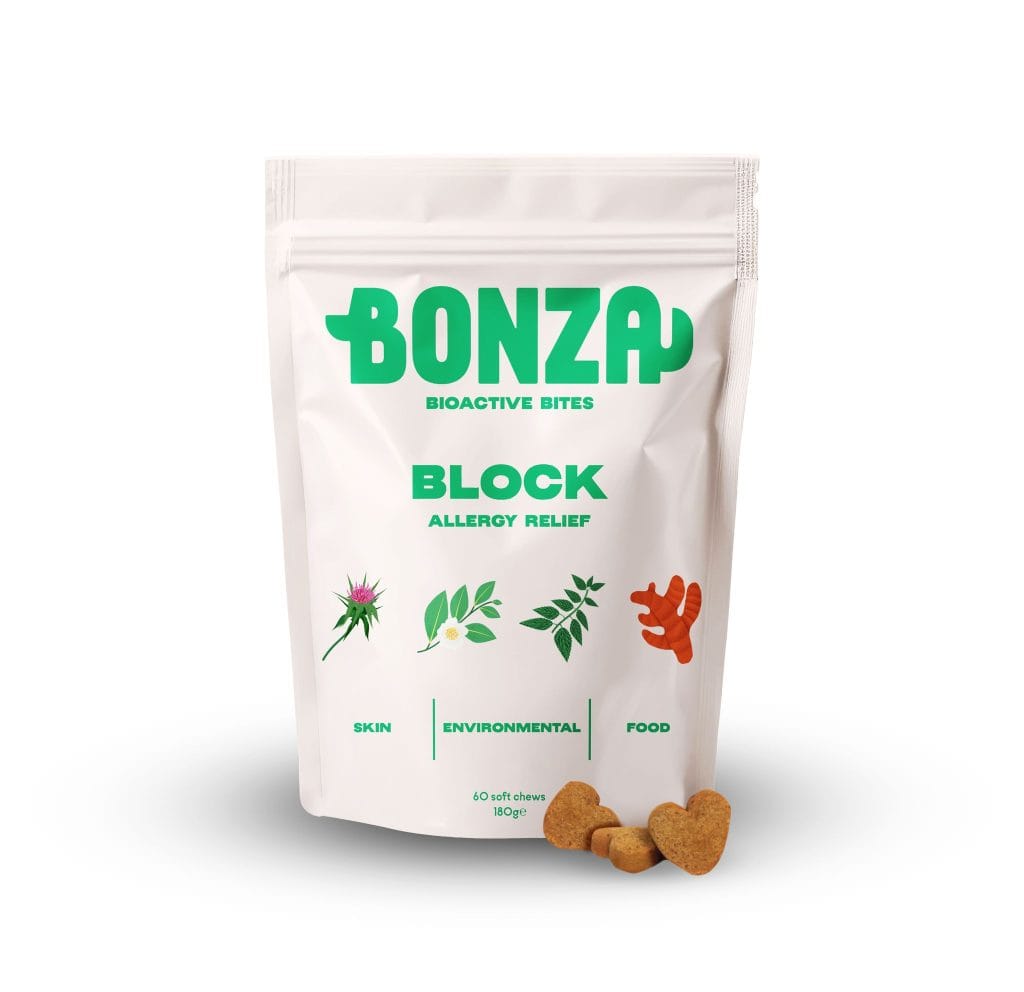
Bonza offers a highly effective natural antihistamine supplement for dog allergies, Bonza Block, that targets the causes of the most common dog allergic responses – food, environmental and fleas.
The following article may be of interest if you would like to investigate the science that underlies the best quercetin supplement for dogs.