

Ayurvedic Medicine for Dogs – Discover The Impacts
Ayurveda, the ancient Indian healing system with over 5,000 years of history, offers a holistic approach to canine health that goes beyond conventional pet care. By identifying your dog’s unique constitution (dosha) and tailoring diet, lifestyle, and herbal remedies accordingly, you can address the root causes of health imbalances rather than just treating symptoms. This article explores how Ayurvedic principles can enhance your dog’s wellbeing, from personalised nutrition to natural remedies for common ailments, creating a deeper bond between you and your canine companion.
Key Takeaways
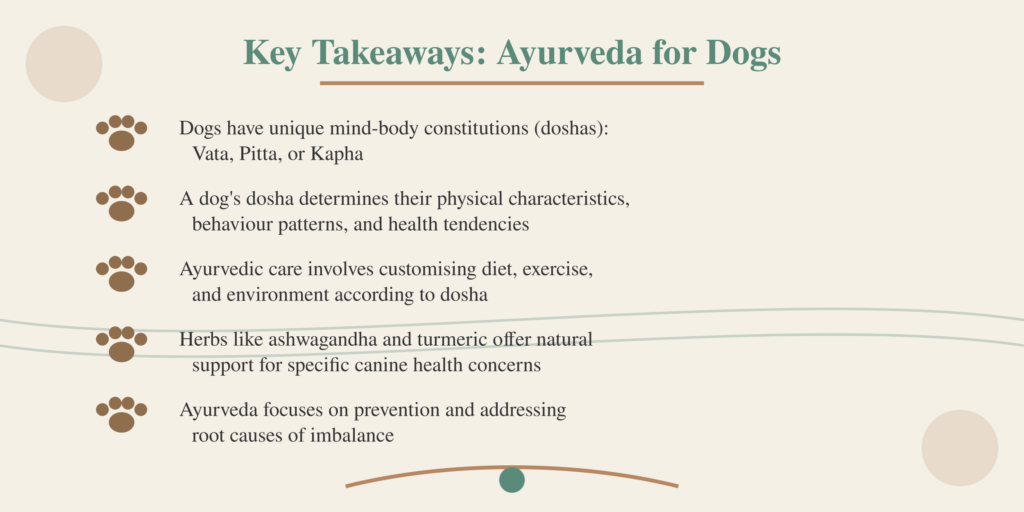
- Dogs, like humans, have unique mind-body constitutions (doshas): Vata, Pitta, or Kapha
- A dog’s dosha determines their physical characteristics, behaviour patterns, and health tendencies
- Ayurvedic care involves customising diet, exercise, and environment according to dosha
- Herbs like ashwagandha and turmeric offer natural support for specific canine health concerns
- Balancing doshas can improve digestion, skin health, joint function, and emotional wellbeing
- Ayurveda focuses on prevention and addressing root causes of imbalance
Table of Contents
- Origins and Philosophy
- The Five Elements and Three Doshas
- Principles of Ayurvedic Healing
- Preventative vs. Reactive Approaches
Understanding Your Dog’s Dosha
- Vata Dogs: Characteristics and Tendencies
- Pitta Dogs: Characteristics and Tendencies
- Kapha Dogs: Characteristics and Tendencies
- Mixed Dosha Types
Ayurveda for Canine Digestive Health
- Dosha-Specific Diets
- Meal Timing and Feeding Practices
- Digestive Herbs for Dogs
Ayurveda for Skin and Coat Care
- Balancing Oils for Different Doshas
- Natural Remedies for Skin Issues
- Seasonal Adjustments
Ayurveda for Joint Health and Mobility
- Vata-Balancing Practices for Arthritic Dogs
- Pitta-Calming Approaches for Inflammation
- Supporting Kapha Dogs’ Structural Health
Emotional Wellbeing and Behaviour
- Reducing Anxiety in Vata-Dominant Dogs
- Calming Aggression in Pitta Dogs
- Motivating Kapha Dogs
Ayurvedic Ingredients and Their Impacts
- Herbs for All Doshas
- Vata-Pacifying Herbs
- Pitta-Pacifying Herbs
- Kapha-Pacifying Herbs
- Proper Dosage and Administration
Creating an Ayurvedic Lifestyle for Your Dog
- Daily Routines (Dinacharya)
- Exercise Recommendations by Dosha
- Creating Balanced Environments
What is Ayurveda?
Origins and Philosophy
Ayurveda, often translated as “the science of life,” originated in India more than 5,000 years ago. This comprehensive healing system views health as the harmonious balance between body, mind, and spirit, rather than simply the absence of disease. For dogs as well as humans, Ayurveda sees optimal health as the natural state that occurs when we live in alignment with nature’s rhythms and our individual constitution.
Historical texts describe early veterinary practices in Ayurveda (1), with animal healers like Sali Hotra documenting treatments for various animal ailments. These approaches focus on supporting the body’s innate healing abilities through diet, herbs, lifestyle adjustments, and sensory therapies.
The Five Elements and Three Doshas
The foundation of Ayurveda is the understanding that all living beings are composed of five elements: earth, water, fire, air, and ether (space). These elements combine to form three biological energies or metabolic types called doshas: Vata, Pitta, and Kapha.
Each dog has a unique combination of these doshas established at conception, though one or two typically predominate. This individual constitution influences everything from physical appearance and behavior to tendencies toward specific health issues.
- Vata (air and ether) governs movement, circulation, respiration, and the nervous system
- Pitta (fire and water) controls digestion, metabolism, and body temperature
- Kapha (earth and water) maintains structure, lubrication, and immunity
When these doshas remain in balance according to a dog’s natural constitution, health thrives. When they become imbalanced due to poor diet, stress, environment, or other factors, health problems develop.
What is Ayurvedic Medicine?
Principles of Ayurvedic Healing
Ayurvedic medicine for dogs follows the same fundamental principles as human Ayurveda. It aims to restore balance to the body by identifying and addressing the root causes of imbalance, rather than merely suppressing symptoms. This holistic approach considers all aspects of a dog’s life, from diet and exercise to environment and emotional wellbeing.
The key principles include:
- Individualisation: Treatment is customised to each dog’s unique constitution
- Balancing opposing forces: Using qualities opposite to the imbalance to restore harmony
- Food as medicine: Diet as the foundation of health and healing
- Sensory therapies: Using touch, smell, sight, and sound to influence health
- Gentle, natural interventions: Herbs, oils, and lifestyle adjustments instead of harsh treatments
Preventative vs. Reactive Approaches
Unlike many modern veterinary approaches that focus on treating disease after it appears, Ayurveda emphasises prevention through lifestyle management. By maintaining balance in a dog’s doshas through appropriate diet, activity, and environment, many health issues can be avoided altogether.
When imbalances do occur, Ayurvedic medicine looks beyond symptoms to identify and treat the underlying cause. For example, rather than simply treating a skin condition with topical medication, an Ayurvedic approach might address the digestive imbalance or excess heat in the body that manifests as skin problems.
Understanding Your Dog’s Dosha
Vata Dogs: Characteristics and Tendencies
Vata-dominant dogs tend to have lean builds with light bones and prominent joints. They’re typically smaller in size, though breeds of all sizes can have Vata characteristics. Their coat may be thin or rough, and they often have dry skin.
Physical traits:
- Slim body with difficulty gaining weight
- Tendency toward cold
- Quick, light movements
- Variable appetite and thirst
- Sensitive digestion with tendency toward gas and constipation
Behavioural traits:
- Highly active and energetic
- Excitable and easily startled
- Quick learners but may have short attention spans
- Tendency toward anxiety or nervousness
- May be restless sleepers
Health tendencies:
- Arthritis and joint problems
- Dry skin and coat
- Nervous disorders
- Constipation or irregular elimination
- Weight loss when stressed
Pitta Dogs: Characteristics and Tendencies
Pitta dogs typically have a medium build with good muscle tone and moderate bone structure. They often have a shiny coat and warm skin.
Physical traits:
- Athletic, muscular body
- Strong appetite and thirst
- Good but fast digestion
- Sensitivity to heat
- Strong body odour
Behavioural traits:
- Focused, determined, and goal-oriented
- Intelligent and trainable
- Can be competitive or territorial
- May show irritability or aggression when imbalanced
- Precise in movements and actions
Health tendencies:
- Skin inflammations and allergies
- Excessive body heat
- Acidic stomach
- Liver and blood disorders
- Eye inflammation
Kapha Dogs: Characteristics and Tendencies
Kapha-dominant dogs have solid, heavy builds with thick bones and well-developed muscles. They tend to be larger in size with dense coats and oily skin.
Physical traits:
- Sturdy, heavy frame
- Tendency to gain weight easily
- Slow, steady movements
- Strong stamina and endurance
- Thick, oily coat
Behavioural traits:
- Calm, steady temperament
- Patient and loyal
- Slow to learn but excellent retention
- Resistance to change
- Affectionate and devoted
Health tendencies:
- Weight gain and obesity
- Respiratory congestion
- Water retention
- Sluggish digestion
- Cysts and growths
Mixed Dosha Types
While most dogs have one predominant dosha, many exhibit a blend of two doshas (dual-dosha types) or even a relatively equal balance of all three (tri-doshic). For example, a Vata-Pitta dog would combine the lightness and activity of Vata with the focus and intensity of Pitta.
Identifying your dog’s unique constitution requires observing their physical characteristics, behavior patterns, and health tendencies. Various online quizzes and assessments can help determine your dog’s dosha profile, which provides the foundation for customizing their care.
Ayurveda for Canine Digestive Health
Dosha-Specific Diets
According to Ayurveda, proper digestion is the cornerstone of health. Each dosha requires specific food qualities to maintain balance:
Vata dogs benefit from:
- Warm, moist, easily digestible foods
- Regular feeding schedule
- Cooked rather than raw foods
- Healthy fats like algal or fish oil
- Sweet, sour, and salty tastes
- Avoiding dry, cold, or raw foods that increase Vata
Pitta dogs benefit from:
- Cooling foods with moderate moisture
- Lean proteins from plant-based sources like peas, fava beans, chickpeas (and other legumes) or turkey and chicken breast if you must feed meat
- Vegetables with cooling properties
- Sweet, bitter, and astringent tastes
- Avoiding spicy, oily, or fermented foods that increase Pitta
Kapha dogs benefit from:
- Light, dry, warming foods
- Lean proteins
- Low-fat meals
- Plenty of fresh vegetables
- Pungent, bitter, and astringent tastes
- Avoiding heavy, oily, or sweet foods that increase Kapha
Meal Timing and Feeding Practices
Ayurveda places importance not just on what dogs eat, but when and how they eat:
- Vata dogs should eat smaller, more frequent meals on a consistent schedule to avoid digestive irregularity
- Pitta dogs benefit from moderate-sized meals at regular intervals, avoiding eating during the hottest part of the day
- Kapha dogs do best with fewer, lighter meals, preferably in the morning and early afternoon, with possible intermittent fasting under veterinary guidance
Digestive Herbs for Dogs
Certain herbs can support healthy digestion according to dosha:
- For Vata digestion: Ginger, fennel, and cardamom help warm the digestive tract and reduce gas
- For Pitta digestion: Coriander, mint, and fennel seeds cool excess heat and support proper bile flow
- For Kapha digestion: Ginger, black pepper, and turmeric (in small amounts) stimulate sluggish digestion
Ayurveda for Skin and Coat Care
Balancing Oils for Different Doshas
The skin reflects internal health in Ayurveda. Each dosha benefits from different approaches to skin care:
- Vata skin tends to be dry and benefits from moisturising with coconut oil
- Pitta skin is prone to inflammation and benefits from cooling oils like sunflower or coconut
- Kapha skin is naturally oily and benefits from lighter, astringent applications like aloe vera
Natural Remedies for Skin Issues
Ayurvedic approaches address common skin problems through both internal and external treatments:
- For itching and allergies: Turmeric paste (internally/externally) and neem (internally) help reduce inflammation and itching
- For hot spots and rashes: Aloe vera gel provides cooling relief for Pitta-type skin conditions
- For dry, flaky skin: Oil massage with sesame or coconut oil nourishes Vata-type dryness
Seasonal Adjustments
Skin care should adapt to seasonal changes:
- In dry, windy weather, all dogs need more moisture protection
- In hot weather, cooling treatments benefit Pitta dogs especially
- In damp weather, Kapha dogs may need more frequent grooming to prevent skin issues
Ayurveda for Joint Health and Mobility
Vata-Balancing Practices for Arthritic Dogs
Since Vata governs movement and is associated with dryness and cold, Vata-type joint problems are common in ageing dogs:
- Warm, moist treatments like heated compresses
- Gentle massage with warming sesame oil
- Protection from cold and drafty environments
- Supplements like ashwagandha and boswellia
- Moderate, consistent exercise without overexertion
Pitta-Calming Approaches for Inflammation
When joint problems stem from excessive inflammation (a Pitta imbalance):
- Cooling herbs like turmeric and aloe vera
- Anti-inflammatory diet emphasising bitter greens
- Cool (not cold) compresses for affected areas
- Gentle water therapy
Supporting Kapha Dogs’ Structural Health
Kapha-type joint issues often involve congestion, stagnation, and excessive weight:
- Regular, stimulating exercise to prevent stiffness
- Weight management to reduce joint stress
- Warming herbs like ginger and turmeric
- Dry brush massage to stimulate circulation
Emotional Wellbeing and Behaviour
Reducing Anxiety in Vata-Dominant Dogs
Vata dogs are naturally sensitive and prone to anxiety when imbalanced:
- Establish consistent daily routines
- Create a quiet, stable environment
- Use calming herbs like ashwagandha
- Practice gentle touch and massage
- Provide security through predictability
Calming Aggression in Pitta Dogs
Pitta imbalance can manifest as irritability, territorial behaviour, or aggression:
- Ensure adequate cooling and shade
- Use calming herbs like chamomile
- Provide mental stimulation without competition
- Maintain a peaceful environment
- Allow sufficient rest periods
Motivating Kapha Dogs
Kapha dogs may become lethargic, withdrawn, or stubborn when imbalanced:
- Incorporate variety and novelty in activities
- Use enthusiasm and excitement in training
- Provide stimulating toys and puzzles
- Maintain regular social interaction
- Use uplifting scents like eucalyptus or citrus
Ayurvedic Ingredients and Their Impacts
Herbs for All Doshas
Some herbs benefit dogs of all constitutions:
- Turmeric: Anti-inflammatory, supports liver function and joint health
- Triphala: Gentle digestive tonic that supports elimination
- Amalaki: Rich in vitamin C, supports immunity and tissue health
Vata-Pacifying Herbs
Herbs that help balance Vata tend to be warming, moistening, and calming:
- Ashwagandha: Adaptogenic herb that reduces anxiety and supports joint health
- Ginger: Warming digestive aid that improves circulation
- Liqourice: Moistening herb that soothes dry tissues and coughs
Pitta-Pacifying Herbs
Herbs that balance Pitta tend to be
- Coriander: Cooling digestive herb that reduces inflammation
- Neem: Bitter herb that purifies blood and helps skin conditions
- Aloe Vera: Cooling, moistening herb for inflammation and digestion
Kapha-Pacifying Herbs
Herbs that balance Kapha tend to be warming, stimulating, and drying:
- Trikatu: Warming spice blend that stimulates metabolism
- Ginger: Stimulates digestion and reduces mucus
- Black Pepper: Improves metabolism and absorption of nutrients
Proper Dosage and Administration
When using Ayurvedic herbs for dogs:
- Start with very small amounts (typically 1/8 teaspoon for a medium-sized dog)
- Observe for any adverse reactions before increasing
- Mix herbs with food rather than administering separately
- Use herbs in whole form rather than extracts when possible
- Consult with a veterinarian knowledgeable about herbs, especially if your dog takes medications
Creating an Ayurvedic Lifestyle for Your Dog
Daily Routines (Dinacharya)
Establishing consistent daily routines helps maintain dosha balance:
- Regular wake and sleep times
- Consistent meal times
- Scheduled exercise periods
- Regular grooming and massage
- Quiet time for rest and bonding
Exercise Recommendations by Dosha
Each dosha benefits from specific types of physical activity:
- Vata dogs: Gentle, regular exercise with consistent routine; walking, moderate play
- Pitta dogs: Moderate exercise avoiding peak heat; swimming, fetching, mental challenges
- Kapha dogs: Vigorous, stimulating exercise; running, agility training, interactive games
Creating Balanced Environments
The sensory environment significantly affects dosha balance:
- Vata-balancing environments: Warm, quiet, protected from wind and cold, with soft bedding
- Pitta-balancing environments: Cool, moderately lit, with access to shade and water
- Kapha-balancing environments: Bright, stimulating, with varied textures and fresh air
Frequently Asked Questions
Ayurvedic principles of balanced diet, appropriate exercise, and natural care are safe for most dogs. However, herbs and specific treatments should be introduced gradually, and you should consult with a veterinarian before using any herbal remedies, especially if your dog has existing health conditions or takes medications.
Observe your dog’s physical characteristics (body frame, coat texture, energy levels), behavioural tendencies (activity level, temperament, response to stress), and health patterns. Many Ayurvedic practitioners offer dosha quizzes specifically for pets, which can help identify your dog’s predominant constitution.
Ayurveda works best as a complementary approach alongside conventional veterinary care. While Ayurvedic practices can support overall health and address minor imbalances, they should not replace professional veterinary diagnosis and treatment for serious conditions, injuries, or acute illnesses.
Timeframes vary depending on the condition and individual dog. Digestive improvements may be noticeable within days, while skin and coat changes might take weeks. Chronic joint issues or behavioural patterns may require months of consistent Ayurvedic care to show significant improvement.
Most human Ayurvedic products contain dosages too high for dogs. Additionally, some herbs safe for humans may not be appropriate for canines. Always use products specifically formulated for pets or adjust dosages under professional guidance.
While your dog’s fundamental constitution remains stable throughout life, the balance of doshas may shift with age, season, diet, and environment. Puppies often show more Vata characteristics, adult dogs develop more Pitta qualities, and senior dogs tend toward Kapha dominance.
Start with tiny amounts (pinch or 1/8 teaspoon for medium-sized dogs) mixed into food. Introduce one herb at a time and observe for any adverse reactions for several days before adding another. Gradually increase to the appropriate dosage for your dog’s size.
Yes, Ayurvedic principles can enhance any feeding regimen. Even without changing the base diet, you can apply dosha-specific guidelines regarding food temperature, feeding times, and small additions like herbs or oils that balance your dog’s constitution.
Conclusion
Ayurveda offers dog owners a comprehensive framework for understanding their pets as unique individuals with specific constitutional needs. By identifying your dog’s predominant dosha and tailoring their diet, exercise, environment, and care accordingly, you can support their natural balance and help prevent many common health issues before they develop.
The beauty of Ayurvedic care lies in its holistic nature—addressing the whole dog rather than isolated symptoms. This approach not only improves physical health but enhances emotional wellbeing and strengthens the human-animal bond through mindful, individualised care.
While implementing Ayurvedic practices requires some observation and learning, the benefits can be profound. Dogs receiving dosha-appropriate care often show improved digestion, enhanced energy levels, better skin and coat condition, reduced anxiety, and increased vitality well into their senior years.
As with any approach to pet health, balance is key. Combining the ancient wisdom of Ayurveda with modern veterinary care provides your canine companion with the best of both worlds—preventive, natural support for everyday wellness alongside medical intervention when necessary. This integrated approach honours both the physical and energetic nature of your dog, supporting them to live their healthiest, happiest life possible.