

Understanding Pumpkin Seeds’ Role in Canine Health
Pumpkin seeds (Cucurbita sp.), particularly from C. pepo and C. maxima species, represent a powerful nutritional supplement that has gained significant attention in veterinary medicine. These nutrient-dense seeds contain a complex matrix of bioactive compounds that work synergistically to support multiple aspects of canine health. This comprehensive guide explores the scientific evidence, biochemical mechanisms, and therapeutic applications of pumpkin seeds in canine health management.
Summary
Pumpkin seeds are functional food powerhouses containing a sophisticated array of bioactive compounds, including essential fatty acids, amino acids, phytosterols, tocopherols, and cucurbitacins. Modern research has validated their effectiveness in supporting digestive health, particularly for anal gland function, intestinal parasites, and overall gastrointestinal wellbeing. This article provides detailed information about the benefits, mechanisms of action, and proper administration of pumpkin seeds for dogs.
Key Takeaways
- Rich source of bioactive compounds including cucurbitacins
- Contains optimal ratios of essential fatty acids
- High-quality protein with key amino acids
- Particularly effective for digestive and anal gland health
- Natural support for parasite defence
- Provides comprehensive anti-inflammatory benefits
- Requires proper dosing based on dog size
- Can be safely integrated into regular diet
Table of Contents
Bioactive Compounds and Composition
- Primary Active Compounds
- Cucurbitacins
- Essential Fatty Acids Profile
- Fibre Components
- Protein and Amino Acids
- Mineral Content
- Digestive Support Pathways
- Fibre-Mediated Actions
- Anti-inflammatory Cascade
- Parasitic Defence Mechanisms
Health Benefits and Applications
- Digestive Health Support
- Anal Gland Function
- Intestinal Health
- Microbiome Support
- Weight-Based Recommendations
- Preparation Options
- Ground Seeds
- Powder Form
- Whole Seeds
Safety Considerations and Precautions
- Potential Side Effects
- Contraindications
- Common Questions and Answers
What are Pumpkin Seeds?
Pumpkin seeds are the edible seeds of pumpkin fruits from the Cucurbitaceae family. These flat, oval-shaped seeds contain a sophisticated nutritional profile including:
- Proteins (25-37%)
- Essential fatty acids (35-50%)
- Dietary fibre (6-12%)
- Minerals including zinc (7.5 mg/100g), magnesium (590 mg/100g), and iron (8.8 mg/100g)
- Bioactive compounds including cucurbitacins (0.5-2%)
Bioactive Compounds and Composition
Primary Active Compounds
- Complex tetracyclic triterpenes unique to Cucurbitaceae
- Major variants include cucurbitacins B, D, E, and I
- Demonstrated anti-inflammatory and antiparasitic properties
- Enhanced bioavailability when seeds are ground
- Concentration varies seasonally and by species
- Essential Fatty Acids Profile:
- Linoleic acid (omega-6): 35-45%
- α-linolenic acid (omega-3): 0.5-1%
- Oleic acid (omega-9): 20-35%
- Optimal ratio for canine inflammatory response
- Enhanced absorption with natural vitamin E
- Fibre Components:
- Total dietary fibre: 6-12%
- Soluble fibre: 2-4%
- Insoluble fibre: 4-8%
- Pectin content: 0.5-1.5%
- Optimal ratio for digestive health
- Protein and Amino Acids:
- Total protein content: 25-37%
- Cucurbitin: 2-3%
- Essential amino acids profile:
- Arginine: 4.0-4.3%
- Glutamic acid: 4.3%
- Aspartic acid: 2.4%
- Leucine: 2.1%
- Mineral Content:
- Zinc: 7.5 mg/100g
- Magnesium: 590 mg/100g
- Iron: 8.8 mg/100g
- Phosphorus: 1233 mg/100g
- Selenium: 0.2 mg/100g
Mechanisms of Action
Digestive Support Pathways
Fibre-Mediated Actions:
- Soluble fibre fermentation produces short-chain fatty acids
- Butyrate production supports colonocyte health
- Prebiotic effects enhance beneficial bacteria
- Improved water retention for optimal stool consistency
- Enhanced natural anal gland expression through proper bulk
Anti-inflammatory Cascade:
- Cucurbitacin modulation of COX-2 pathways
- Reduction of pro-inflammatory cytokines
- Enhanced mucosal barrier function
- Regulation of immune cell response
- Protection of gut epithelial integrity
Parasitic Defence Mechanisms:
- Cucurbitin’s direct effect on parasite cell membranes
- Creation of alkaline intestinal environment
- Enhancement of natural mucus barriers
- Support of beneficial gut microbiota
- Modulation of immune response
Pumpkin seed is traditionally used as a gentle natural support against intestinal worms. It features in Bonza’s natural flea, tick and worm supplement.
Health Benefits and Applications
Digestive Health Support
Anal Gland Function:
- Mechanical support through improved stool bulk
- Anti-inflammatory effects reduce gland inflammation
- Enhanced natural expression through proper consistency
- Reduced risk of impaction and infection
- Regular maintenance support
Intestinal Health:
- Enhanced nutrient absorption through:
- Improved gut barrier function
- Reduced inflammation
- Enhanced beneficial bacteria
- Optimal pH balance
- Improved overall digestion
- Better nutrient utilisation
Microbiome Support:
- Prebiotic effects enhance beneficial bacteria
- Reduction of harmful bacterial populations
- Improved colonisation resistance
- Enhanced immune system modulation
- Better digestive balance
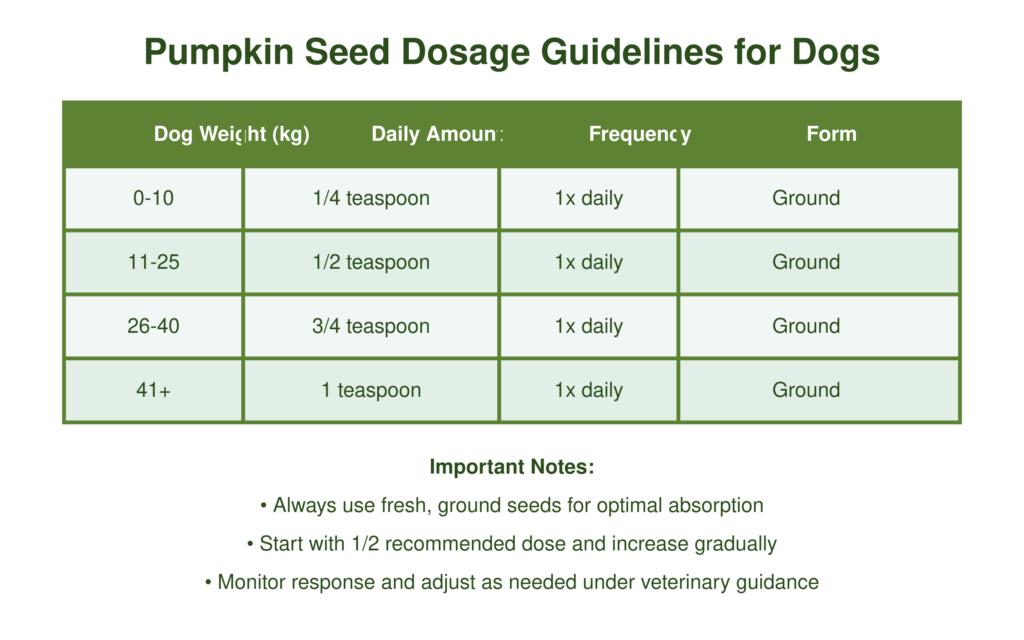
Dosage Guidelines
Weight-Based Recommendations
Administration Methods
Preparation Options
Ground Seeds:
- Freshly ground preferred for optimal bioavailability
- Mixed with food for easy administration
- Sprinkled on meals for palatability
- Store in airtight container
Powder Form:
- Pre-ground supplement for convenience
- Mixed with wet food for acceptance
- Added to treats for variety
- Monitor freshness carefully
Whole Seeds:
- Hulled and raw for maximum nutrient retention
- Lightly roasted (unsalted) for palatability
- Soaked and softened for easier digestion
- Always remove shells
Safety Considerations and Precautions
Potential Side Effects
Digestive Adjustment:
- Temporary gas during adaptation
- Mild digestive changes initially
- Initial adaptation period of 1-2 weeks
- Usually self-resolving
Rare Effects:
- Allergic reactions in sensitive individuals
- Excessive fibre effects if overdosed
- Individual sensitivities vary
- Monitor response carefully
Contraindications
- Dogs with known seed allergies
- Pre-existing severe digestive conditions
- Pancreatic sensitivity
- Scheduled surgery (discontinue 2 weeks prior)
- Individual sensitivities
FAQ – Pumpkin Seeds for Dogs
Yes, dogs can safely eat pumpkin seeds when they are properly prepared and administered. These nutrient-dense seeds contain valuable compounds including essential fatty acids, amino acids, and minerals that support canine health. For optimal benefits and safety, pumpkin seeds should be:
Fresh and properly stored
Ground or finely chopped to prevent choking
Free from shells and husks
Unsalted and unflavoured
Raw or very lightly roasted without oils
Given in appropriate amounts based on dog size
Introduced gradually into the diet
Yes, pumpkin seeds are safe for dogs when properly prepared and administered in appropriate amounts. They should be ground or finely chopped to prevent choking and aid digestion. Raw, unsalted seeds are preferred, though lightly roasted seeds (without salt or oils) are also acceptable.
Pumpkin seeds help with anal gland issues through multiple mechanisms:
The fiber content helps bulk up stools
Anti-inflammatory compounds reduce anal gland inflammation
Improved stool consistency aids natural gland expression
Regular bowel movements support gland health
The most effective way to prepare pumpkin seeds is to:
Use fresh, raw seeds
Remove any shells/husks
Grind them finely
Store in an airtight container
Use within 2 weeks
Most dogs show improvement in stool quality within 24-48 hours of starting pumpkin seed supplementation. For anal gland and parasitic issues, improvement is typically seen within 2-3 weeks of consistent use.
Yes, pumpkin seeds generally work well with other supplements. They can be particularly effective when combined with:
Probiotics for gut health
Omega fatty acid supplements
Joint support supplements
General multivitamins
Yes, pumpkin seeds contain cucurbitin, an amino acid that has natural anthelmintic (deworming) properties. While not a replacement for veterinary-prescribed dewormers, they can provide support as part of a comprehensive parasite management program.
Excessive amounts of pumpkin seeds can lead to:
Digestive upset
Too much fiber
Caloric excess
Mineral imbalances Follow the recommended dosage based on your dog’s weight and monitor their response.
Conclusion
Pumpkin seeds represent a valuable natural supplement for supporting canine health, particularly in areas of digestive function, anal gland health, and parasite defence. Their complex matrix of bioactive compounds provides multiple therapeutic pathways that work synergistically to improve canine health. Success depends on proper preparation, consistent administration, and appropriate dosing based on individual dog needs. Always consult with a veterinarian before starting any new supplement regimen, especially for dogs with existing health conditions or those on medication.