

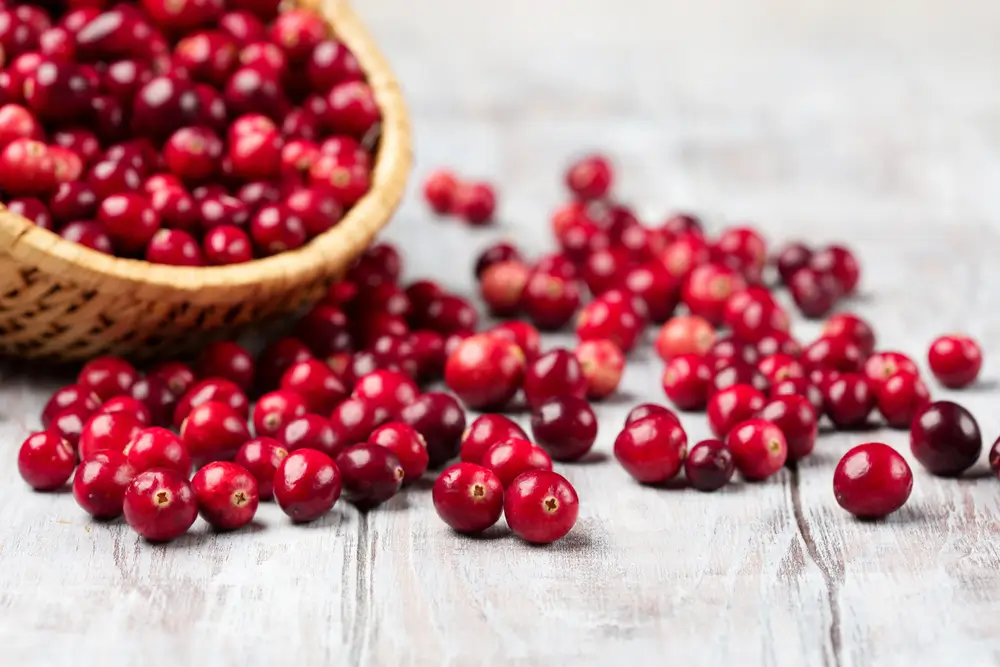
Understanding Cranberries’ Role in Canine Health
Cranberries (Vaccinium macrocarpon), a fruit native to North America, represent one of the most potent natural supplements for canine health. These small, tart berries contain an exceptional concentration of bioactive compounds that work synergistically to support multiple aspects of canine health. This comprehensive guide explores the scientific evidence, biochemical mechanisms, and therapeutic applications of cranberries in canine health management.
Summary
Cranberries are nutrient-dense superfruits containing a sophisticated array of bioactive compounds, including flavonol polyphenols, proanthocyanidins, and essential nutrients. Modern research has validated their effectiveness in supporting urinary tract health, digestive function, and cardiovascular health. The unique biochemical profile of cranberries enables multiple therapeutic pathways that benefit canine health through both direct antimicrobial action and powerful anti-inflammatory effects.
Key Takeaways
- Exceptional source of antioxidant compounds including flavonol polyphenols
- Contains unique A-type proanthocyanidins that support urinary tract health
- Offers powerful histamine-blocking compounds including quercetin, myricetin, and kaempferol
- Provides comprehensive anti-inflammatory benefits
- Supports cardiovascular and digestive health
- Acts as a natural probiotic enhancer
- Can be safely integrated into regular canine diet
- Requires proper dosing based on dog size
Table of Contents
Bioactive Compounds and Composition
- Primary Active Compounds
- Flavonol Polyphenols
- Proanthocyanidins
- Anthocyanins
- Organic Acids
- Essential Nutrients
- Urinary Tract Protection Pathways
- Anti-Adhesion Mechanisms
- Urinary pH Modulation
- Anti-Inflammatory and Antihistamine Pathways
- Flavonol-Mediated Histamine Regulation
- Anti-Inflammatory Cascade
- Antioxidant Defence Systems
Health Benefits and Applications
- Urinary Tract Health Support
- Gastrointestinal Benefits
- Cardiovascular Support
- Weight-Based Recommendations
- Preparation Options
Safety Considerations and Precautions
- Potential Side Effects
- Contraindications
- Common Questions and Answers
What are Cranberries?
Cranberries are small, round, tart berries from the Vaccinium macrocarpon plant, a member of the Ericaceae family. These unique berries contain a sophisticated nutritional profile including:
- Carbohydrates (12-14%)
- Dietary fibre (4-5%)
- Vitamins (particularly C, E, and K1)
- Minerals (manganese and copper)
- Exceptionally high levels of bioactive plant compounds
- One of the highest antioxidant contents of any fruit
Bioactive Compounds and Composition
Primary Active Compounds
- Flavonol Polyphenols:
- Quercetin: 20-30 mg/100g
- Powerful natural antihistamine
- Potent anti-inflammatory agent
- Strong antioxidant properties
- Myricetin: 6-10 mg/100g
- Inhibits histamine release from mast cells
- Supports enzymatic antioxidant systems
- Modulates inflammatory pathways
- Kaempferol: 2-5 mg/100g
- Natural histamine blocker
- Regulates inflammatory protein expression
- Supports cellular antioxidant defences
- Quercetin: 20-30 mg/100g
- Proanthocyanidins:
- A-type proanthocyanidins (unique to cranberries)
- Prevents bacterial adhesion to urinary tract walls
- Provides protection against E. coli infections
- Disrupts biofilm formation
- B-type proanthocyanidins
- General antioxidant properties
- Anti-inflammatory effects
- Cardiovascular support
- A-type proanthocyanidins (unique to cranberries)
- Anthocyanins:
- Peonidin derivatives
- Cyanidin derivatives
- Responsible for red pigmentation
- Powerful antioxidant effects
- Organic Acids:
- Quinic acid
- Malic acid
- Citric acid
- Creates acidic environment unfavourable to pathogens
- Enhances absorption of minerals
- Essential Nutrients:
- Vitamin C: 13.3 mg/100g
- Vitamin E: 1.2 mg/100g
- Vitamin K1: 5.1 μg/100g
- Manganese: 0.36 mg/100g
- Copper: 0.061 mg/100g
Mechanisms of Action
Urinary Tract Protection Pathways
- Anti-Adhesion Mechanisms:
- A-type proanthocyanidins bind to P-fimbriae (adhesins) on E. coli
- Prevents bacterial attachment to uroepithelial cells
- Reduces bacterial colonisation potential
- Creates physical barrier against pathogen adhesion
- Disrupts bacterial communication systems
- Urinary pH Modulation:
- Organic acids create mildly acidic urinary environment
- Unfavourable conditions for bacterial proliferation
- Enhancement of antimicrobial properties
- Support for natural defence mechanisms
- Reduction of bacterial viability
Anti-Inflammatory and Antihistamine Pathways
- Flavonol-Mediated Histamine Regulation:
- Quercetin inhibits histamine release from mast cells by (1):
- Stabilising cell membranes
- Inhibiting calcium-dependent secretion
- Reducing inflammatory enzyme activity
- Modulating intracellular signalling
- Myricetin blocks histamine receptor activation through (2):
- Competitive binding at receptor sites
- Alteration of receptor sensitivity
- Downregulation of receptor expression
- Inhibition of downstream signalling cascades
- Kaempferol reduces histamine production via (3):
- Inhibition of histidine decarboxylase
- Reduction of mast cell degranulation
- Modulation of calcium influx
- Interference with inflammatory transcription factors
- Quercetin inhibits histamine release from mast cells by (1):
- Anti-Inflammatory Cascade:
- Inhibition of pro-inflammatory cytokines
- Reduction of NF-κB pathway activation
- Modulation of COX-2 expression
- Regulation of inflammatory cell recruitment
- Protection of tissue from inflammatory damage
Antioxidant Defence Systems
- Direct Free Radical Scavenging:
- Donation of electrons to neutralise free radicals
- Prevention of lipid peroxidation
- Protection of DNA from oxidative damage
- Preservation of cellular membrane integrity
- Reduction of oxidative stress markers
- Enhancement of Endogenous Antioxidant Systems:
- Upregulation of glutathione production
- Support for superoxide dismutase activity
- Enhancement of catalase expression
- Improvement of cellular redox balance
- Protection against oxidative stress
Health Benefits and Applications
Urinary Tract Health Support
- Prevention of Urinary Tract Infections (4, 5, 6, 7, 8, 9, 10, 11, 12, 13, 14, 15 16, 17):
- Reduction of bacterial adhesion to urinary tract walls
- Creation of unfavourable environment for bacterial growth
- Support for natural flushing mechanisms
- Enhancement of immune response
- Reduction in recurrence rates
- Bladder Health Maintenance:
- Protection of epithelial integrity
- Reduction of inflammation
- Support for normal urinary function
- Improved urine quality
- Natural cleansing action
Gastrointestinal Benefits
- Probiotic Enhancement of Cranberries (18):
- Support for beneficial bacteria growth
- Inhibition of pathogenic bacteria
- Improvement of gut microbiome diversity
- Enhanced nutrient absorption
- Better digestive function
- Gastric Protection:
- Inhibition of H. pylori adhesion
- Reduction of gastric inflammation
- Protection against ulcer formation
- Support for gastric mucosal integrity
- Enhanced natural defence mechanisms
Cardiovascular Support
- Vascular Health: (19, 20, 21, 22, 23, 24, 25, 26, 27, 28)
- Protection of endothelial function
- Reduction of oxidative stress
- Improvement of vessel elasticity
- Support for normal blood pressure
- Enhancement of circulatory efficiency
- Lipid Profile Optimisation:
- Improvement of cholesterol ratios
- Reduction of oxidised LDL
- Support for healthy triglyceride levels
- Enhancement of cardiovascular function
- Protection against atherosclerosis
Dosage Guidelines
Weight-Based Recommendations
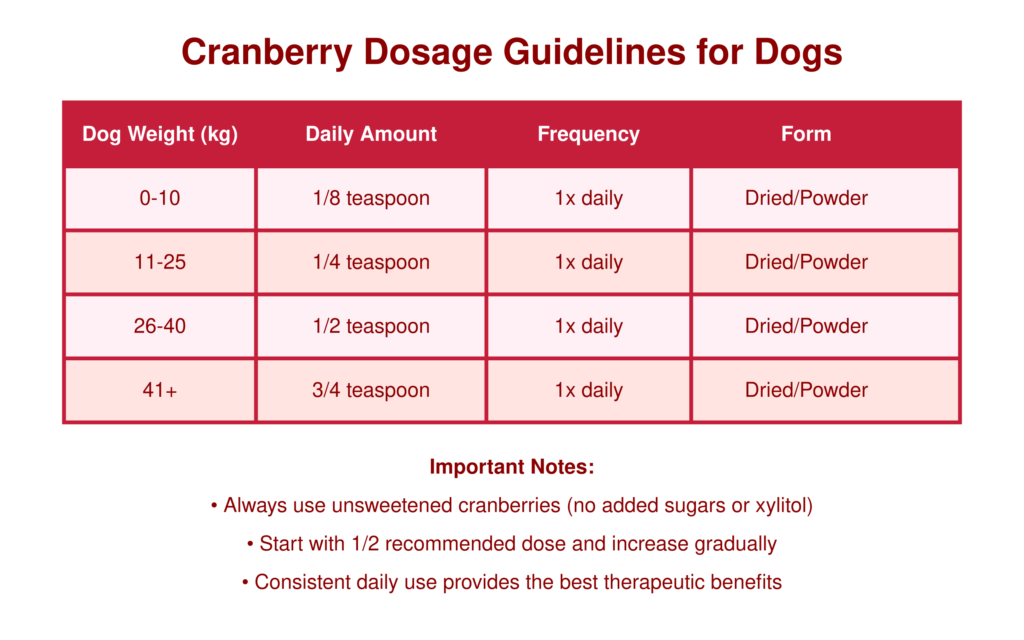
Administration Methods
Preparation Options
- Dried Cranberries:
- Unsweetened only (no added sugars)
- Finely chopped for smaller dogs
- Mixed with food for palatability
- Rehydrated for easier digestion
- Cranberry Powder:
- Concentrated form for enhanced potency
- Easily mixed with wet food
- Precise dosing capability
- Higher bioactive compound concentration
- Fresh Cranberries:
- Limited seasonal availability
- Must be mashed or pureed
- Highly tart (may require mixing with food)
- Preserve maximum nutritional value
- Cranberry Supplements:
- Standardised extracts
- Veterinary-formulated options
- Specific therapeutic applications
- Consistent potency
Safety Considerations and Precautions
Potential Side Effects
- Digestive Adjustment:
- Temporary loose stools
- Mild digestive changes initially
- Slight gas during adaptation
- Usually self-resolving within days
- Rare Effects:
- Possible allergic reactions in sensitive dogs
- Excessive acidity effects if overdosed
- Individual sensitivities vary
- Monitor response carefully
Contraindications
- Dogs with oxalate-forming urinary stones
- Pre-existing severe digestive conditions
- Dogs on blood-thinning medications
- Diabetes (due to natural sugar content)
- Known allergies to berries
FAQ – Cranberries for Dogs
Yes, dogs can safely consume cranberries when properly prepared and administered. These nutrient-dense berries contain valuable compounds including flavonol polyphenols, proanthocyanidins, and essential vitamins that support canine health. For optimal benefits and safety, cranberries should be:
Unsweetened (absolutely no artificial sweeteners, especially xylitol)
Given in appropriate amounts based on dog size
Introduced gradually into the diet
Properly prepared (dried, powdered, or mashed if fresh)
Used consistently for therapeutic benefits
Cranberries are generally safe for dogs when administered properly and in appropriate amounts. They contain beneficial compounds including quercetin, myricetin, and proanthocyanidins that provide multiple health benefits. However, safety considerations include:
Proper Preparation:
Must be unsweetened
No added ingredients
Appropriate processing for digestibility
Suitable form for the individual dog
Safe Administration:
Follow weight-based dosing guidelines
Start with small amounts
Monitor for individual tolerance
Consistent administration for therapeutic effects
Considerations:
Not suitable for dogs with oxalate urinary stones
May interact with certain medications
Should be used cautiously in diabetic dogs
May cause digestive adjustment initially
Cranberries help prevent and manage urinary tract infections through multiple mechanisms:
A-type proanthocyanidins physically prevent bacteria from adhering to the bladder wall
Create an environment unfavourable for bacterial growth
Reduce the ability of E. coli to form biofilms
Support normal urinary pH
Enhance the natural flushing mechanisms of the urinary tract
For therapeutic benefits, consistent administration is more important than occasional large doses.
Yes, cranberries can help dogs with allergies through their natural antihistamine
compounds:
Quercetin: Known as “nature’s Benadryl,” it stabilises mast cells to prevent histamine release
Myricetin: Blocks histamine receptors and reduces inflammatory responses
Kaempferol: Inhibits histamine production and modulates immune reactions
Combined effect reduces allergic symptoms including itching and inflammation
For allergy support, daily consistent administration provides the best results.
The most effective ways to administer cranberries include:
Dried unsweetened cranberries:
Finely chopped and mixed with food
Start with small amounts
Ensure they are unsweetened
Cranberry powder:
Easily mixed with wet food
More concentrated form
Precise dosing
Veterinary supplements:
Standardised extracts
Formulated specifically for dogs
May include synergistic ingredients
Always introduce gradually and monitor for individual tolerance.
Response times vary based on the specific health issue:
Urinary tract support: 2-4 weeks of consistent use
Allergic symptoms: 10-14 days for noticeable improvement
Digestive benefits: 1-3 weeks
Overall antioxidant effects: Cumulative benefits over months
Consistency is key for therapeutic benefits, as effects are often dose-dependent and cumulative.
Yes, cranberries generally complement other supplements and may enhance their effects:
Probiotics: Cranberries support beneficial bacteria
Omega fatty acids: Synergistic anti-inflammatory effects
Joint supplements: Complementary anti-inflammatory action
Vitamin C: Enhanced antioxidant effects
Always inform your veterinarian about all supplements being administered.
Dogs can benefit from consuming cranberries as part of a balanced diet, though they’re not essential for all dogs. Cranberries provide unique health advantages that make them particularly valuable for:
Dogs with recurring urinary tract infections
Dogs suffering from seasonal allergies
Dogs needing additional antioxidant support
Older dogs requiring cardiovascular support
Dogs with specific inflammatory conditions
When deciding whether to include cranberries in your dog’s diet, consider their individual health needs and consult with your veterinarian. For dogs with urinary tract vulnerabilities or inflammatory conditions, the unique proanthocyanidins and histamine-blocking flavonols offer targeted support that few other foods provide. For healthy dogs, cranberries can serve as a preventative supplement with cumulative benefits over time.
If you do choose to include cranberries, ensure they’re properly prepared (unsweetened, appropriate form) and administered in the correct dosage for your dog’s size. The benefits are most pronounced with consistent, long-term use rather than occasional administration.
Conclusion
Cranberries represent a scientifically validated supplement for supporting canine health, particularly in areas of urinary tract function, allergic response, and overall antioxidant protection. Their unique composition of flavonol polyphenols and proanthocyanidins provides multiple therapeutic pathways that work synergistically to improve canine health. Success depends on proper preparation, consistent administration, and appropriate dosing based on individual dog needs. Always consult with a veterinarian before starting any new supplement regimen, especially for dogs with existing health conditions or those on medication.