

Discover why dogs still need flea and tick protection during winter.
Summary
Many dog owners believe that flea and tick treatments can stop during winter, assuming cold weather eliminates the risk of parasites. However, fleas and ticks can survive in heated homes, sheltered outdoor spots, and mild winter conditions across the UK. Skipping protection can allow infestations or diseases to take hold, creating costly and uncomfortable problems for your dog. Maintaining a year-round prevention routine — whether through conventional or natural methods — remains the safest and most effective approach.
Key Takeaways
- Fleas and ticks can survive indoors and in mild winter weather across the UK.
- Skipping winter treatments risks infestation and disease transmission.
- Indoor heating creates ideal environments for flea eggs and larvae to thrive.
- Use consistent year-round prevention to break parasite life cycles.
- Combine treatments with good home hygiene and regular coat checks.
- Natural supplements and repellents can support conventional prevention and suit owners seeking chemical-free options.
- Always consult your vet before switching or combining products.
Table of Contents
How Fleas and Ticks Behave in Colder Months
- Fleas — Survival Strategies & Indoor Life
- Ticks — Cold Tolerance and Seasonal Activity
- Influence of Heating, Mild Spells and Climate Variation
Why You Shouldn’t Pause Treatment in Winter
- Prevent Re-infestation Cycles in Your Home
- Risk of Disease and Health Consequences
- Disruption to Life Cycles
- Cost and Effort of Dealing with Infestations
- Environmental and Wildlife Spill-over Risks
Factors Affecting Winter Risk for Your Dog
- Dog’s Lifestyle
- Household Environment
- Geographical Location and Climate
- Previous History of Fleas or Ticks
- Travel or Kennelling
Types of Flea and Tick Preventatives
- Spot-On Treatments
- Oral Tablets or Chewables
- Long-Lasting Collars
- Sprays and Environmental Treatments
- Integrated Approach
Natural Flea and Tick Prevention Options
- Nutritional Supplements and Herbal Support
- Plant-Based Oils and Extracts
- Home Environment Maintenance
- Balancing Natural and Conventional Methods
Best Practices for Winter Parasite Control
FAQ: Winter Flea and Tick Treatment for Dogs
How Fleas and Ticks Behave in Colder Months
Fleas — Survival Strategies & Indoor Life
Fleas thrive in warmth and humidity. In winter, central heating keeps most homes at the ideal temperature range (18–24 °C), allowing flea eggs, larvae and pupae to continue developing. Pupae can remain dormant for months and re-emerge when conditions are right — even in January. Carpets, bedding and furniture are common hotspots.
According to the Small Animal Veterinary Surveillance Network (SAVSNET) at the University of Liverpool, around 14.4 % of dogs examined in UK practices during early summer carried fleas, and while prevalence dips in colder months, fleas are still detected all year round. Another study, ‘Seasonality and other risk factors for fleas infestations in domestic dogs and cats‘, published in 2023 recorded 1.17 % of cat consultations and 0.25% dog consultations showing flea presence in winter — confirming that low-level infestations persist even during the coldest months. Over 90 % of fleas found on dogs and cats in the UK were identified as the cat flea (Ctenocephalides felis), which adapts easily to indoor environments. (1, 2)
Ticks — Cold Tolerance and Seasonal Activity
Ticks don’t disappear in winter. Some species remain active when temperatures rise above 4 °C. Mild spells, particularly in southern England and coastal areas, can bring them out of hibernation. Dogs walking in woodland, heather, bracken, or tall grass are still at risk of picking up ticks during winter walks.
Data from the Big Tick Project, a national UK tick survey, found that biting ticks were detected even in winter months, highlighting that tick activity continues during brief warm spells. The same project estimated that around 30 % of UK dogs had at least one tick during the spring–summer season, with year-round surveillance confirming ongoing, if lower, winter presence. Some species, such as Dermacentor reticulatus, remain active at temperatures close to 1 °C, making them cold-tolerant and a potential risk throughout the year.
Influence of Heating, Mild Spells and Climate Variation
The UK’s increasingly mild winters mean that ticks and fleas may never experience sufficiently cold conditions to halt their activity entirely. Indoors, the problem persists year-round thanks to heating and insulation.
Research by the The Veterinary Nurse suggests that the UK’s warming trend has already extended the seasonal window for parasite activity by 4–6 weeks compared with two decades ago. Central heating systems also create microclimates within homes that keep flea larvae thriving at humidity levels above 50 % and temperatures between 18–27 °C — identical to their summer breeding conditions.
Why You Shouldn’t Pause Treatment in Winter
Prevent Re-infestation Cycles
Stopping treatment mid-winter may allow surviving eggs or larvae in carpets and bedding to hatch. Once adults emerge, they reinfest your dog and the home, restarting the cycle.
A University of Bristol study on flea treatment compliance found that only 35 % of UK dogs had flea treatments that were still active (“in date”), leaving nearly two-thirds at risk of re-infestation — even during cooler months when owners were less vigilant.
Health Risks and Disease Transmission
Fleas can cause itching, dermatitis, and even anaemia in severe infestations. They can also transmit tapeworms. Ticks carry serious diseases such as Lyme disease, babesiosis, and ehrlichiosis, which are increasingly seen in the UK due to climate change and pet travel.
Public Health England reports that Lyme disease cases in the UK have risen by more than 100 % over the past two decades, and while risk peaks in spring and autumn, infections are recorded every month of the year — including winter.
Breaking Life Cycles
Consistent protection ensures every emerging generation of fleas or ticks is killed before breeding can resume. Stopping treatments, even briefly, allows hidden life stages to complete their cycle.
Cost and Effort of Dealing with Infestations
Once fleas or ticks establish in a household, full eradication can take weeks and require professional treatment, deep cleaning, and multiple vet visits. Continuous prevention is far easier and cheaper.
Environmental and Wildlife Spill-over
Wildlife such as foxes, hedgehogs, and rodents carry parasites that can enter gardens and homes. Keeping pets protected helps reduce transmission between wildlife and domestic animals.
UK wildlife monitoring has confirmed high tick burdens on urban foxes and hedgehogs, both of which are now common in residential areas, further increasing year-round exposure risk for dogs.
Factors Affecting Winter Risk for Your Dog
Dog’s Lifestyle
Dogs that go on woodland walks or spend time outdoors are more at risk than fully indoor pets. Even so, fleas can be brought in on shoes, clothing, or other pets.
Household Environment
Homes with carpets, upholstery, and multiple pets offer ideal microclimates for flea survival. Heated homes effectively mimic summer conditions year-round.
Geographical and Climate Factors
Southern and coastal UK regions experience milder winters, so outdoor tick activity may continue intermittently. In Scotland or the north, indoor risk remains dominant.
Research shows that tick density in southern England (Hampshire, Devon, Kent) is three times higher than in northern regions, though ticks are now spreading northwards due to climate change.
Previous History of Infestation
Homes that have previously had fleas are more likely to experience re-infestation, as dormant pupae may survive in cracks or furnishings.
Travel and Kennelling
Dogs travelling or staying in kennels can pick up parasites from other animals, even in winter months.
Types of Flea and Tick Preventatives
Spot-On Treatments
Monthly topical applications that kill and repel fleas and ticks. Some prevent the development of eggs and larvae. Always follow label instructions.
Oral Tablets or Chewables
Palatable tablets that work systemically to kill parasites when they feed. These are waterproof and ideal for active dogs.
Long-Lasting Collars
Collars infused with slow-release insecticides or repellents provide up to 8 months’ protection and are convenient for year-round use.
Sprays and Environmental Treatments
Useful for killing fleas on contact and treating home areas such as carpets and pet bedding. Should complement, not replace, on-pet treatments.
Integrated Approach
Combining consistent treatment on the dog with home hygiene and environmental sprays provides the most effective control.
Natural Flea and Tick Prevention Options
For owners preferring a more sustainable or chemical-free approach to treating fleas and ticks, several natural strategies can reduce risk and support your dog’s resilience.
Natural prevention is gaining popularity among environmentally conscious owners. A 2024 survey found that 62 % of UK dog owners expressed interest in natural parasite control alternatives, citing reduced chemical exposure and ecological safety as primary motivators.
Nutritional Supplements and Herbal Support
Certain natural compounds help deter parasites and support the skin barrier:
- Garlic extract (allicin-free formulations) – mild repellent effect when used safely under veterinary guidance.
- Brewer’s yeast – rich in B-vitamins, may make dogs less appealing to fleas.
- Apple cider vinegar – sometimes added to food or water to slightly alter skin odour and pH.
- Neem, lemongrass, lavender, rosemary, and cedarwood oils – used in pet-safe topical blends or sprays to repel fleas and ticks naturally.
- Turmeric, ginger, reishi, chamomile, and echinacea – herbs and adaptogens supporting skin integrity, immune balance, and inflammatory control.
Plant-Based Oils and Extracts
Coconut oil, flaxseed oil, and hempseed oil contain fatty acids that promote a healthy skin barrier and may help deter parasites naturally.
Home Environment Maintenance
Regular vacuuming, washing pet bedding at ≥ 40 °C, and using eco-friendly sprays (diatomaceous earth, plant-based repellents) help control fleas in the environment.
Balancing Natural and Conventional Methods
Natural products can complement veterinary treatments but should not replace proven protection in high-risk areas. Always consult your vet before substituting or combining products.
Best Practices for Winter Parasite Control
- Keep up regular monthly or prescribed treatments.
- Maintain home hygiene: vacuum frequently and launder bedding weekly.
- Inspect your dog after outdoor walks — especially ears, armpits, and between toes.
- Use year-round prevention suited to your region and dog’s lifestyle.
- Combine treatments with dietary supplements that support healthy skin and immunity.
- Consult your vet before using multiple products or switching formulations.
FAQ: Winter Flea and Tick Treatment for Dogs
Not completely. Indoor warmth allows fleas to continue breeding throughout the year.
Yes, especially when temperatures rise above 4 °C. Mild spells often trigger activity.
Stopping can lead to infestations. Continuous prevention is recommended in the UK.
Some herbal and nutritional options can help repel or deter parasites, but they’re best used as supplements to — not replacements for — proven veterinary treatments.
Follow product instructions: most spot-ons are monthly, while collars can last up to eight months.
Only pet-specific, diluted formulations and those used in supplements formulated specifically for dogs. Many essential oils can be toxic to dogs if used incorrectly — always check with your vet.
Yes. Warmth, humidity, and pet bedding make perfect breeding grounds in winter months
Remove it promptly with a tick removal tool, disinfect the area, and continue your prevention protocol. Monitor for signs of infection.
Key Take-Home Points
- Fleas and ticks can survive UK winters, especially indoors or during mild spells.
- Continuous prevention prevents re-infestation and disease.
- Home hygiene is as important as on-pet treatment.
- Natural and nutritional supplements can complement standard prevention for eco-conscious owners.
- Veterinary advice ensures safe, effective, and environmentally responsible parasite control.
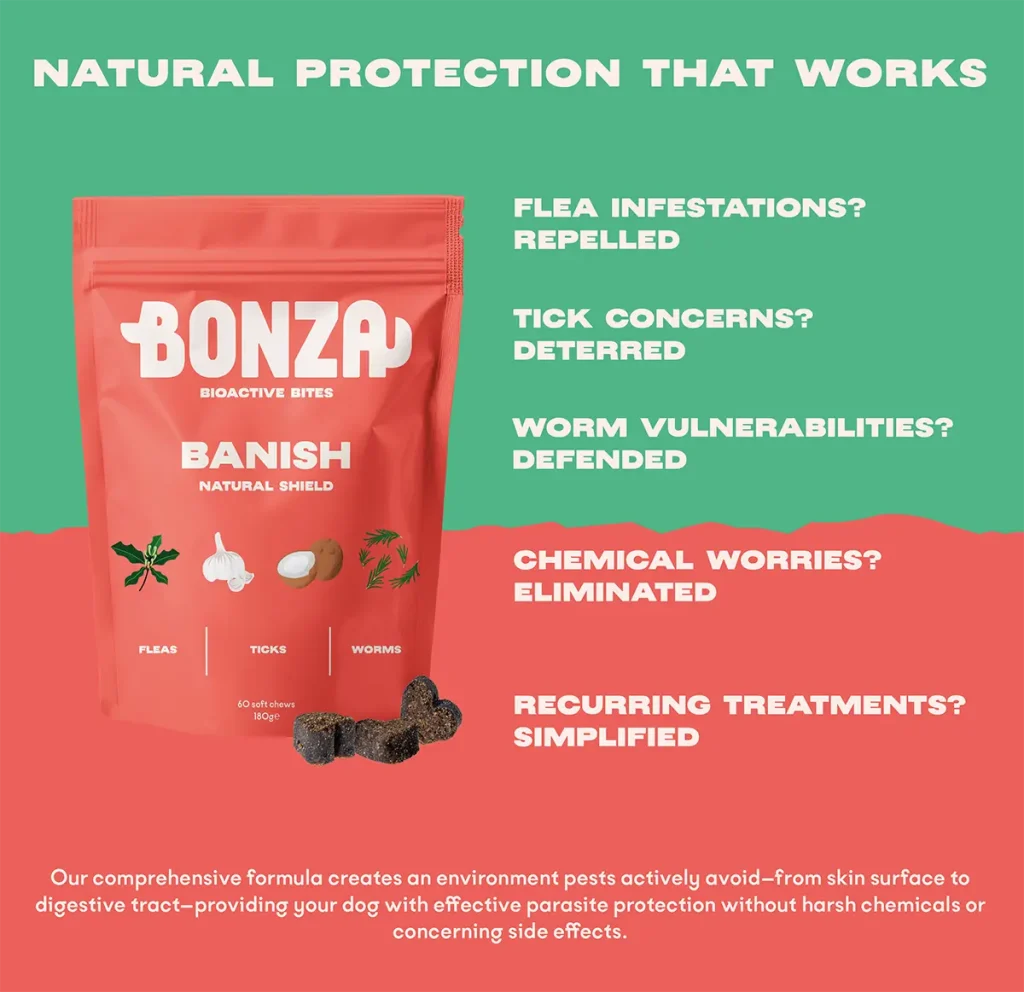
Bonza Banish Bioactive Bites are a natural, chemical-free soft chew supplement designed to help repel fleas, ticks, and worms by combining botanical extracts (like coconut oil, rosemary, garlic) with probiotics and immune-supporting nutrients.
The formula aims to discourage parasite attachment and disrupt life cycles internally and externally, while supporting the dog’s natural defences.
These chews can complement conventional parasite control, especially for owners seeking a more environmentally conscious or gentler approach — but they should be used alongside (not always as a replacement for) veterinary-approved treatments depending on the severity of the infestation.