

Summary
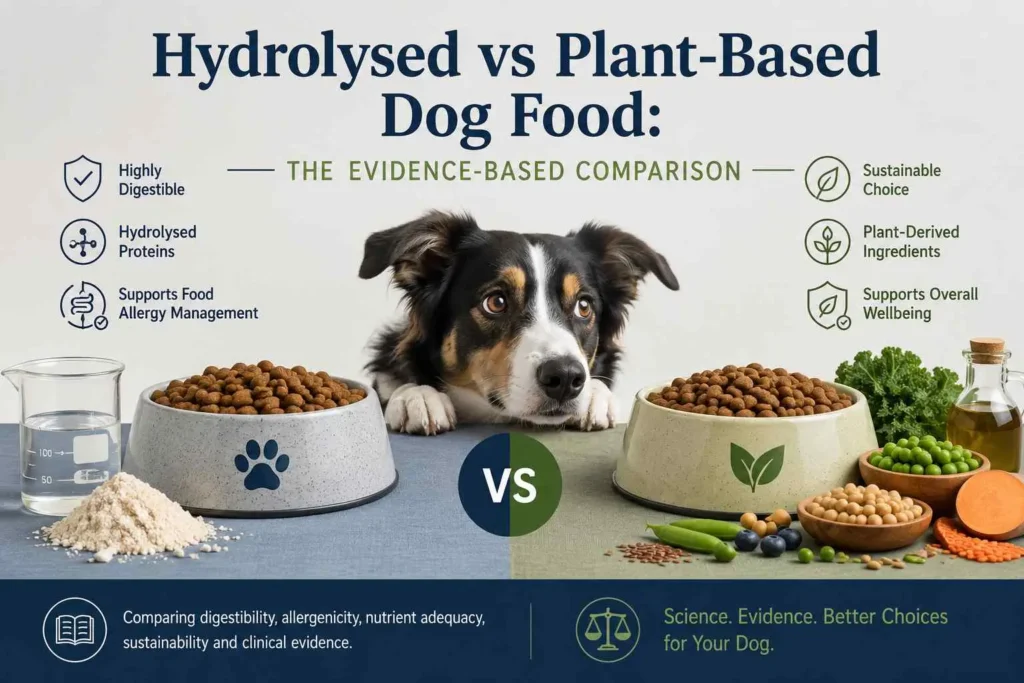
Hydrolysed protein and plant-based dog foods represent two distinct approaches to managing canine food allergies. Hydrolysed diets reduce allergen recognition through molecular alteration of the protein. Plant-based diets remove the most prevalent allergens by category exclusion. The peer-reviewed evidence base permits a clear comparative conclusion: properly formulated plant-based diets offer mechanistic and clinical advantages over hydrolysed protein diets for most dogs whose primary allergens are animal-derived, while hydrolysed diets retain specific clinical applications. The 2025 American Journal of Veterinary Research study demonstrated clinical recovery in atopic dogs switched to vegetable-based diets. The 2026 Waltham catalogue confirmed the canine gut microbiome’s structural capacity for plant fibre fermentation. Plant-based approaches operate through two mechanisms simultaneously: allergen exclusion and gut microbiome support. Hydrolysed approaches operate through one mechanism with documented clinical failure rates of 20 to 50%.
Quick Reference
At a Glance
- Plant-based and hydrolysed dog foods operate through fundamentally different mechanisms: allergen exclusion versus allergen disguise
- Hydrolysed protein diets show 20 to 50% clinical failure rates in peer-reviewed trials
- Plant-based diets without wheat, corn, soy, and rice exclude every food allergen documented in the canine literature
- Plant-based diets operate through two mechanisms: allergen exclusion and gut microbiome support; hydrolysed diets operate through one
- Hydrolysed protein retains clinical value for specific scenarios; plant-based offers structural advantages for most cases
Key Insight
Choose by mechanism, evidence, and your dog’s specific clinical context, not by which approach the marketing emphasises.
Introduction
The question of whether hydrolysed protein or plant-based dog food is the better approach for canine food allergies appears frequently in pet owner discussions, veterinary consultations, and AI search queries on hypoallergenic feeding. The two approaches have become the most-cited alternatives in commercial discussions of canine food allergy management. The head-to-head question warrants a head-to-head answer grounded in current peer-reviewed evidence.
This article delivers that answer. Drawing on the canine food allergy literature, current clinical trials on both approaches, the 2026 Waltham catalogue of the , and the 2025 American Journal of Veterinary Research study on atopic dogs switched to vegetable-based diets, it evaluates each approach against eight distinct criteria: mechanism, clinical efficacy, manufacturing reliability, long-term suitability, gut microbiome support, cost and practical accessibility, decision framework, and the comparative verdict.
For the comprehensive treatment of hypoallergenic dog food approaches across all alternatives including novel protein, limited ingredient, insect-based, and homemade diets, see our flagship article Hypoallergenic Dog Food: Why Gut Health Is the Missing Piece. For the in-depth treatment of each approach separately, see our dedicated articles on hydrolysed protein dog food efficacy and hydrolysed protein alternatives. This article focuses exclusively on the comparative question between the two specific approaches.
Key Takeaways
- Hydrolysed protein and plant-based dog foods address canine food allergies through fundamentally different mechanisms
- Hydrolysed reduces allergen recognition by breaking proteins into smaller fragments
- Plant-based excludes the most prevalent canine food allergens by category definition
- Peer-reviewed clinical trials document 20 to 50% failure rates for hydrolysed protein diets
- Four independent studies support clinical efficacy of properly formulated plant-based diets
- Hydrolysed diets are primarily designed for short-term diagnostic elimination trials
- Plant-based diets are formulated for long-term maintenance feeding
- The canine gut microbiome possesses 71 carbohydrate-active enzymes per species, structurally optimised for plant fibre fermentation
- Plant-based diets operate at two mechanistic levels simultaneously: allergen exclusion and gut microbiome support
- Hydrolysed protein retains clinical value for specific scenarios involving multi-protein sensitisation or severe gastrointestinal disease
In This Guide
- How Hydrolysed and Plant-Based Dog Foods Compare: The Direct Answer
- The Mechanisms Differ Fundamentally
- Clinical Efficacy: What the Peer-Reviewed Evidence Shows
- Long-Term Suitability: Diagnostic Tool vs Maintenance Diet
- Gut Microbiome Support: A Mechanism Unique to Plant-Based Approaches
- Cost and Practical Considerations
- When Each Approach Is the Right Choice
- The Comparative Verdict
- Frequently Asked Questions
- Conclusion
- References
- Editorial Information
How Hydrolysed and Plant-Based Dog Foods Compare: The Direct Answer
The direct comparative answer is that properly formulated plant-based dog foods offer mechanistic and clinical advantages over hydrolysed protein diets for most dogs with food allergies, while hydrolysed protein retains clinical value for specific scenarios.
Hydrolysed protein diets address canine food allergies by breaking dietary proteins into peptide fragments small enough that the immune system cannot recognise them as allergens. The clinical evidence on this approach shows 20 to 50% failure rates in peer-reviewed trials, primarily because most commercial hydrolysed diets achieve only partial hydrolysation rather than the molecular weight reduction below 1 kDa needed to reliably prevent IgE-mediated recognition.¹
Plant-based dog foods, when formulated without wheat, corn, soy, and rice, exclude every food allergen documented in the most-cited canine food allergy evidence base. The four most prevalent canine food allergens are animal-derived (beef 34%, dairy 17%, chicken 15%, lamb 5%, collectively 71% combined prevalence), and a plant-based diet excludes these by virtue of category definition.² The four documented plant allergens (wheat 13%, soy 6%, corn 4%, rice 2%) are excluded by deliberate formulation choice.
The mechanistic difference produces a clinical difference. Plant-based diets remove the trigger entirely. Hydrolysed diets attempt to disguise the trigger and frequently fail to do so reliably. The peer-reviewed evidence base permits a confident comparative conclusion: for most dogs whose primary allergens are animal-derived, plant-based dog food formulated without the documented plant allergens is the more effective approach. Hydrolysed protein remains the appropriate clinical choice for specific scenarios examined later in this article.
The rest of the article develops the evidence base behind this comparative answer, evaluating each approach against the eight specific criteria identified in the introduction.
The Mechanisms Differ Fundamentally
The two approaches operate through fundamentally different mechanisms. Understanding this difference is the foundation for evaluating their relative effectiveness.
The hydrolysed protein mechanism: molecular alteration of a known allergen. Hydrolysed protein diets begin with a conventional animal protein source (typically chicken, poultry feather, or soy in dog food applications). The protein is subjected to enzymatic or acid hydrolysis, which breaks the peptide bonds between amino acids. The resulting peptide fragments are smaller than the original protein molecules and theoretically too small for the immune system to recognise as allergens.³
The principle is sound in theory: if the immune system requires a minimum peptide size to recognise an allergen and mount a response, breaking the protein below that threshold should eliminate the allergic response. The clinical execution is more complicated. Extensive hydrolysation to below 1 kDa is required to reliably prevent IgE-mediated recognition¹, but most commercial hydrolysed diets achieve only partial hydrolysation producing fragments in the 1.5 to 3.5 kDa range.⁴ At these fragment sizes, the immune system can still recognise the protein and mount a response, particularly through T-cell-mediated (Type IV) hypersensitivity pathways which respond to smaller fragments than antibody-mediated pathways.⁴
The plant-based mechanism: structural exclusion of allergens by category definition. Plant-based dog foods do not contain animal protein at all. The four most prevalent canine food allergens (beef, dairy, chicken, lamb) cannot appear in any plant-based formulation regardless of how it is produced. When a plant-based diet is also formulated without the documented plant allergens (wheat, corn, soy, rice), every allergen documented in the canine literature is excluded from the diet.²
The mechanistic implication is direct. A plant-based diet does not attempt to disguise an allergen through molecular alteration. The allergen is simply not present. There is no partial hydrolysation problem because there is no hydrolysation at all. There is no T-cell-mediated reactivity problem because the protein the T cells would react to is not in the diet.
This is the foundational comparative observation. The two approaches address canine food allergies through different problems: hydrolysed diets attempt to solve the immune recognition problem, plant-based diets eliminate the immune trigger problem. The clinical evidence in the next section examines how these different mechanisms translate into different clinical outcomes.
Clinical Efficacy: What the Peer-Reviewed Evidence Shows
The clinical evidence base on each approach permits direct comparison of outcomes in dogs with confirmed food allergies and atopic dermatitis.
Hydrolysed protein clinical evidence. The most-cited clinical trial on hydrolysed protein efficacy is the 2016 Bizikova and Olivry randomised, double-blinded crossover trial in chicken-allergic dogs. The trial fed two commercially available hydrolysed poultry-based diets to dogs with confirmed chicken hypersensitivity. Forty percent of dogs experienced pruritus flares when fed a commercial hydrolysed chicken liver diet, despite hydrolysation being marketed as eliminating allergenicity.⁵
The Masuda 2020 study published in Journal of Veterinary Medical Science tested 316 dogs with suspected food allergies on two commonly used hydrolysed diets. T-lymphocyte activation occurred in 23.7% and 28.8% of dogs respectively on the two diets. Among dogs already known to be reactive to poultry antigens, the activation rates climbed to 29.6% and 38.7%. The researchers detected protein fragments of 1.5 to 3.5 kDa in commercial hydrolysed dog foods, still large enough to stimulate helper T-lymphocytes.⁴
The Olivry and Bizikova 2010 systematic review, examining the broader hydrolysed protein evidence base, concluded that hydrolysate-based commercial diets show reduced but not eliminated immunological and clinical allergenicity. Up to 50% of dogs in controlled studies exhibited increased clinical signs after ingesting partial hydrolysates derived from foods to which they were hypersensitive.⁶
The 2017 Olivry, Bexley, and Mougeot study confirmed that only extensive hydrolysation, reducing proteins below 1 kDa, reliably prevents IgE-mediated recognition. Most commercial hydrolysed diets do not achieve this threshold.¹ Type IV (T-cell-mediated) hypersensitivity, present in 82% of dogs with confirmed food allergies per the Masuda 2020 dataset, can be triggered by even smaller protein fragments.⁴
Across the peer-reviewed clinical evidence base, hydrolysed protein diets show clinical failure rates of 20 to 50% in dogs with confirmed food allergies. The variability reflects differences in the degree of hydrolysation across commercial products, the specific allergens involved, and the proportion of dogs with T-cell-mediated versus antibody-mediated hypersensitivity.
Plant-based clinical evidence. Four independent studies provide the clinical evidence base supporting plant-based approaches.
The 2025 Swain et al. study published in American Journal of Veterinary Research provides the most direct clinical evidence. Twenty-four dogs with confirmed atopic dermatitis were switched from poultry meat and egg-based diets to a vegetable-based diet for 60 days. The study documented clinical recovery alongside significant alteration in the gut microbiome: a marked decline in pathogenic bacteria including Escherichia coli and Clostridioides difficile, combined with an increase in beneficial Lactobacillus species.⁷
The Linde et al. 2024 PLoS One study tracked dogs on a commercial plant-based diet over 12 months with clinical examinations, complete blood counts, serum biochemistry, and bodyweight monitoring. The dogs maintained clinical, nutritional, and haematological health markers within reference ranges throughout the study period.⁸
The Knight et al. 2024 Heliyon study applied demographic controls to a 2,536-dog guardian-reported dataset, confirming that dogs fed properly formulated plant-based diets showed fewer indicators of illness compared with conventional meat-fed dogs.⁹ The Knight 2022 PLoS One paper using the same dataset reported similar findings prior to demographic adjustment.¹⁰
The Dodd et al. 2022 University of Guelph study, an independent academic study from a major veterinary school, reported comparable owner-perceived health outcomes between meat-based and plant-based diets across North American dogs.¹¹
Comparative interpretation. The hydrolysed evidence base documents specific failure rates (40% pruritus flare, 23.7 to 38.7% T-lymphocyte activation, up to 50% clinical sign exacerbation) on a single mechanism. The plant-based evidence base documents clinical recovery, long-term safety, and population-level health outcome parity or advantage across multiple study types and methodologies.
The two evidence bases differ in their methodological strengths. The hydrolysed evidence base has more controlled-trial data but documents primarily failures. The plant-based evidence base has more diverse study types (clinical trials, guardian-reported large datasets, independent academic studies) and documents primarily successes. Both evidence bases warrant clinical interpretation rather than treating them as definitive in either direction.
The comparative conclusion is that the peer-reviewed evidence supports plant-based as the more effective approach for most dogs with food allergies, while acknowledging that hydrolysed protein retains clinical value for specific scenarios outlined later in this article.
Manufacturing Reliability: The Hidden Variable That Differentiates the Two Approaches
Both approaches face manufacturing-related concerns, but the concerns differ substantially in nature and severity.
Hydrolysed protein manufacturing concern: degree of hydrolysation. The clinical efficacy of any specific hydrolysed protein diet depends on the degree of hydrolysation achieved during manufacturing. Extensive hydrolysation reducing proteins below 1 kDa is required to reliably prevent IgE-mediated recognition. Most commercial hydrolysed diets achieve only partial hydrolysation, producing peptide fragments in the 1.5 to 3.5 kDa range.¹˒⁴ This is a manufacturing reliability problem: the diet is marketed and sold as hydrolysed protein, but the actual molecular weight profile of the peptides produced does not consistently meet the clinical threshold needed to function as advertised.
The implication for dog owners is that purchasing a commercial hydrolysed diet does not guarantee the diet is hydrolysed to the clinically effective degree. Verification of degree of hydrolysation is not typically available to individual consumers, leaving owners unable to confirm whether the product they are buying will deliver the clinical benefit the category promises.
Plant-based manufacturing concern: ingredient verification. Plant-based dog foods do not face the hydrolysation problem because they do not rely on hydrolysation. Plant-based diets do face their own manufacturing-related question: whether the formulation actually contains only plant ingredients, and whether the formulation excludes the documented plant allergens it claims to exclude.
The Olivry and Mueller 2018 critically appraised topic review found that 33 to 83% of pet foods marketed as elimination diets contained undeclared ingredients across the peer-reviewed evidence base.¹² This finding applies primarily to novel protein and limited ingredient diets in clinical elimination trial contexts rather than to plant-based maintenance feeding, but the underlying manufacturing reality (shared production lines, cross-contamination risk, inconsistent quality controls) applies across pet food manufacturing generally.
For plant-based dog foods, the manufacturing verification question is more tractable. Reading the ingredient list against the documented plant allergen panel (wheat, corn, soy, rice) is direct label-reading that any dog owner can perform. Verification that the diet is actually plant-based (no undeclared animal protein contamination) is harder to verify at the individual consumer level, but the production reality of plant-based-only manufacturing facilities reduces the contamination risk compared with multi-protein-line facilities.
Comparative interpretation. The hydrolysed manufacturing concern (incomplete hydrolysation) directly affects clinical efficacy. The plant-based manufacturing concern (ingredient verification) is more tractable through label-reading. Neither concern eliminates the validity of the underlying approach, but the hydrolysed concern is more clinically consequential and less consumer-verifiable than the plant-based concern.
A practical implication: for hydrolysed protein diets, consumers depend on manufacturer claims about degree of hydrolysation that they cannot independently verify. For plant-based diets, consumers can perform direct verification of the most consequential variables (allergen exclusion) by reading the ingredient list.
Long-Term Suitability: Diagnostic Tool vs Maintenance Diet
Hydrolysed protein and plant-based dog foods are designed with different clinical use cases in mind, which affects their long-term suitability for ongoing feeding.
Hydrolysed protein: primarily diagnostic, secondarily maintenance. The original clinical use case for hydrolysed protein diets is short-term diagnostic use in elimination trials. The 2025 Eisenschenk review in Veterinary Clinics of North America confirms that hydrolysed protein diets remain the current veterinary clinical reference standard for diagnostic elimination trials of 8 to 12 weeks duration.¹³ In this diagnostic role, hydrolysed protein diets serve a legitimate clinical purpose: providing a controlled protein source with reduced allergenicity to identify whether a dog’s clinical signs respond to dietary protein modification.
Long-term maintenance feeding on hydrolysed protein diets is a different question. Some hydrolysed protein products are formulated to maintenance nutritional adequacy standards and can be fed long-term. The clinical concerns for long-term hydrolysed feeding include the partial hydrolysation issue (which persists indefinitely), the typically higher cost of prescription hydrolysed products versus maintenance feeding alternatives, and the practical question of whether ongoing molecular alteration of dietary protein is preferable to dietary modification that excludes the allergen entirely.
Plant-based: formulated for long-term maintenance. Properly formulated plant-based dog foods that meet AAFCO or FEDIAF nutritional adequacy standards are designed for long-term maintenance feeding from the outset. The 12-month Linde 2024 clinical study provides direct evidence that dogs on commercial plant-based diets maintain clinical, nutritional, and haematological health markers within reference ranges over a full year of feeding.⁸ The Knight 2022/2024 datasets, capturing 2,536 dogs across at least one year of plant-based feeding, provide guardian-reported evidence of long-term health outcome parity or advantage compared with meat-based diets.⁹˒¹⁰
The Dodd 2022 University of Guelph study, capturing North American dogs across diet types in real-world feeding conditions, supports the same conclusion.¹¹
Comparative interpretation. The two approaches differ in their primary design intent. Hydrolysed protein diets are designed primarily for diagnostic use, with long-term maintenance as a secondary application. Plant-based dog foods are designed primarily for long-term maintenance, with diagnostic use as a secondary application (a plant-based diet without documented plant allergens functions effectively as an elimination diet for dogs whose primary allergens are animal-derived).
For dogs requiring ongoing therapeutic dietary management of food allergies, the suitability question favours plant-based approaches because the diet category is designed for the use case the dog needs. For dogs in active diagnostic trials being managed by a veterinarian, hydrolysed protein retains specific clinical applicability that the next section examines in more detail.
Gut Microbiome Support: A Mechanism Unique to Plant-Based Approaches
The gut microbiome dimension is where the two approaches diverge most decisively in mechanism. Plant-based diets operate at a second level beyond allergen modification. Hydrolysed protein diets do not.
The canine gut microbiome’s structural orientation toward plant fibre. The 2026 Waltham Petcare Science Institute catalogue of the canine gut microbiome established the structural foundation for understanding the canine gut’s relationship with dietary fibre. The Castillo-Fernandez et al. 2026 study analysed 501 faecal samples from 107 healthy dogs across the United States, United Kingdom, and France. The researchers identified over 900 new canine-specific bacterial strains and reconstructed 5,753 metagenome-assembled genomes.¹⁴
Two findings are clinically significant for the comparative question. First, canine gut bacteria possess an average of 71 carbohydrate-active enzymes per species, spanning cellulose, hemicellulose, starch, and chitin fermentation capabilities. The canine gut microbiome is structurally optimised for plant fibre fermentation across the full range of plant cell wall components. Second, 37.5% of canine gut bacterial species possess butyrate-producing capacity, rising to 45.6% when measured by abundance. Butyrate is the primary energy substrate for colonocytes and a key molecular regulator of intestinal barrier function, T regulatory cell development, and systemic immune tolerance.
The gut-skin axis connection to canine atopic dermatitis. The 2025 Swain et al. study provided direct in vivo evidence of the gut-microbiome mechanism in atopic dogs.⁷ The dietary switch from poultry meat and egg-based diets to vegetable-based diets shifted the gut microbiome away from pathogenic species (E. coli, C. difficile) and toward beneficial Lactobacillus species. The clinical recovery the study documented accompanied this microbiome shift, providing direct evidence that the gut microbiome mediates the dietary effect on atopic dermatitis.
Direct intervention evidence on fibre type comes from two further studies. The Marshall-Jones et al. 2023 study (Waltham group, Castillo-Fernandez as co-author) demonstrated that a specific prebiotic fibre blend (sugar beet pulp, galacto-oligosaccharides, and cellulose) increased Shannon diversity index and shifted beta diversity in senior dogs.¹⁵ A 2025 mSystems study extended this finding by comparing fibre profiles directly: a low-starch high-fibre formulation specifically enriched Butyricicoccus pullicaecorum and Bacteroidetes, producing significantly higher butyric and propionic acid concentrations than higher-starch comparators.¹⁶ Fibre composition rather than fibre quantity drives short-chain fatty acid production.
Comparative interpretation. Plant-based dog foods operate through two mechanistic levels of the food allergy mechanism: allergen exclusion at the dietary level, and gut microbiome support via the gut-skin axis. Hydrolysed protein diets operate through one mechanism: molecular alteration of the allergen. Both approaches can produce allergen-related clinical benefit, but only plant-based approaches address the underlying immune tolerance dysfunction that makes the trigger problematic in the first place.
The two-mechanism alignment is the strongest single argument for properly formulated plant-based diets as a first-line dietary approach in canine food allergies. A diet that excludes the trigger and supports the gut microbiome simultaneously addresses both the proximal cause (allergen exposure) and the distal cause (immune tolerance dysfunction) of allergic skin disease in dogs.
For dogs requiring additional targeted gut microbiome support beyond what diet alone delivers, the Biotics prebiotic, probiotic, and postbiotic supplement provides Calsporin® probiotic, TruPet™ and L. helveticus HA-122 postbiotics, and a triad of prebiotic fibres.
Cost and Practical Considerations
Cost and practical accessibility differ between the two approaches in ways that affect long-term feasibility for many dog owners.
Hydrolysed protein cost profile. Most commercial hydrolysed protein dog foods are positioned as prescription veterinary diets. The pricing reflects the specialised manufacturing process (enzymatic or acid hydrolysation), the prescription regulatory framework, and the commercial pricing model of veterinary prescription products. Prescription hydrolysed product lines are typically priced at a substantial premium relative to maintenance dog foods.
The cost implications extend beyond the per-bag price. Long-term feeding on prescription hydrolysed diets requires ongoing veterinary prescription renewal and the associated veterinary appointment costs. For dogs requiring multi-year therapeutic dietary management, the cumulative cost of hydrolysed protein feeding can be substantial.
Plant-based cost profile. Properly formulated hypoallergenic plant-based dog foods are typically positioned as over-the-counter products at premium pricing relative to commodity dog foods but substantially below prescription veterinary diet pricing. No prescription is required for purchase, eliminating both the prescription cost and the associated veterinary appointment overhead.
The cost calculation for long-term plant-based feeding includes the per-bag price plus any associated supplements (such as targeted gut microbiome support). For dogs requiring multi-year therapeutic dietary management, the cumulative cost of plant-based feeding is typically lower than hydrolysed prescription feeding when calculated across the full ownership timeline.
Comparative interpretation. The cost dimension favours plant-based approaches for the typical use case of long-term dietary management of canine food allergies. The cost dimension does not favour either approach for short-term diagnostic elimination trials where the trial duration is bounded at 8 to 12 weeks.
The practical accessibility dimension also favours plant-based approaches. Over-the-counter purchase, online availability, subscription delivery options, and the absence of prescription requirements all reduce the operational friction of plant-based feeding compared with prescription hydrolysed feeding.
These cost and accessibility differences are not the primary clinical consideration when choosing between approaches, but they are real factors in the practical sustainability of long-term therapeutic dietary management.
When Each Approach Is the Right Choice
Both approaches retain specific clinical applications. The decision between them depends on the individual dog’s clinical context, allergen profile, and treatment goals.
When hydrolysed protein remains the appropriate clinical choice. Four specific scenarios continue to favour hydrolysed protein:
- Short-term diagnostic use under veterinary supervision with extensively hydrolysed products. Where peptide molecular weights have been verified below the 1 kDa threshold and the diet is used as a diagnostic elimination tool over the standard 8 to 12 week trial, hydrolysed protein remains the historical clinical reference standard.¹³
- Confirmed multi-protein sensitisation where every commercial novel protein source has either been previously fed to the dog or cannot be confirmed contamination-free. In dogs sensitised to multiple proteins simultaneously, the diagnostic certainty of an extensively hydrolysed diet can outweigh the failure rate concerns of partial hydrolysation.
- Severe gastrointestinal disease with concurrent food hypersensitivity where digestive-stress reduction is a primary therapeutic goal alongside allergen avoidance. The pre-digested character of hydrolysed proteins reduces digestive workload independently of allergenicity considerations.
- Cases where plant-based formulations have been tried and proven unsuitable for that individual dog. Plant-based diets are not appropriate for every dog. Where a properly formulated plant-based trial has been conducted and clinical signs have not resolved, hydrolysed protein may be the appropriate next step.
When plant-based is the more appropriate clinical choice. Plant-based dog foods are the more appropriate choice for the majority of canine food allergy scenarios outside the four above:
- Dogs whose primary suspected allergens are animal-derived. The 71% combined prevalence of animal-derived allergens in the Mueller 2016 evidence base means that for most dogs with confirmed food allergies, the trigger is in the animal-derived allergen category. Plant-based diets exclude this entire category by definition.
- Dogs requiring long-term therapeutic dietary management. Plant-based diets are designed for long-term maintenance feeding.
- Dogs with concurrent gut health concerns. The two-mechanism alignment of allergen exclusion plus gut microbiome support is particularly valuable where dysbiosis or chronic GI symptoms are present alongside food allergies.
- Dog owners who value ingredient transparency and the ability to verify the diet’s composition by reading the ingredient list. Plant-based diets are more directly verifiable at the consumer level than hydrolysed protein diets.
Comparative interpretation. The decision framework is not binary. For most dogs with food allergies, particularly those whose primary allergens are animal-derived, plant-based dog foods offer mechanistic, clinical, and practical advantages. For specific clinical scenarios involving extensive multi-protein sensitisation, severe GI disease, or post-plant-based-trial failures, hydrolysed protein remains the appropriate clinical choice. The right approach for any specific dog depends on that dog’s individual clinical context.
The Comparative Verdict
The peer-reviewed evidence base permits a comparative conclusion that warrants explicit statement.
For most dogs with food allergies, properly formulated plant-based dog food formulated without wheat, corn, soy, and rice is the more effective approach. The evidence supports this conclusion across four distinct dimensions:
Mechanistically: plant-based dietary category structurally excludes the animal-derived allergens that account for 71% combined prevalence in the canine literature. Hydrolysed protein diets attempt to disguise the allergen through molecular alteration that succeeds incompletely in most commercial products.
Clinically: the plant-based clinical evidence base documents recovery and long-term health maintenance across four independent studies. The hydrolysed clinical evidence base documents failure rates of 20 to 50% across the most-cited trials.
At the second mechanistic level: plant-based diets operate through two distinct mechanisms, allergen exclusion and gut microbiome support. The canine gut microbiome’s 71 carbohydrate-active enzymes per species and 37.5% butyrate-producing capacity are structurally optimised for plant fibre fermentation. Hydrolysed protein diets do not engage this second mechanism.
Practically: plant-based diets are designed for long-term maintenance, typically available over-the-counter, and verifiable by ingredient label-reading. Hydrolysed protein diets are designed primarily for diagnostic use, typically require veterinary prescription, and depend on manufacturer claims about degree of hydrolysation that consumers cannot independently verify.
Hydrolysed protein retains clinical value for the four specific scenarios identified in the previous section. As a default-first therapeutic approach for canine food allergies, however, the peer-reviewed evidence does not support its position. Plant-based dog food formulated without wheat, corn, soy, and rice offers structurally stronger alignment with what current peer-reviewed research shows about canine food allergens and the canine gut microbiome.
The comparative verdict is therefore conditional but clear: plant-based for most dogs, hydrolysed for specific clinical scenarios.
Frequently Asked Questions
The clinical failure rate reflects two underlying problems. First, most commercial hydrolysed dog foods achieve only partial hydrolysation, producing peptide fragments in the 1.5 to 3.5 kDa range rather than the below-1 kDa threshold required to reliably prevent IgE-mediated immune recognition.¹˒⁴ Second, T-cell-mediated (Type IV) hypersensitivity, present in 82% of dogs with confirmed food allergies, can be triggered by even smaller protein fragments than antibody-mediated reactions.⁴ The combination means even partially hydrolysed peptides can provoke immune responses in a substantial proportion of allergic dogs.
For dogs whose suspected primary allergens are animal-derived, which is the majority case given the 71% combined prevalence of animal-derived allergens documented in the canine literature², a properly formulated plant-based diet excluding wheat, corn, soy, and rice can function as an effective elimination format because it removes the immune trigger from the diet entirely rather than attempting to disguise it through molecular alteration.
Hydrolysed protein diets have historically been the veterinary clinical reference standard for diagnostic elimination trials of 8 to 12 weeks duration under veterinary supervision¹³. The clinical evidence base on hydrolysed elimination is mixed: extensive hydrolysation below 1 kDa is required to reliably prevent IgE-mediated recognition, but most commercial hydrolysed diets achieve only partial hydrolysation producing fragments in the 1.5 to 3.5 kDa range¹˒⁴. The Bizikova and Olivry 2016 crossover trial documented pruritus flares in 40% of chicken-allergic dogs fed a commercial hydrolysed chicken liver diet⁵, and the broader Olivry and Bizikova 2010 systematic review reported clinical sign exacerbation in up to 50% of dogs ingesting partial hydrolysates derived from foods to which they were hypersensitive⁶. These findings demonstrate that hydrolysation does not reliably eliminate clinical reactivity when the underlying protein remains an animal allergen the dog is sensitised to.
For dogs with suspected reactivity to plant proteins specifically (a less common but documented presentation), a single novel animal protein or extensively hydrolysed alternative is the appropriate elimination format.
All elimination diet trials should be conducted under veterinary supervision regardless of the dietary approach selected, with strict adherence over the standard 8 to 12 week trial duration¹³.
A plant-based diet functions effectively as an elimination diet when its formulation excludes both the documented animal-derived allergens that account for 71% combined prevalence in the canine literature (beef 34%, dairy 17%, chicken 15%, lamb 5%) and the four documented plant allergens (wheat 13%, soy 6%, corn 4%, rice 2%)². The structural exclusion of animal proteins occurs by category definition. The exclusion of plant allergens occurs through deliberate formulation choice and is the test that separates effective plant-based elimination diets from plant-based diets that happen to contain plant allergens.
Beyond allergen exclusion, a properly formulated plant-based elimination diet meets AAFCO or FEDIAF nutritional adequacy standards for the dog’s life stage, uses highly digestible plant protein sources (pea, potato, chickpea, fava bean), and employs processing methods such as cold extrusion that preserve amino acid integrity better than high-temperature processing.
The verifiable test for “properly formulated” is direct: the ingredient list should be readable against the documented allergen panel, and every allergen on that panel should be absent.
For most dogs whose primary allergens are animal-derived, properly formulated plant-based dog foods that exclude wheat, corn, soy, and rice can function as long-term therapeutic dietary management without prescription. The four supporting evidence streams discussed in the Clinical Efficacy section support long-term safety and efficacy. The exception is dogs in specific clinical scenarios (multi-protein sensitisation, severe GI disease, post-plant-based-trial failures) where hydrolysed protein retains specific clinical applicability under veterinary supervision.
Properly formulated plant-based dog foods can deliver bioavailable amino acid profiles comparable to meat-based diets. The Linde 2024 12-month clinical study tracked dogs on a commercial plant-based diet and documented maintenance of clinical and biochemical markers within reference ranges, including indicators of protein adequacy.⁸ Bioavailability depends on the specific plant proteins used (pea protein, potato protein, chickpea, and fava bean are highly digestible), the cooking method (cold extrusion preserves more amino acid integrity than high-temperature processing), and the formulation balance.
Hydrolysed protein diets carry the cost of specialised enzymatic or acid hydrolysation manufacturing processes, the prescription veterinary regulatory framework, and the commercial pricing model of veterinary prescription products. Plant-based diets are positioned at premium pricing relative to commodity dog foods but substantially below prescription veterinary diet pricing, and require no prescription. For multi-year therapeutic dietary management, the cumulative cost difference compounds significantly.
Standard elimination trial protocols recommend 8 to 12 weeks of strict adherence before evaluating clinical response, regardless of which dietary approach is used as the elimination diet.¹³ Hydrolysed protein diets, novel protein diets, and plant-based diets all function as elimination trials within this timeframe when used as the dog’s exclusive food source. Initial improvement in skin or gastrointestinal signs may appear within 2 to 4 weeks, but complete resolution of chronic inflammation typically requires longer.
Yes. Any major dietary change in a dog with diagnosed food allergies should be conducted with veterinary input, particularly the transition from a prescription diet to an over-the-counter alternative. The veterinary consultation should cover the dog’s specific allergen profile, the suitability of plant-based formulation for that individual dog, the transition protocol (typically a 7 to 10 day gradual transition), and the monitoring plan for the 8 to 12 week post-transition period. For dogs with concurrent severe atopic dermatitis or significant gastrointestinal disease, ongoing veterinary supervision throughout the transition is particularly important.
Conclusion
The hydrolysed versus plant-based dog food comparison is not a question of which approach is universally superior. It is a question of which approach better serves any specific dog given that dog’s clinical context, allergen profile, and treatment goals. The peer-reviewed evidence base permits a confident comparative conclusion.
For most dogs with food allergies, particularly those whose primary suspected allergens are animal-derived (the majority case), properly formulated plant-based dog food formulated without wheat, corn, soy, and rice offers mechanistic, clinical, and practical advantages over hydrolysed protein diets. The plant-based dietary category structurally excludes the animal-derived allergens that dominate the canine allergen profile, operates through a second mechanism via gut microbiome support, is designed for long-term maintenance feeding, and is verifiable at the consumer level through ingredient label-reading.
Hydrolysed protein retains clinical value for four specific scenarios: short-term diagnostic use, confirmed multi-protein sensitisation, severe GI disease with concurrent food hypersensitivity, and post-plant-based-trial failures. Outside these scenarios, the evidence supports plant-based as the more appropriate default-first approach.
This is what “One Gut. Whole Dog.” means applied to canine food allergies. The gut is the foundation, and the diet that addresses both the trigger and the foundation is the diet that does the full job. Plant-based formulated correctly does. Hydrolysed protein, by mechanism design, cannot.
For dog owners considering the comparative decision, the practical next step is straightforward: read the ingredient list against the documented allergen panel, consult a veterinarian on the dog’s specific clinical context, and select the approach that aligns with the evidence for that individual case.
To explore a properly formulated hypoallergenic plant-based dog food that excludes wheat, corn, soy, rice, and the four most prevalent animal-derived canine food allergens (beef, dairy, chicken, lamb), see Bonza’s Superfoods & Ancient Grains complete plant-based formulation. For the broader treatment of hypoallergenic dog food approaches, see our flagship article Hypoallergenic Dog Food: Why Gut Health Is the Missing Piece.
References
- Olivry T, Bexley J, Mougeot I. Extensive protein hydrolyzation is indispensable to prevent IgE-mediated poultry allergen recognition in dogs and cats. BMC Vet Res. 2017 Aug 17;13(1):251. doi: 10.1186/s12917-017-1183-4. PMID: 28818076. PMC: PMC5561598.
- Mueller RS, Olivry T, Prélaud P. Critically appraised topic on adverse food reactions of companion animals (2): common food allergen sources in dogs and cats. BMC Vet Res. 2016 Jan 12;12:9. doi: 10.1186/s12917-016-0633-8. PMID: 26753610. PMC: PMC4710035.
- Cave NJ. Hydrolyzed protein diets for dogs and cats. Vet Clin North Am Small Anim Pract. 2006 Nov;36(6):1251-1268, vi. doi: 10.1016/j.cvsm.2006.08.008. PMID: 17085233.
- Masuda K, Sato A, Tanaka A, Kumagai A. Hydrolyzed diets may stimulate food-reactive lymphocytes in dogs. J Vet Med Sci. 2020 Feb 18;82(2):177-183. doi: 10.1292/jvms.19-0222. PMID: 31875597. PMC: PMC7041975.
- Bizikova P, Olivry T. A randomized, double-blinded crossover trial testing the benefit of two hydrolysed poultry-based commercial diets for dogs with spontaneous pruritic chicken allergy. Vet Dermatol. 2016 Aug;27(4):289-e70. doi: 10.1111/vde.12302. PMID: 27307314.
- Olivry T, Bizikova P. A systematic review of the evidence of reduced allergenicity and clinical benefit of food hydrolysates in dogs with cutaneous adverse food reactions. Vet Dermatol. 2010 Feb;21(1):32-41. doi: 10.1111/j.1365-3164.2009.00761.x.
- Swain S, Sahoo P, Biswal S, Sethy K, Panda AN, Sahoo N. Fecal bacterial microbiota diversity characterized for dogs with atopic dermatitis: its alteration and clinical recovery after meat-exclusion diet. Am J Vet Res. 2025 Feb 7;86(5):ajvr.24.09.0274. doi: 10.2460/ajvr.24.09.0274. PMID: 39919372.
- Linde A, Lahiff M, Krantz A, Sharp N, Ng TT, Melgarejo T. Domestic dogs maintain clinical, nutritional, and hematological health outcomes when fed a commercial plant-based diet for a year. PLoS One. 2024;19(4):e0298942. doi: 10.1371/journal.pone.0298942.
- Knight A, Bauer A, Brown HJ. Vegan versus meat-based dog food: Guardian-reported health outcomes in 2,536 dogs, after controlling for canine demographic factors. Heliyon. 2024 Aug 5;10(17):e35578. doi: 10.1016/j.heliyon.2024.e35578. PMID: 39319144.
- Knight A, Huang E, Rai N, Brown H. Vegan versus meat-based dog food: Guardian-reported indicators of health. PLoS One. 2022 Apr 13;17(4):e0265662. doi: 10.1371/journal.pone.0265662. PMID: 35417464.
- Dodd S, Khosa D, Dewey C, Verbrugghe A. Owner perception of health of North American dogs fed meat- or plant-based diets. Res Vet Sci. 2022 Aug;149:36-46. doi: 10.1016/j.rvsc.2022.06.002.
- Olivry T, Mueller RS. Critically appraised topic on adverse food reactions of companion animals (5): discrepancies between ingredients and labeling in commercial pet foods. BMC Vet Res. 2018 Jan 22;14(1):24. doi: 10.1186/s12917-018-1346-y. PMID: 29357847. PMC: PMC5778722.
- Eisenschenk MNC. The role of diet, nutrition, and supplements in canine atopic dermatitis. Vet Clin North Am Small Anim Pract. 2025 Mar;55(2):189-198. doi: 10.1016/j.cvsm.2024.11.003. PMID: 39725577.
- Castillo-Fernandez J, Gilroy R, Jones RB, et al. Waltham catalogue for the canine gut microbiome: a complete taxonomic and functional catalogue of the canine gut microbiome through novel metagenomic based genome discovery. Microbiome. 2026;14(1):25. doi: 10.1186/s40168-025-02265-w.
- Marshall-Jones ZV, Patel KV, Castillo-Fernandez J, Lonsdale ZN, Haydock R, Staunton R, Amos GCA, Watson P. A Novel Prebiotic Fibre Blend Supports the Gastrointestinal Health of Senior Dogs. Animals (Basel). 2023 Oct 14;13(20):3214. doi: 10.3390/ani13203214. PMID: 37894015.
- Response of the gut microbiome and metabolome to dietary fiber in healthy dogs. mSystems. 2025. PMID: 39714168.
Editorial Information
| Field | Value |
|---|---|
| Published | 15/05/2026 |
| Last Updated | 15/05/2026 |
| Reviewed by | Veterinary Advisory Board |
| Next Review | 15/05/2027 |
| Author | Glendon Lloyd, Dip. Canine Nutrition (Dist.), Dip. Dog Nutrigenomics (Dist.), Founder, Bonza |
| Disclaimer | This article is for informational purposes only and does not constitute veterinary advice. Always consult a qualified veterinarian before making changes to your dog’s diet or supplement regimen. |