
Impact on Health of Natural Prebiotics and Probiotics for Dogs
Summary
Natural prebiotics and probiotics are essential for maintaining optimal gut health in dogs, supporting digestion, immunity, and overall wellbeing. Prebiotics serve as food for beneficial gut bacteria, while probiotics are live microorganisms that balance the microbiome. This article provides a comprehensive list of natural prebiotic and probiotic foods and supplements for dogs, along with detailed sections on their bioactive compounds, mechanisms of action, and how they benefit canine health. The FAQ section addresses common questions to help dog owners make informed decisions.
Natural prebiotic and probiotic foods can support canine gut health, but for consistent and complete daily microbiome support, named-strain supplementation built around the four-criterion biotic framework delivers what food sources alone cannot.
Whole foods deliver prebiotic fibre and incidental probiotic content. They cannot deliver the EFSA-authorised probiotic strain at clinical dose, the named postbiotic from a documented source, or the gut barrier and tight junction support that complete microbiome formulations provide.
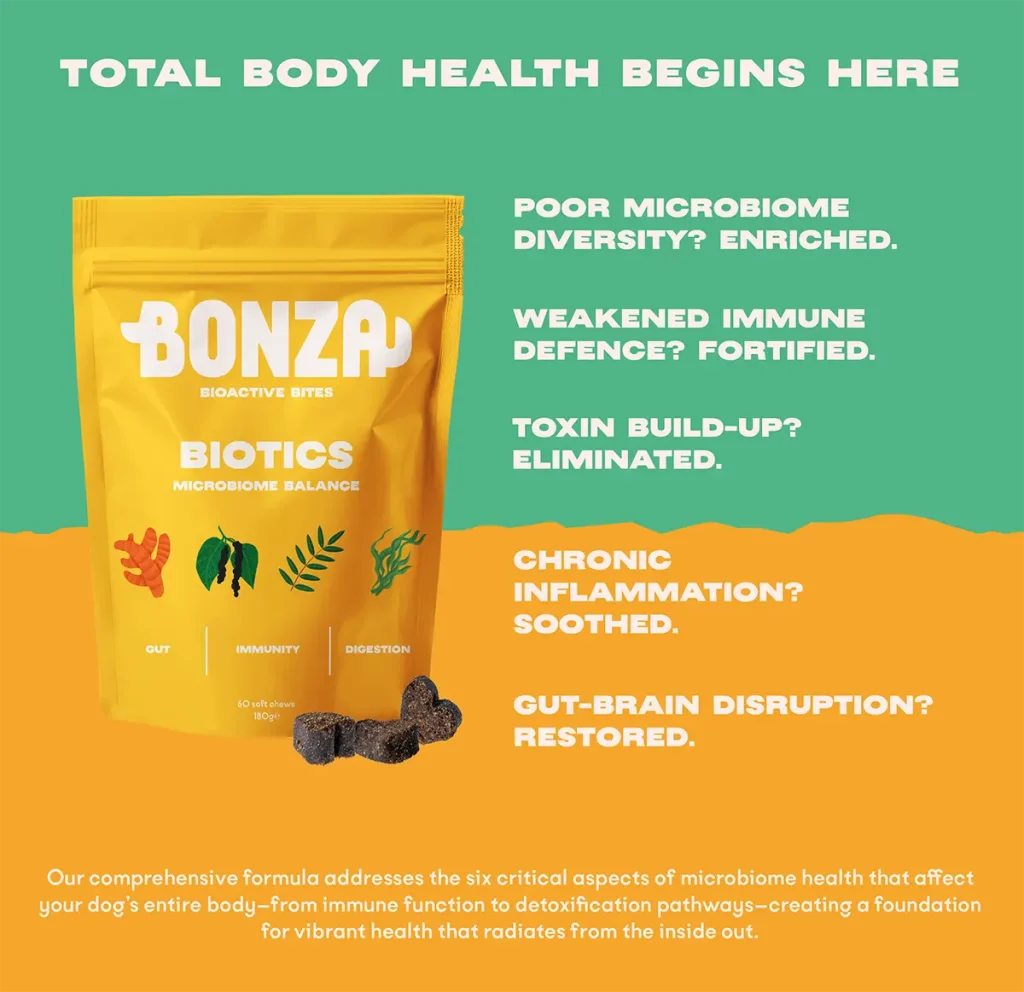
Bonza Biotics Bioactive Bites is built around the complete biotic framework: named prebiotic substrates with documented fermentation profiles, the only EFSA-authorised spore-forming probiotic strain specifically for dogs, two individually named postbiotics from two source categories, and direct support for gut barrier integrity, tight junction function, and toxin binding.
- Calsporin® (Bacillus velezensis DSM 15544): the only spore-forming probiotic strain with EFSA authorisation specifically for dogs, engineered to survive gastric acid and reach the intestine alive
- TruPet™ and L. helveticus HA-122: two individually named postbiotics, not a generic postbiotic blend
- Fibrofos™ 60 chicory root inulin and Biolex® MB40: named, standardised prebiotic substrates with documented fermentation profiles
- L-Glutamine, Zinc chelate of glycine hydrate, and Clinoptilolite: named EU-registered feed additives delivering direct barrier integrity, tight junction support, and toxin binding
Every bioactive ingredient is backed by peer-reviewed research. The Bonza Health Hub explains the evidence-based why behind every ingredient in every Bonza formulation.
Key Takeaways
- Prebiotics and probiotics work synergistically: Together, they enhance gut health, digestion, and immunity.
- Natural sources are effective: Many foods and supplements provide prebiotics and probiotics for dogs.
- Bioactive compounds support health: Compounds like SCFAs, lactic acid, and inulin play critical roles in gut health.
- Consistency is key: Regular use ensures long-term benefits for your dog’s health.
Table of Contents
- What Are Prebiotics and Probiotics?
- Benefits of Prebiotics and Probiotics for Dogs
- Digestive Health
- Immune Support
- Skin and Coat Health
- Stress Reduction and Mental Wellbeing
- Natural Prebiotic Foods for Dogs
- Chicory Root
- Bananas
- Sweet Potatoes
- Pumpkin
- Oats
- Baobab
- Jerusalem Artichokes
- Peas
- Asparagus
- Quinoa
- Fava Beans
- Chickpeas
- Dandelions
- Berries (Strawberries, Blueberries, Cranberries, Blackberries, Raspberries)
- Seaweed
- Natural Probiotic Foods for Dogs
- Kefir
- Yoghurt (Unsweetened)
- Sauerkraut
- Miso Paste
- Fermented Vegetables
- Natural Prebiotic and Probiotic Supplements for Dogs
- Prebiotic Supplements (Inulin, FOS)
- Probiotic Strains (Saccharomyces boulardii, Lactobacillus acidophilus, Bacillus velezensis (DSM 15544), Bifidobacterium animalis, Enterococcus faecium)
- Bioactive Compounds and Mechanisms of Action
- Short-Chain Fatty Acids (SCFAs)
- Inulin and Oligosaccharides
- Lactic Acid and Antimicrobial Peptides
- FAQs
- What are natural prebiotics for dogs?
- What foods are natural prebiotics?
- How do probiotics benefit dogs?
- Can I give prebiotics and probiotics together?
- How often should I give my dog prebiotics and probiotics?
- Are there side effects to prebiotics and probiotics?
- What is the best prebiotic and probiotic combination for dogs?
- Conclusion
- Bonza: Synbiotics for Dogs
What Are Prebiotics and Probiotics?
- Prebiotics: Non-digestible fibres and compounds that feed beneficial gut bacteria.
- Probiotics: Live microorganisms that balance the gut microbiome and support overall health.
- Together: Prebiotics and probiotics work synergistically to promote a healthy digestive system and immune function.
Benefits of Prebiotics and Probiotics for Dogs
Digestive Health
- Prebiotics: Enhance the growth of beneficial bacteria, improving digestion and stool quality.
- Probiotics: Reduce diarrhoea, bloating, and gas while improving nutrient absorption.⁵
Immune Support
- Prebiotics: Stimulate the production of SCFAs, which regulate immune responses.
- Probiotics: Boost the production of antibodies and prevent harmful bacteria from colonising the gut.
Skin and Coat Health
- Prebiotics and probiotics: Reduce systemic inflammation, alleviating skin allergies and improving coat condition.
Stress Reduction and Mental Wellbeing
- Gut-brain axis: Probiotics influence serotonin production, reducing anxiety and improving mood.
Natural Prebiotic Foods for Dogs
Chicory Root
- Description: High in inulin, a soluble fibre.
- Benefits: Promotes the growth of beneficial bacteria in the gut.
Bananas
- Description: Contain fructooligosaccharides (FOS).
- Benefits: Support digestive health and act as a mild prebiotic.
Sweet Potatoes
- Description: Rich in fibre and resistant starch.
- Benefits: Nourish gut bacteria and regulate bowel movements.
Pumpkin
- Description: High in soluble fibre.
- Benefits: Supports gut health and reduces diarrhoea or constipation.
Oats
- Description: A source of beta-glucans and soluble fibre.
- Benefits: Feed beneficial bacteria and improve digestion.
Baobab
- Description: A fruit high in fibre and antioxidants.
- Benefits: Acts as a prebiotic, feeding gut bacteria and reducing inflammation.
Jerusalem Artichokes
- Description: Rich in inulin and a natural source of prebiotic fibre.
- Benefits: Enhances gut health by promoting beneficial bacteria growth.
Peas
- Description: Contain resistant starch and prebiotic fibres.
- Benefits: Improve digestion and support gut health.
Asparagus
- Description: High in inulin and other prebiotic fibres.
- Benefits: Encourages the growth of healthy gut bacteria.
Quinoa
- Description: A gluten-free grain with fibre content.
- Benefits: Provides prebiotic benefits and supports digestive health.
Fava Beans
- Description: Rich in resistant starch and fibre.
- Benefits: Nourish gut bacteria and improve stool consistency.
Chickpeas
- Description: High in fibre and resistant starch.
- Benefits: Support gut bacteria and promote healthy digestion.
Dandelions
- Description: Contain inulin and other beneficial compounds.
- Benefits: Act as a prebiotic and support liver and digestive health.
Berries (Strawberries, Blueberries, Cranberries, Blackberries, Raspberries)
- Description: Rich in antioxidants and fibre.
- Benefits: Provide mild prebiotic effects and support overall gut health.
Seaweed
- Description: Contains polysaccharides that act as prebiotics.⁴
- Benefits: Supports gut bacteria and provides additional minerals.
Natural Probiotic Foods for Dogs
Kefir
- Description: Fermented milk containing diverse probiotic cultures including Lactobacillus and Bifidobacterium species.
- Benefits and Considerations: Provides genuine probiotic benefit and supports digestion. Caution: dairy-based kefir contains lactose, and many adult dogs have reduced lactase activity, which can cause digestive upset. Lactose-free water kefir offers similar probiotic benefit without the lactose tolerance question. For dog owners considering kefir, plant-based fermented alternatives are generally better tolerated.
Yoghurt (Unsweetened)
- Description: Contains live cultures including Lactobacillus and Bifidobacterium species.
- Benefits and Considerations: Live cultures support gut health and nutrient absorption. Lactose content varies by type, with Greek-style yoghurt having lower lactose than standard. Critical caution: many flavoured or sweetened yoghurts contain xylitol, which is highly toxic to dogs. Always verify the ingredient list before feeding any yoghurt to a dog. Unsweetened plain yoghurt fed in small amounts is the safe form.
Sauerkraut
- Description: Naturally fermented cabbage containing Lactobacillus species.
- Benefits and Considerations: Plant-based and naturally probiotic, well-suited to dogs in small portions and one of the better natural probiotic food options for canine diets. Caution: avoid sauerkraut prepared with added vinegar, excess salt, or caraway seeds, which are commonly used in commercial preparations. Plain naturally-fermented sauerkraut is the right form.
Miso Paste
- Description: Fermented soy product with active probiotic cultures including Aspergillus oryzae and Lactobacillus species.
- Benefits and Considerations: Provides genuine probiotic content. However, miso has extremely high sodium content, typically 3,500 to 4,000mg per 100g, which can quickly exceed daily canine sodium limits even with small servings. Use sparingly if at all, with portions calculated against the dog’s daily sodium tolerance. For most dogs, the sodium load makes miso a poor regular choice despite the probiotic value.
Fermented Vegetables
- Description: Naturally fermented vegetables such as carrots, cabbage, and green beans containing Lactobacillus species.
- Benefits and Considerations: Plant-based, well-tolerated by most dogs, and a strong natural probiotic option for canine diets. Caution: avoid ferments containing onion, garlic in large quantities, or excessive salt, which are toxic to dogs. Plain naturally-fermented vegetables in small portions are the right form.
Natural Prebiotic and Probiotic Supplements for Dogs
Prebiotic Supplements
- Inulin, MOS and FOS: Derived from plants like chicory.
- Benefits: Feed beneficial bacteria and improve gut health.
Probiotic Strains
- Saccharomyces boulardii: A clinically researched probiotic yeast effective for antibiotic-associated diarrhoea, acute diarrhoea, and pathogen control including Clostridium difficile and Clostridium perfringens. Unique among probiotics in surviving both stomach acid and antibiotic exposure, making it the probiotic of choice during antibiotic treatment. Non-colonising, working transiently rather than establishing permanently in the gut.⁷
- Lactobacillus helveticus (acidophilus): Balances gut flora and reduces inflammation.¹
- Bifidobacterium animalis: Enhances stool quality and gut barrier function.²
- Bacillus velezensis (DSM 15544, Calsporin®): Survive stomach acid, improve nutrient absorption, and produce antimicrobial compounds.³
- Enterococcus faecium: Supports digestive balance and helps prevent diarrhoea in dogs. Important context: Enterococcus species have not achieved EFSA Qualified Presumption of Safety status, with safety assessed strain-by-strain rather than at species level because some strains carry antimicrobial resistance markers. Veterinary preparations using strains specifically selected for safety profile are the preferred form over general supplementation.⁸
Bioactive Compounds and Mechanisms of Action
Short-Chain Fatty Acids (SCFAs)
- Produced by prebiotics: Nourish colon cells and reduce inflammation.
Inulin and Oligosaccharides
- Action: Feed beneficial bacteria and stimulate SCFA production.
Lactic Acid and Antimicrobial Peptides
- Produced by probiotics: Lower gut pH and inhibit harmful bacteria.
FAQs
Natural prebiotics include chicory root, bananas, pumpkin, sweet potatoes, and oats. These fibres feed beneficial gut bacteria, improving digestion and immunity.
Foods like chicory root, bananas, oats, and pumpkin are excellent sources of natural prebiotics.
Probiotics balance gut bacteria, improve digestion, boost immunity, and reduce inflammation.
Yes, combining prebiotics and probiotics (synbiotics) enhances their effectiveness.
Daily supplementation is recommended for consistent benefits.
Side effects are rare but may include mild bloating or gas during the adjustment period.
Synbiotics combining inulin or FOS with strains like Bacillus velezensis (DSM 15544, Calsporin®), Lactobacillus acidophilus and Bifidobacterium animalis are highly effective.⁶
Related Articles
- The Gut Microbiome: Your Dog’s Hidden Health Command Centre. The pillar article on how the gut microbiome shapes whole-system canine health, providing the foundational context for why prebiotic and probiotic intake matters.
- Probiotics for Dogs: Discover the Next Generation Supplement
- Best Gut Health Supplement for Dogs in 2026: A Canine Nutritionist’s Comparative Evaluation
- Best Prebiotics for Dogs: A Canine Nutritionist’s Complete Guide. The canonical reference on prebiotic mechanism and selection for canine gut health, including detailed coverage of inulin, FOS, MOS, and food-source prebiotics.
- The Best Probiotics for Dogs: A Canine Nutritionist’s Guide to Real Gut Impact. The strain-by-strain evidence matrix for probiotic selection in dogs, with EFSA regulatory context and condition-specific recommendations.
Conclusion
Natural prebiotics and probiotics are integral to a dog’s health, supporting digestion, immunity, and overall wellbeing. Incorporating natural food sources and supplements ensures your dog enjoys the full range of benefits these powerful nutrients offer.
Bonza: Synbiotics for Dogs
Bonza Superfoods and Ancient Grains vegan dog food recipe includes clinically researched, spore-forming probiotics like Calsporin®, combined with high quality prebiotics and the advanced postbiotic TruPet™. This synbiotic blend ensures optimal gut health and long-term wellness for your dog.
Bonza 100% plant-based food for dogs also contains the following prebiotic foods and supplements:
- Quinoa
- Oats
- Sweet Potato
- Seaweed
- Pumpkin
- Baobab
- Peas
- Fava Beans
- Chickpeas
- FOS and MOS
- Inulin
References
- Hanchi H, Mottawea W, Sebei K, Hammami R. The Genus Enterococcus: Between Probiotic Potential and Safety Concerns — An Update. Front Microbiol. 2018;9:1791. doi: 10.3389/fmicb.2018.01791. PMID: 30123208. PMC: PMC6085487.
- Baillon ML, Marshall-Jones ZV, Butterwick RF. Effects of probiotic Lactobacillus acidophilus strain DSM13241 in healthy adult dogs. Am J Vet Res. 2004;65(3):338-343. doi: 10.2460/ajvr.2004.65.338. PMID: 15027683.
- Strompfová V, Lauková A, Simónová M, Marciňáková M. Bifidobacterium animalis B/12 administration in healthy dogs. Anaerobe. 2014;28:37-43. doi: 10.1016/j.anaerobe.2014.04.011. PMID: 24838022.
- Félix AP, Souza CMM, Hori E, de Oliveira SG. Effect of Calsporin® (Bacillus subtilis C-3102, reclassified as Bacillus velezensis DSM 15544) addition to the diet on faecal quality and nutrient digestibility in healthy adult dogs. J Appl Anim Nutr. 2019;7:e9. doi: 10.1017/jan.2019.7.
- O’Sullivan L, Murphy B, McLoughlin P, Duggan P, Lawlor PG, Hughes H, Gardiner GE. Prebiotics from Marine Macroalgae for Human and Animal Health Applications. Mar Drugs. 2010;8(7):2038-2064. doi: 10.3390/md8072038. PMID: 20714423. PMC: PMC2920542.
- Jensen AP, Bjørnvad CR. Clinical effect of probiotics in prevention or treatment of gastrointestinal disease in dogs: A systematic review. J Vet Intern Med. 2019;33(5):1849-1864. doi: 10.1111/jvim.15554. PMID: 31381186. PMC: PMC6766488.
- Pilla R, Guard BC, Steiner JM, Gaschen FP, Olson E, Werling D, Allenspach K, Salavati Schmitz S, Suchodolski JS. Administration of a Synbiotic Containing Enterococcus faecium Does Not Significantly Alter Fecal Microbiota Richness or Diversity in Dogs With and Without Food-Responsive Chronic Enteropathy. Front Vet Sci. 2019;6:277. doi: 10.3389/fvets.2019.00277. PMID: 31508431. PMC: PMC6716148.
- Krasowska A, Murzyn A, Dyjankiewicz A, Łukaszewicz M, Dziadkowiec D. The antagonistic effect of Saccharomyces boulardii on Candida albicans filamentation, adhesion and biofilm formation. FEMS Yeast Res. 2009;9(8):1312-1321. doi: 10.1111/j.1567-1364.2009.00559.x. PMID: 19732158.
Editorial Information
| Field | Detail |
|---|---|
| Published | 15 January 2025 |
| Last Updated | May 2026 |
| Reviewed by | Glendon Lloyd, Dip. Canine Nutrition (Distinction), Dip. Canine Nutrigenomics (Distinction) |
| Next Review | May 2027 |
| Author | Glendon Lloyd, Dip. Canine Nutrition (Distinction), Dip. Canine Nutrigenomics (Distinction) |
| Disclaimer | This article is for informational purposes only and does not constitute veterinary advice. Always consult a qualified veterinarian before making changes to your dog’s diet or supplement regimen. |
Natural Prebiotic and Probiotic Supplement for Dogs
Biotics Bioactive Bites, a next generation prebiotic, probiotic and postbiotic supplement for dogs, are vet-trusted soft chew supplements, that combine advanced probiotic strains, targeted prebiotics and postbiotics, toxin eliminators and microbiome-supporting nutrients to:
- Restore your dog’s gut balance improving vital gut-organ communication
- Support the removal of harmful toxins
- Boost their immune system naturally
- Reduce inflammation and oxidative damage
- Promote whole body metabolic health for your dog
Formulated with cutting-edge microbiome science, these delicious chews deliver a complex ecosystem of beneficial organisms and bioactive ingredients, that transform your dog’s health from the inside out.
Because gut health isn’t just about digestion.