


Understanding Green Tea’s Role in Canine Health
Green tea (Camellia sinensis), a popular beverage consumed worldwide, has garnered significant attention in veterinary nutrition due to its complex bioactive profile. This comprehensive guide explores the scientific evidence, safety considerations, and potential applications of green tea in canine health management, addressing the critical question: is green tea safe for dogs?
Summary
Green tea contains a sophisticated array of bioactive compounds, primarily catechins, with epigallocatechin gallate (EGCG) being the most abundant and biologically active. While offering potential benefits including antioxidant protection, anti-inflammatory properties, and possible support for metabolic health, green tea presents several important safety considerations for canine consumption. This article provides detailed information about green tea’s bioactive profile, mechanisms of action, potential benefits, and crucial safety guidelines for dogs.
Key Takeaways
- Contains powerful catechins with EGCG being the primary bioactive compound
- Offers significant antioxidant and moderate anti-inflammatory properties
- May support cellular health and provide gentle digestive benefits
- Theanine content provides calming effects
- Contains caffeine, which can be problematic for dogs in excessive amounts
- MUST be decaffeinated and properly dosed for canine safety
- High concentrations can cause liver toxicity concerns
- Should always be introduced gradually under veterinary guidance
- NOT recommended for dogs with certain medical conditions
Table of Contents
- Summary
- Key Takeaways
- What is Green Tea?
- Bioactive Compounds and Composition
- Primary Active Compounds
- Secondary Compounds
- Nutritional Elements
- Mechanisms of Action
- Antioxidant Pathways
- Anti-inflammatory Effects
- Metabolic Regulation
- Potential Benefits for Dogs
- Cellular Protection
- Immune System Support
- Additional Potential Applications
- Safety Considerations
- Caffeine Content
- Hepatotoxicity Risks
- Contraindications
- Dosage Guidelines
- Safe Administration
- Form-Specific Considerations
- FAQ – Green Tea for Dogs
- Conclusion
What is Green Tea?
Green tea is derived from the leaves of Camellia sinensis, a plant native to East Asia. Unlike black tea, green tea leaves undergo minimal oxidation during processing, which preserves its distinctive catechin content. The historical use of green tea dates back thousands of years in traditional Chinese and Japanese medicine, where it was valued for its health-promoting properties.
For canine applications, green tea presents a complex profile:
- Contains valuable polyphenols (8-12% dry weight)
- Problematic caffeine content (2-4% dry weight)
- Unique amino acids including theanine (1-2% dry weight)
- Various minerals and trace elements
- Volatile compounds contributing to flavour and aroma
The processing method significantly impacts the bioactive profile, with “first flush” young leaves typically containing higher concentrations of both beneficial compounds and caffeine. For canine applications, decaffeinated green tea extracts are essential to mitigate safety concerns whilst retaining beneficial compounds.
Bioactive Compounds and Composition
Primary Active Compounds
Catechins:
- Epigallocatechin gallate (EGCG): 7-13% dry weight
- Most abundant and bioactive catechin
- Strongest antioxidant properties
- Possible hepatotoxicity at high concentrations
- Epigallocatechin (EGC): 3-6% dry weight
- Secondary catechin with moderate bioactivity
- Better absorption than EGCG
- Epicatechin gallate (ECG): 2-4% dry weight
- Complementary activities to EGCG
- Lower bioavailability
- Epicatechin (EC): 1-3% dry weight
- More readily absorbed
- Longer plasma half-life
Methylxanthines:
- Caffeine: 2-4% dry weight
- Problematic for dogs due to slower metabolism
- Stimulant effects on central nervous system
- Cardiac and diuretic effects
- Theobromine: 0.05-0.1% dry weight
- Also toxic to dogs but in lower concentrations
- Similar but milder effects compared to caffeine
- Theophylline: Trace amounts
- Bronchodilatory effects
- Cardiac stimulation properties
Secondary Compounds
Amino Acids:
- L-theanine: 1-2% dry weight
- Promotes relaxation without sedation
- Modulates neurotransmitter activity
- May counteract some caffeine effects
- Other amino acids: 4% total dry weight
- Various essential and non-essential amino acids
- Contribute to overall nutritional profile
Flavonols:
- Quercetin derivatives: 0.3-0.5% dry weight
- Additional antioxidant properties
- Anti-inflammatory effects
- Complement catechin activity
- Kaempferol compounds: 0.2-0.4% dry weight
- Support vascular health
- Modest anti-inflammatory activity
Phenolic Acids:
- Gallic acid: 0.5-1% dry weight
- Chlorogenic acid: 0.3-0.5% dry weight
- Coumaric acid derivatives: Trace amounts
Nutritional Elements
Minerals:
- Manganese: 20-100 mg/kg
- Potassium: 20-35 g/kg
- Magnesium: 2-3 g/kg
- Trace minerals (zinc, selenium, copper)
- Vitamin C: 250-350 mg/kg
- Vitamin E: 25-70 mg/kg
- B vitamins (trace amounts)
Other Components:
- Chlorophyll compounds
- Volatile oils
- Complex carbohydrates
- Plant sterols
Mechanisms of Action
Antioxidant Pathways
Direct Free Radical Neutralisation:
- Catechins donate hydrogen atoms to stabilise free radicals (3)
- EGCG particularly effective at quenching reactive oxygen species
- Metal chelation prevents free radical formation
- Protection of cellular membranes from peroxidation
- Preservation of mitochondrial function
Enhancement of Endogenous Antioxidant Systems:
- Activation of Nrf2 signalling pathway
- Upregulation of glutathione synthesis
- Enhanced activity of superoxide dismutase
- Increased catalase expression
- Modulation of glutathione peroxidase activity
Cellular Protection Mechanisms:
- Preservation of mitochondrial membrane integrity
- Protection of DNA from oxidative damage
- Maintenance of cellular redox balance
- Support for cellular repair mechanisms
- Reduction of oxidative stress biomarkers
Anti-inflammatory Effects
NF-κB Pathway Modulation:
- Inhibition of IκB kinase activation (3)
- Prevention of NF-κB nuclear translocation
- Reduction of inflammatory gene expression
- Modulation of upstream signalling events
- Balance of pro- and anti-inflammatory factors
Enzyme Inhibition:
- Modest regulation of cyclooxygenase activity
- Modulation of lipoxygenase pathways
- Reduction of inducible nitric oxide synthase
- Inhibition of certain matrix metalloproteinases
- Balanced approach to inflammatory response
Cytokine Regulation:
- Moderation of pro-inflammatory cytokine production
- Reduction of TNF-α and IL-6 expression
- Balanced IL-10 response
- Modulation of immune cell activation
- Support for resolution of inflammation
Metabolic Regulation
Lipid Metabolism:
- Modest activation of AMP-activated protein kinase
- Support for fatty acid oxidation
- Gentle regulation of lipid absorption
- Potential modulation of adipokine signalling
- Support for healthy fat utilisation
Glucose Regulation:
- Mild effects on intestinal glucose absorption
- Modest support for insulin sensitivity
- Potential protection of pancreatic β-cells
- Subtle effects on hepatic glucose output
- Complementary to dietary management
- Selective prebiotic effects on beneficial bacteria
- Modest inhibition of certain pathogenic species
- Support for short-chain fatty acid production
- Enhancement of intestinal barrier function
- Balanced approach to gut ecology
Potential Benefits for Dogs
Cellular Protection
- Support for cells exposed to environmental toxins
- Protection against age-related oxidative damage (3)
- Complementary to other antioxidant nutrients
- Support for cellular longevity
- Balanced free radical management
Tissue Health Maintenance:
- Support for hepatic cellular integrity
- Gentle protection for renal tissues
- Modest cardiovascular tissue support
- Neurological cell protection
- General support for cellular health
Immune System Support
Balanced Immune Modulation:
- Subtle enhancement of innate immune function
- Regulation of inflammatory immune responses
- Support for natural killer cell activity
- Modest enhancement of T-cell function
- Complementary to overall immune health
Respiratory Support:
- Mild support for airway health
- Gentle mucosal protection
- Balanced inflammatory response in respiratory tissues
- Complementary to respiratory management
- Subtle antioxidant protection
Additional Potential Applications
- Subtle prebiotic effects
- Support for intestinal barrier function
- Modest regulation of gut inflammation
- Complementary to digestive health protocols
- Balanced approach to intestinal health
- Subtle metabolic effects when combined with diet and exercise
- Modest support for healthy fat metabolism
- Complementary to comprehensive weight programmes
- Gentle thermogenic properties
- Supports overall metabolic health
- Modest antimicrobial effects against oral bacteria (2)
- Reduction of plaque formation
- Support for gingival health
- Complementary to dental hygiene
- Subtle support for oral microbiome balance
Safety Considerations
Caffeine Content
Toxicity Concerns:
- Dogs metabolise caffeine more slowly than humans
- Toxic effects observed at 20-30 mg/kg body weight
- Regular green tea contains 20-40 mg caffeine per cup
- Symptoms include hyperactivity, cardiac issues, seizures
- Can be fatal at high doses
Decaffeination Requirements:
- Only decaffeinated green tea is suitable for dogs
- Water process decaffeination preferred to chemical methods
- Decaffeinated extracts should contain <0.1% caffeine
- Verification of decaffeination essential for safety
- Regular testing for residual caffeine important
Individual Sensitivity:
- Some dogs more sensitive to even trace caffeine
- Smaller breeds at higher risk due to body weight ratio
- Senior dogs may have reduced metabolism capacity
- Puppies particularly vulnerable to stimulant effects
- Careful monitoring essential when introducing
Hepatotoxicity Risks
EGCG Concentration Concerns:
- High EGCG concentrations linked to liver injury
- More pronounced on empty stomach or in fasted state (1)
- Risk increases with concentrated extracts
- Proper dosing critical to avoid toxicity
- Individual susceptibility varies significantly
Monitoring Requirements:
- Veterinary supervision recommended
- Liver enzyme monitoring for long-term use
- Immediate discontinuation if adverse effects
- Gradual introduction at low doses
- Regular health assessment during supplementation
Risk Reduction Strategies:
- Administration with food
- Low-dose, gradual introduction
- Use of balanced, whole extracts rather than isolated EGCG
- Avoiding use in dogs with existing liver conditions
- Regular veterinary consultation
Contraindications
Medical Conditions:
- Liver disease or dysfunction
- Cardiac arrhythmias or heart conditions
- Anxiety or nervous system disorders
- Renal insufficiency
- Gastrointestinal disorders
Medication Interactions:
- Stimulant medications
- Blood thinners
- Certain antibiotics
- Hepatically metabolised drugs
- MAO inhibitors
Life Stages:
- Pregnancy
- Lactation
- Very young puppies
- Highly senior dogs
- Perioperative periods
Dosage Guidelines
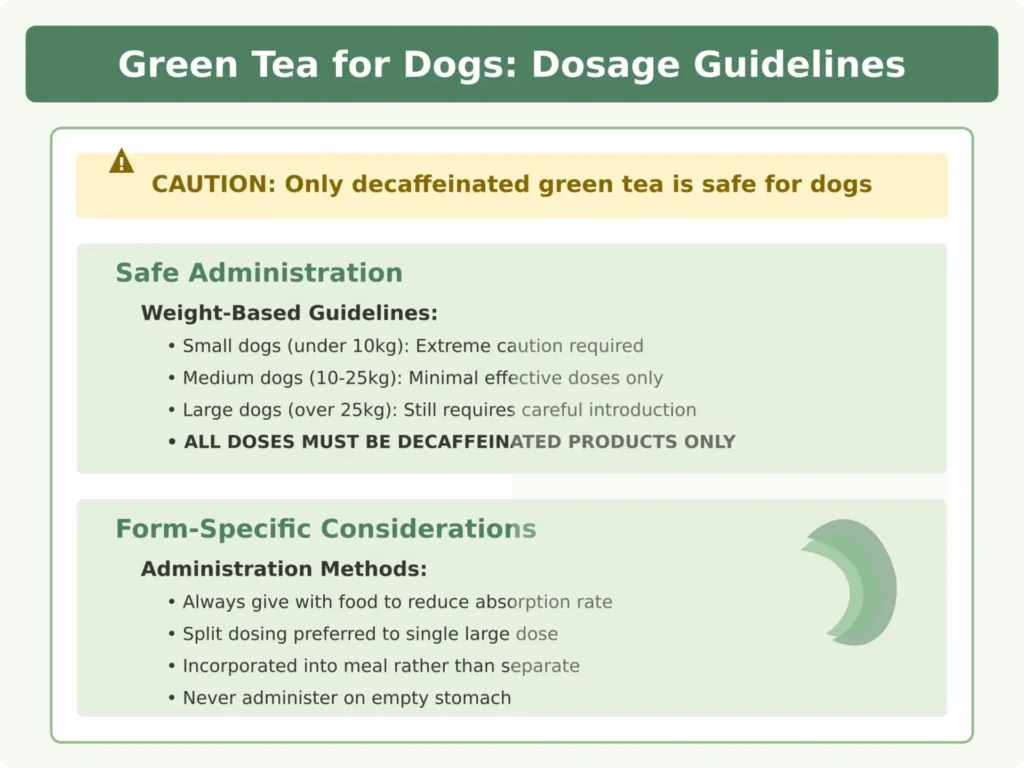
Safe Administration
Weight-Based Recommendations:
- Very low initial doses for all dogs
- Small dogs (under 10kg): Extreme caution required
- Medium dogs (10-25kg): Minimal effective doses only
- Large dogs (over 25kg): Still requires careful introduction
- All dosing must be of decaffeinated products only
Introduction Protocol:
- Begin with 25% of target dose
- Gradual increase over 2-4 weeks
- Monitor for any adverse reactions
- Discontinue immediately if negative effects observed
- Veterinary consultation essential throughout process
Duration Considerations:
- Short-term use (1-3 months) generally safer
- Cycled administration with breaks recommended
- Regular monitoring during any long-term use
- Periodic reassessment of benefits vs. risks
- Adjustment based on individual response
Form-Specific Considerations
Extract Standardisation:
- Standardised to catechin content (preferably 50-70%)
- Verified decaffeination essential
- Known EGCG percentages preferred
- Reputable manufacturer with testing protocols
- Third-party verification ideal
Administration Methods:
- Always with food to reduce absorption rate
- Split dosing preferred to single large dose
- Incorporated into meal rather than separate
- Mixed thoroughly with moist food
- Never administered on empty stomach
Product Selection:
- Veterinary-formulated products preferred
- Avoid human supplements without consultation
- No additives (especially xylitol)
- Clear ingredient specification
- Transparent manufacturing processes
FAQ – Green Tea for Dogs
Green tea can be safe for dogs only under specific conditions:
Must be decaffeinated: Regular green tea contains caffeine that is toxic to dogs even in moderate amounts.
Proper dosing is critical: Even decaffeinated green tea should be given in appropriate amounts based on weight.
Requires careful introduction: Starting with very small amounts and monitoring for any adverse reactions.
Not suitable for all dogs: Dogs with certain health conditions should avoid green tea entirely.
The safety profile depends on:
1. Complete removal of caffeine
2. Appropriate EGCG concentrations
3. Proper administration with food
4. Individual dog health status
5. Veterinary supervision
Green tea presents a narrower safety margin than many other botanical supplements for dogs, so the benefits must be carefully weighed against potential risks.
When safely administered in appropriate formulations, decaffeinated green tea may offer several potential benefits:
Antioxidant Support:
Protection against cellular oxidative damage
Support for overall cellular health
Complementary to other antioxidant nutrients
Particular support for tissues exposed to toxins
Gentle Anti-inflammatory Effects:
Modest regulation of inflammatory pathways
Support for balanced inflammatory responses
Complementary to other anti-inflammatory approaches
Subtle support for tissues with inflammatory challenges
Metabolic Support:
Gentle enhancement of metabolic processes
Modest support for healthy fat metabolism
Complementary to comprehensive weight management
Subtle support for glucose regulation
Additional Potential Benefits:
Modest prebiotic effects for gut health
Subtle immune modulation
Gentle support for dental health
Mild antimicrobial properties
It’s important to note that these benefits are generally subtle rather than dramatic and should be considered as complementary to more established therapeutic approaches
Decaffeinated green tea extract may offer modest support for canine weight management, but several important factors must be considered:
Potential Supporting Mechanisms:
Gentle enhancement of fat metabolism
Subtle thermogenic properties
Modest support for metabolic rate
Small effects on fat absorption
Important Limitations:
Effects are mild and complementary only
Not a substitute for proper diet and exercise
Individual response varies significantly
Must be part of comprehensive weight programme
Practical Considerations:
Only appropriate for otherwise healthy dogs
Requires veterinary monitoring
Must be decaffeinated
Should be given with food
For weight management, green tea should be viewed as a minor supportive element within a comprehensive approach that includes appropriate caloric restriction, proper nutrient balance, and regular physical activity. The primary focus should always remain on dietary management and exercise rather than supplementation.
Green tea has a complex relationship with liver health in dogs:
Potential Benefits:
Antioxidant protection for liver cells
Modest support for liver detoxification processes
Subtle anti-inflammatory effects
Significant Concerns:
High concentrations of EGCG linked to hepatotoxicity
Risk of elevated liver enzymes
Potential for severe liver injury at high doses
More pronounced effects on empty stomach
Risk Factors:
Pre-existing liver conditions
Fasting state administration
Genetic susceptibility
Concurrent medications
Due to these concerns, liver function should be monitored when using green tea supplements, particularly during the initial introduction period and with any long-term use. Dogs with pre-existing liver conditions should generally avoid green tea supplements altogether.
Green tea toxicity in dogs can manifest through two primary mechanisms: caffeine toxicity (from non-decaffeinated products) and EGCG-related effects. Signs to watch for include:
Caffeine-Related Signs:
Restlessness and hyperactivity
Elevated heart rate
Vomiting
Tremors or twitching
Increased urination
Elevated blood pressure
Hyperthermia
Seizures (in severe cases)
EGCG-Related Signs:
Decreased appetite
Lethargy
Vomiting
Abdominal discomfort
Jaundice (yellowing of gums, eyes, or skin)
Dark urine
Clay-coloured stool
If any of these signs occur after administering green tea products, discontinue use immediately and seek veterinary attention. Prompt intervention is essential, particularly with caffeine toxicity which can be life-threatening.
If considering green tea supplementation for your dog, follow these guidelines for safe introduction:
Preparation:
Consult with your veterinarian first
Select a high-quality, decaffeinated product
Verify the product is specifically formulated for pets
Have baseline health parameters established if possible
Introduction Protocol:
Begin with approximately 25% of the target dose
Always administer with a full meal
Monitor closely for any adverse reactions
Increase gradually over 2-4 weeks if well tolerated
Document any observations during introduction
Monitoring Considerations:
Watch for changes in energy, appetite, and stool
Monitor water consumption and urination
Note any unusual behaviours
Schedule follow-up veterinary assessment
Consider liver enzyme testing for long-term use
This cautious approach minimises risk while allowing for assessment of individual tolerance.
Home-brewed green tea is not recommended for dogs for several important reasons:
Caffeine Concerns:
Regular green tea contains significant caffeine
Home brewing cannot reliably remove caffeine
Strength and concentration vary substantially
Impossible to measure exact caffeine content
Dosing Challenges:
Inconsistent strength between batches
Difficult to measure appropriate amounts
Variable extraction of compounds
Unpredictable absorption rates
Safety Issues:
Risk of caffeine toxicity
Unable to standardise beneficial compounds
Variable temperature effects on compounds
Potential for contamination
If you wish to provide green tea benefits to your dog, veterinary-formulated, decaffeinated supplements with standardised ingredients and clear dosing guidelines are the safer option. These products undergo testing to ensure removal of caffeine and appropriate levels of beneficial compounds
Green tea supplements are contraindicated for several categories of dogs:
Medical Conditions:
Dogs with liver disease or elevated liver enzymes
Dogs with kidney insufficiency
Dogs with cardiac conditions or arrhythmias
Dogs with seizure disorders
Dogs with certain gastrointestinal conditions
Medication Considerations:
Dogs on hepatically metabolised medications
Dogs taking blood thinners
Dogs on stimulant medications
Dogs receiving certain antibiotics
Dogs taking drugs with narrow therapeutic windows
Life Stages:
Pregnant or lactating dogs
Very young puppies
Dogs recovering from surgery
Dogs undergoing chemotherapy
Extremely senior dogs with multiple health issues
Additionally, caution is warranted for dogs with unknown health status or those that haven’t had recent veterinary assessment. When in doubt, consult with your veterinarian before introducing any green tea products
Conclusion
Green tea represents a botanical supplement with a complex profile for canine health—offering potential benefits through its rich catechin content while presenting significant safety considerations that require careful management. The antioxidant, anti-inflammatory, and metabolic properties of green tea provide modest support for cellular health, balanced inflammatory responses, and gentle metabolic regulation when properly administered.
However, the presence of caffeine in regular green tea and the potential for hepatotoxicity from concentrated EGCG necessitate a cautious approach. Only decaffeinated products specifically formulated for dogs should be considered, with appropriate dosing based on weight and health status. The safety margin is narrower than many other botanical supplements, making veterinary consultation essential.
For suitable candidates—healthy adult dogs without liver, kidney, cardiac, or neurological conditions—properly administered decaffeinated green tea extracts may offer subtle complementary support for antioxidant protection, gentle anti-inflammatory effects, and modest metabolic benefits. These should be viewed as supportive elements within comprehensive health management rather than primary therapeutic agents.
The decision to use green tea supplements should be made on an individual basis, considering the specific health needs of the dog, potential risks, and alternative options. With appropriate caution, product selection, and veterinary oversight, green tea can be safely incorporated into a dog’s health regimen, but it remains a supplement that demands respect for its potent bioactive profile and associated safety considerations.